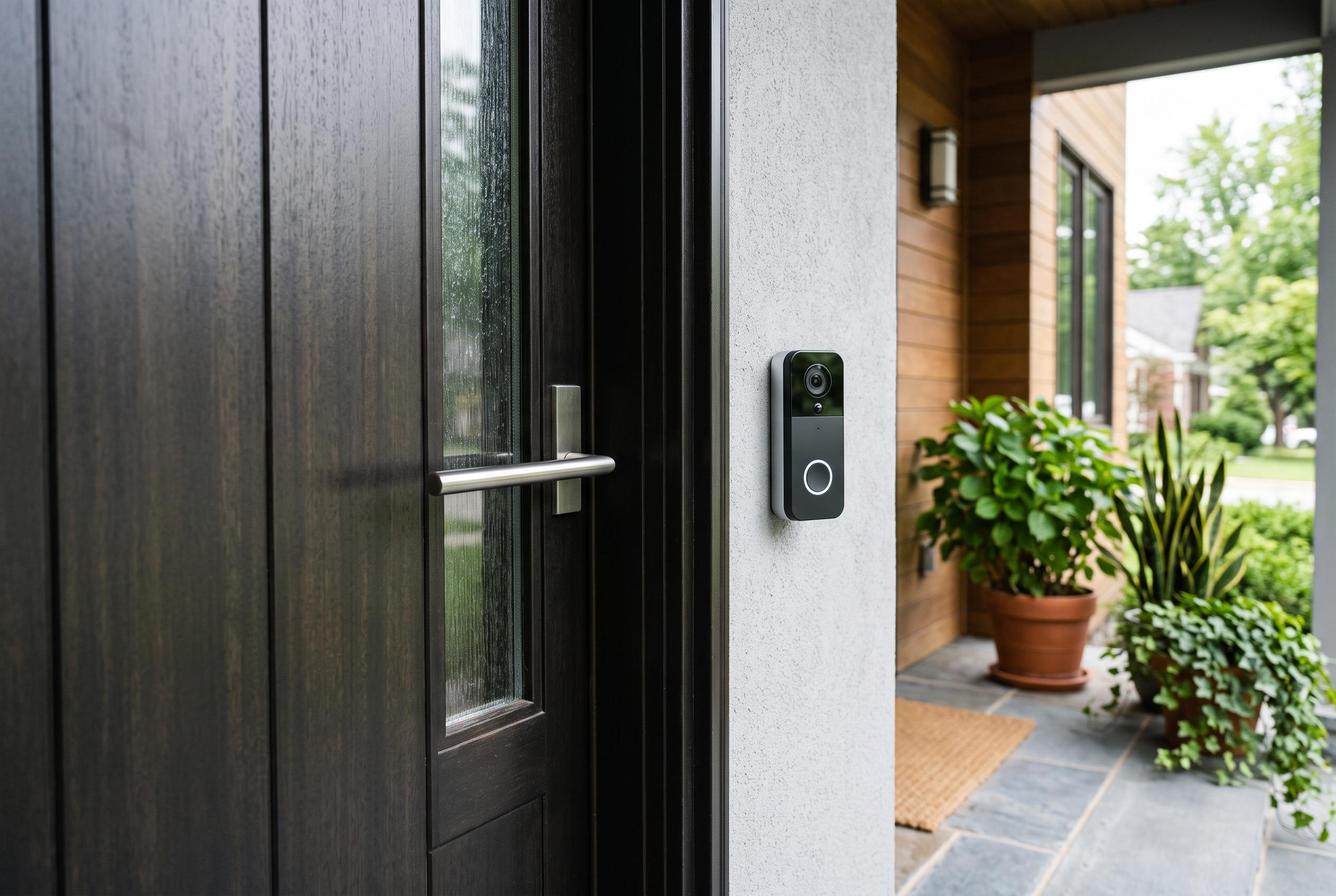

The Tapo D260 combines 4K video, on-device AI detection and local microSD storage, offering a capable alternative to subscription-led smart doorbells.
TP-Link’s Tapo D260 Video Doorbell Pro stands out in a crowded market because it tries to remove the monthly fee from the smart doorbell equation without stripping back the features. CNET said the model combines 4K video, on-device AI detection and local recording with a microSD card, making it one of the more capable subscription-free options the reviewer tested this year. That positioning is reinforced by Tapo’s own product information, which says the doorbell supports both battery and wired installation, stores footage locally on cards up to 512 GB and works with Amazon Alexa and Google Home.
The hardware is larger and heavier than many rivals, but that size appears to have been used to pack in more functionality. According to CNET’s testing, the doorbell can be fitted with adhesive, screws or wiring, and the kit includes an angle mount to help direct the camera. The reviewer found the build solid and weather resistant, while noting that the glossy front is prone to fingerprints. Tapo says the D260 also uses radar-based motion detection and includes full-colour night vision and two-way audio with voice masking.
The camera’s imaging features are unusually broad for a product that does not require a subscription for core intelligence. CNET reported that the D260 delivers 4K footage and has a wide field of view, with clear audio and a useful live view in the app. The app also includes privacy mode, which temporarily disables audio and video, and a distortion-correction setting that changes the image from a stretched doorbell view to a more natural lens profile. T3 likewise highlighted the D260’s 4K sensor, 180-degree field of view and local-storage approach when it covered the launch.
Its strongest argument, though, is in detection. CNET said the D260 can recognise people, animals, vehicles, packages and general motion without a paid plan, and that users can set separate motion zones for each category. That allows, for example, one alert area for the driveway and a different one for the porch. Tapo’s product page says the AI runs on-device, which means footage analysis happens locally rather than being sent to the cloud. Consumer Reports and other no-subscription round-ups have increasingly favoured this local-storage model because it avoids recurring charges while giving users more control over their footage.
Not every advanced feature is free. CNET said the most sophisticated cloud tools, including facial recognition and AI-generated summaries, sit behind Tapo’s Tapo Care service, which it tested through a trial and described as expensive at around $20 a month for the advanced tier. The publication also noted privacy concerns around face recognition and said Tapo disables the feature in some states with stronger privacy rules, including Illinois and Texas. Even so, the reviewer’s conclusion was clear: for buyers who want a capable doorbell without an ongoing bill, the D260 offers an unusually generous set of functions at the price, provided they add a microSD card for local storage.
Disclaimer: This content is intended for informational purposes only. Readers are advised to exercise their own judgement, conduct due diligence, or consult a qualified expert before acting on any information provided.