

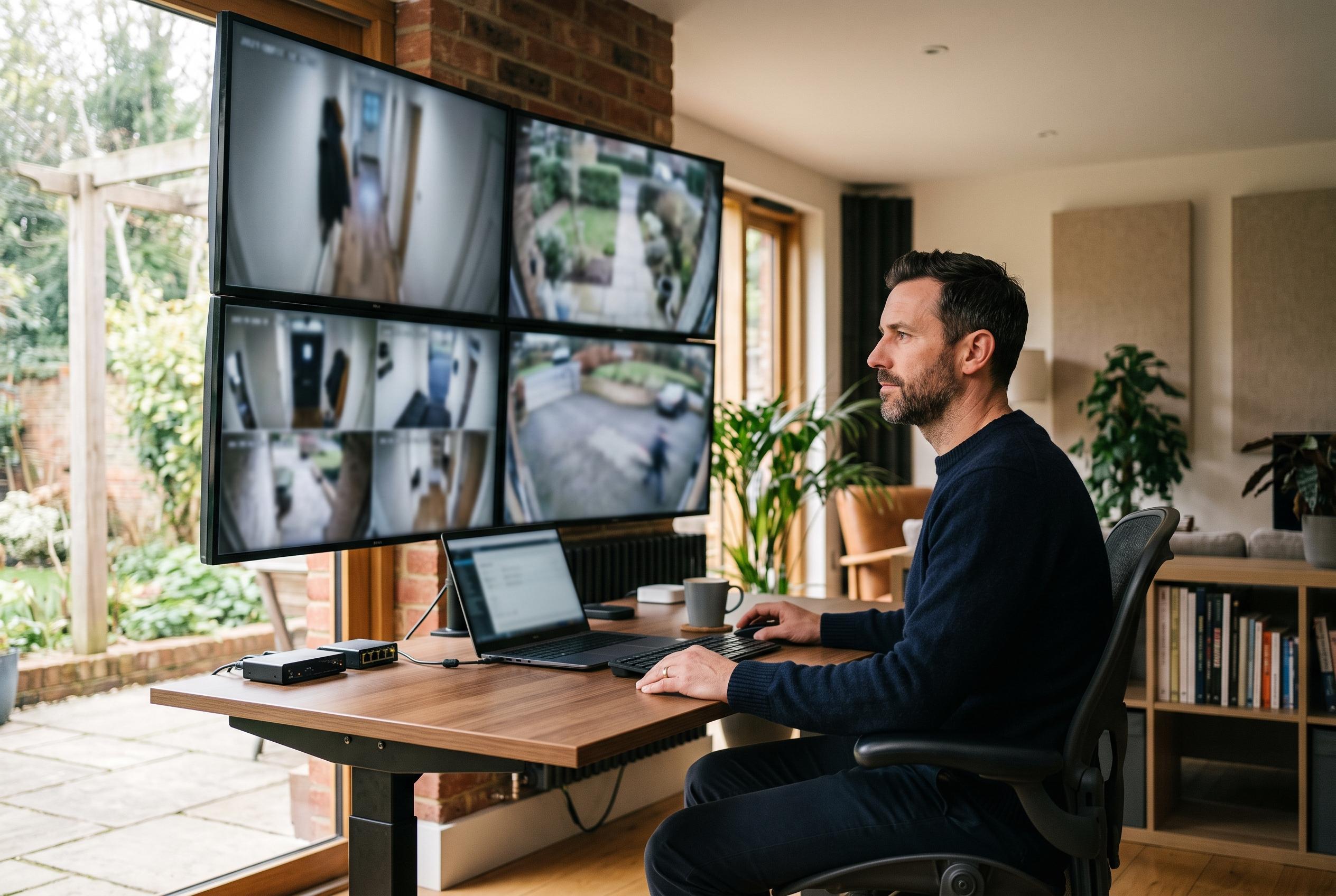

Professional video monitoring adds crucial context to alarm alerts, helping households and businesses distinguish genuine threats from routine activity and respond more selectively.
Video verification is becoming a more precise way to interpret alarm events, because it gives monitoring staff visual context rather than a bare signal. ADT says the service lets trained professionals review footage when an alarm is activated, helping distinguish between genuine intrusions and routine activity, while DTiQ says verified incidents can be escalated more selectively and with better evidence. The result is a system that can reduce false dispatches and support a faster, more informed response.
For households, the appeal is practical rather than technical. Fluent Home says the feature can help when children are at home alone, a parcel is left on the porch, or an unfamiliar person appears near the drive. That is the real value of the service: not constant surveillance, but an additional layer of judgement when the owner is asleep, travelling or otherwise unable to check a phone alert in real time.
The limitation of ordinary alarm monitoring is that sensors detect change, not intent. A door contact can show that an entry point opened, while a motion detector can only report movement. ProTech Security and American Alarm both say video verification adds the missing context by showing whether an event is an authorised arrival, an innocent cause or a credible break-in. In many municipalities, that distinction also matters because verified alarms can help businesses satisfy local rules tied to emergency dispatch and false-alarm control.
That is why the placement of cameras matters as much as the monitoring plan itself. Fluent Home recommends covering doors, driveways, gates and other approaches that are likely to be used after hours, while also paying attention to privacy and lighting. AvantGuard Monitoring says its interactive video service can go further by using live review and two-way communication to deter suspicious activity before it escalates. In practice, that means the system works best when cameras, sensors and response procedures are designed together, rather than installed as separate products.
The strongest use cases are the places where no one can readily investigate an alert. That includes side entrances, garages, stockrooms, loading bays and vacant properties such as holiday homes or seasonal offices. DTiQ says AI-assisted video can help direct attention to the incidents most likely to matter, while Fluent Home argues that professional installation is important because a camera that misses the right angle or drops its connection can undermine the entire system. For business owners in particular, the benefit is less about watching everything and more about knowing which events deserve immediate action.
Video verification should therefore be seen as part of a broader security design, not as a replacement for locks, lighting or basic alarm equipment. Cameras, intrusion sensors, smart locks, smoke and water protection, and 24/7 monitoring each address a different risk. Used together, they give homeowners and businesses a clearer picture of what is happening and a better chance of responding quickly, which is why companies in the sector describe verified video as a more efficient way to separate noise from real threat.
Disclaimer: This content is intended for informational purposes only. Readers are advised to exercise their own judgement, conduct due diligence, or consult a qualified expert before acting on any information provided.



