

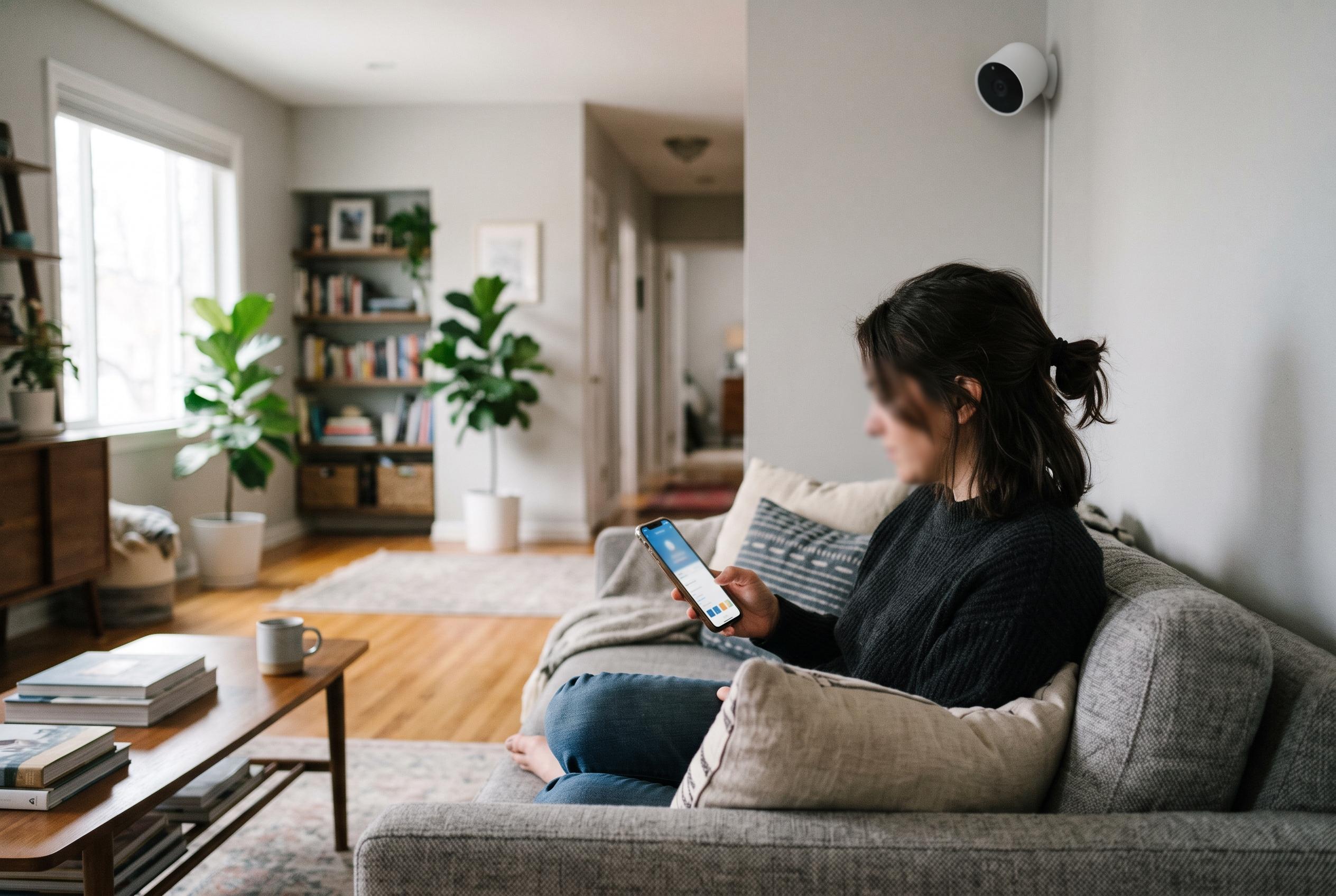

From individual logins and strong passwords to careful camera placement and regular updates, households can reduce the risk of hackers, technical failures and privacy breaches.
Home security cameras have become a routine part of domestic life, allowing households to check on their property through a phone from almost anywhere. Yet the same devices that make monitoring easier can also expose intimate moments, personal routines and private spaces if they are not configured carefully. Kien Thuc notes that the issue is not only picture quality, but also account security, access controls and the stability of the system itself.
One of the most important steps is to decide, from the outset, who should be able to view the feed. The Vietnamese report advises against sharing a single username and password across the whole household when the system allows individual accounts. Separate logins make it easier to remove access when someone no longer needs it, and they also make it simpler to review which phones or tablets remain connected. The same logic applies to camera placement: Security.org says cameras are most effective when they cover entrances, stairs, driveways and other vulnerable points, while bathrooms and bedrooms should generally be avoided to protect privacy. In homes where a camera points towards a boundary, the angle should be set so that it does not capture more of a neighbour’s property than is necessary.
Buying a camera on resolution alone is also a mistake. The Federal Trade Commission says shoppers should look for built-in security features, including encryption, and should check that the manufacturer provides regular software updates. CSO Online makes a similar point, arguing that default usernames and passwords should be changed immediately, and that features such as port forwarding to the public internet should be avoided unless there is a clear reason to use them. The stronger systems are those that combine encryption, software support and account controls rather than relying on image sharpness as the main selling point.
Once the device is installed, it should be checked as part of normal household maintenance rather than left to run unattended. The Kien Thuc article warns that an internet outage, a full or damaged memory card, a recording fault or outdated software can all cause footage to fail when it is most needed. The FTC likewise recommends keeping software up to date, since updates often close security flaws. For cameras that store footage in the cloud, users should understand how long clips are kept, how much space is available and how deletion works. That matters because storage settings can affect both convenience and privacy.
Passwords deserve the same care as any other connected device. A camera should use a unique password that is not reused for email, social media or banking, and two-factor authentication should be enabled where possible. The FTC says strong, unique passwords are one of the simplest ways to reduce the risk of unauthorised access, while PCWorld also recommends limiting exposure by using secure network settings and protecting the wider home connection. If a phone is replaced or sold, the camera account should be signed out on the old device so it cannot remain linked by mistake.
TechRadar notes that home cameras can also create legal problems if they capture a neighbour’s private space or are used in a way that breaches privacy rules. That makes careful setup more than a technical issue; it is part of responsible use. In practice, the most secure home camera system is not the one with the highest resolution, but the one that combines sensible placement, restricted access, regular updates and clear rules on how video is stored and shared. For families, that is what turns a camera into a useful safeguard rather than a permanent privacy risk.
Disclaimer: This content is intended for informational purposes only. Readers are advised to exercise their own judgement, conduct due diligence, or consult a qualified expert before acting on any information provided.



