

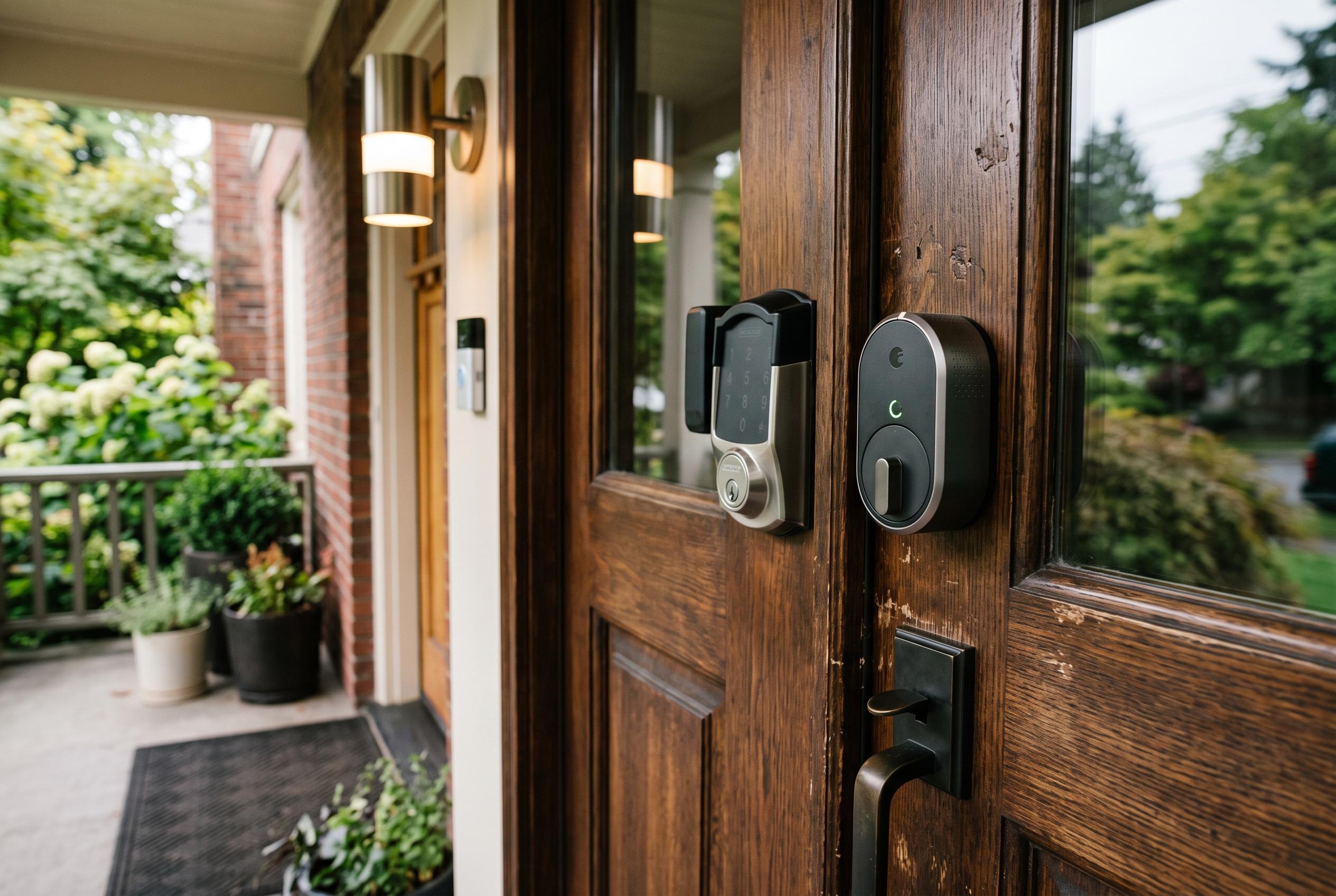

From the dependable Schlage Connect to Long Range models from Kwikset and ULTRALOQ, the latest Z-Wave locks are being shaped by hub compatibility, battery life and the demands of different homes.
Z-Wave smart locks remain a practical choice for households that want local control, dependable automations and longer battery life without leaning on vendor cloud services. They work through a Z-Wave hub or alarm panel rather than directly with a phone, which means the lock can still respond to routines such as disarming an alarm, locking at sunset or sending an alert when a door is left open. As Smart Home Gear HQ and Locksmith Rates both note, that hub dependency is the main trade-off, but it is also what makes Z-Wave appealing to users of Home Assistant, SmartThings, Hubitat and Ring Alarm.
The strongest all-round option in this group is still the Schlage Connect Smart Deadbolt. It has the most established reputation for reliable hub integration, a built-in alarm for forced-entry and tamper events, and hardware that sits at the top end of residential security ratings. That older Z-Wave Plus radio does mean it benefits from a powered repeater nearby, but for buyers who value proven compatibility over novelty, it remains the benchmark. The newer Kwikset HomeConnect 620 and 918 models, meanwhile, represent the current direction of the market: both use 700-series Z-Wave hardware, support Long Range, S2 security and SmartStart provisioning, and store up to 250 user codes.
For homes that sit farther from the hub, the ULTRALOQ Bolt Z-Wave is the most forward-looking option. Its 800-series radio and Long Range support are designed for detached garages, outbuildings and larger properties where classic mesh Z-Wave may be less convenient. It also combines Grade 1 certification with weather resistance and a compact design, which makes it one of the more technically ambitious locks in the category. The catch, as several buying guides point out, is that Long Range only matters if the controller also supports it; otherwise, the lock behaves like a conventional Z-Wave device.
Ring Alarm users have a particularly clear choice in the Kwikset HomeConnect 620, which is called out by multiple guides as the most natural fit for that ecosystem. It offers the same Long Range and SmartStart features as the 918, but in a push-button format that many households will find easier to live with on an exterior door. The 250-code capacity is especially useful for rentals, multigenerational homes or properties where temporary access codes are routine. Kwikset’s SmartKey cylinder also remains a useful feature for anyone who wants to keep using an existing house key.
Yale’s Assure Lock 2 range broadens the picture by emphasising entry method rather than radio technology alone. The Touch model adds fingerprint entry, which is still rare among Z-Wave locks and especially useful for families or users who do not want to remember codes. The touchscreen and keypad versions keep the same slim, modern body, while DoorSense helps Auto-Lock wait until the door is actually shut. That modular approach has helped Yale stay relevant as smart home standards shift, even if some features still depend on the Yale app rather than the Z-Wave connection itself.
There are also niche options that matter for specific doors. The Yale Assure Lever is the most sensible choice where there is no deadbolt cut-out, such as garage entry doors, side doors and some interior spaces. Kwikset’s older SmartCode 916 and 914 models remain useful value picks for buyers who want a familiar keypad deadbolt with SmartKey rekeying, while the SmartCode 888 keeps a more traditional look for older doors. Together, the current Z-Wave market looks less like a race for the flashiest lock and more like a split between proven classics, Long Range models and specialised designs for particular homes and hub ecosystems.
Disclaimer: This content is intended for informational purposes only. Readers are advised to exercise their own judgement, conduct due diligence, or consult a qualified expert before acting on any information provided.



