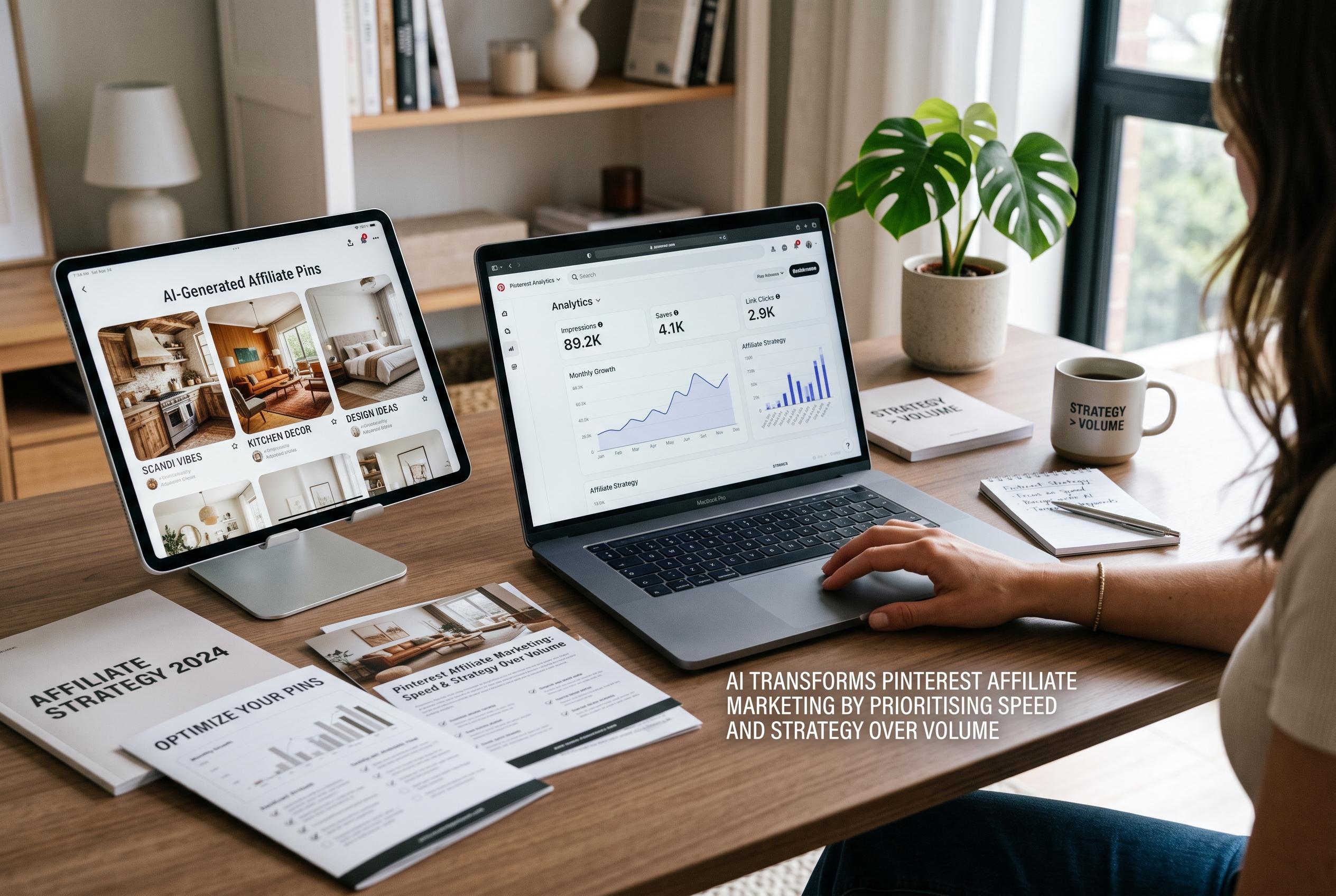

A new wave of AI integration is shifting Pinterest marketing from content quantity to quality, emphasising speed, relevance, and strategic use of tools like ChatGPT and Canva to enhance creator workflows and audience engagement.
In 2026, Pinterest affiliate marketing is less about producing more content and more about producing the right content at speed. That shift has made artificial intelligence a practical part of many creators’ workflows, especially for beginners who need help with research, writing, design and scheduling without turning every post into low-value, generic material. The central lesson is simple: AI can accelerate execution, but it cannot replace strategy.
For Pinterest marketers, that matters because the platform is still built around search, discovery and evergreen traffic. Success depends on keyword research, clear pin titles, persuasive descriptions, visual consistency and regular publishing. The most effective creators use AI to reduce repetitive work, then apply their own judgement to keep content useful and distinctive. That approach is also reflected in training material such as Udemy’s Pinterest-focused ChatGPT courses, which frame AI as a way to support niche research, pin creation and affiliate content rather than as a shortcut to results.
At the top of the stack is ChatGPT, which remains the most versatile tool for brainstorming, outlines, titles, descriptions and repurposing blog content into pin-friendly assets. Its appeal is not limited to one task; it can support nearly every stage of a Pinterest workflow when prompts are specific and the marketer already knows the audience and the goal. For beginners, that breadth makes it the most practical starting point.
Canva is the strongest design companion because Pinterest is a visual platform first and a text platform second. Canva’s partnership with Pinterest underlines that role, while its Magic Studio toolkit adds automation for tasks such as image editing, content generation and resizing. TechRadar’s review of Magic Studio highlights features like Magic Switch and Magic Grab, which reduce the technical friction of creating polished graphics. For Pinterest marketers, the real advantage is speed without sacrificing presentation quality.
Claude is better suited to long-form writing, particularly when a Pinterest campaign depends on supporting articles such as tutorials, buying guides or comparison posts. Perplexity fills a different gap by helping with research, summarisation and trend discovery, which is crucial because weak keyword research often leads to content that looks polished but fails to answer real search intent. HARPA AI’s Pinterest-focused ChatGPT tools point in the same direction, showing how AI can be tuned to generate pin descriptions and content ideas that are closer to platform needs.
For image generation, Ideogram stands out where headline text must be readable on the graphic itself, while Midjourney is the premium option for more distinctive visual concepts. Both can help in niches where imagery matters heavily, including travel, lifestyle, home décor and food. But neither solves the core marketing problem on its own. A striking image still needs a useful offer, a clear hook and a reason to click.
Automation tools such as Pin Generator are useful once a creator has a repeatable system and wants to scale publishing or schedule multiple pin variations. Grammarly remains the final check, because clean copy still matters for trust and credibility, especially when affiliate recommendations are involved. The most effective beginner workflow is straightforward: research with Perplexity, outline and draft with ChatGPT or Claude, polish with Grammarly, design in Canva, generate extra visuals with Ideogram or Midjourney and then schedule with an automation tool if needed.
That sequence also helps avoid the most common mistakes. Many beginners publish AI-generated content without editing, rely on generic templates, ignore search research or post inconsistently. The courses and tools now surrounding Pinterest marketing all point towards the same conclusion: AI is valuable when it strengthens an existing strategy, not when it is used as a substitute for one. For most creators, a modest starter stack is enough, with ChatGPT, Canva and Grammarly covering the essentials before any paid upgrades are added.
The article’s wider message is that Pinterest still rewards relevance, quality and consistency more than volume. AI can save time, but the best results still come from content that feels tailored, accurate and genuinely useful. That is why the most sensible approach is to start small, learn each tool properly and expand only when the workflow demands it.
Disclaimer: This content is intended for informational purposes only. Readers are advised to exercise their own judgement, conduct due diligence, or consult a qualified expert before acting on any information provided.