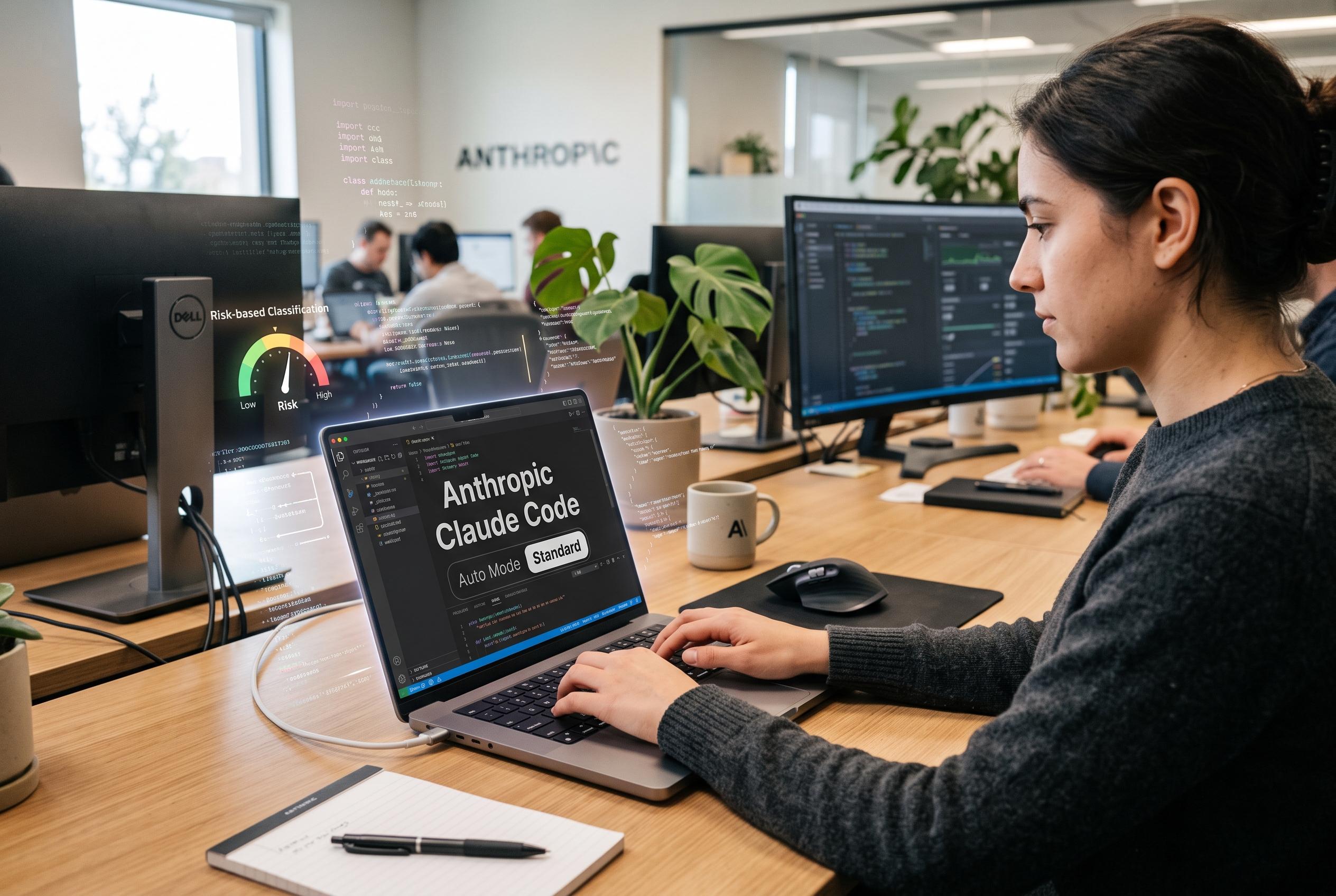

Anthropic will set auto mode as the default in Claude Code on August 14, aiming to streamline developer workflows and minimise permission prompts by using a risk-based classification system.
Anthropic will make auto mode the default permission setting in Claude Code on August 14, a change the company says is meant to cut down on “approval fatigue” for developers who have been clicking through prompts that rarely blocked anything. According to Anthropic, users were approving about 93% of requests under the old system, suggesting that manual permission checks had become routine rather than restrictive.
Auto mode sits between full manual approval and unrestricted autonomy. Anthropic says the system uses a classifier to judge whether a requested action is low risk before it runs. A fast initial filter screens user messages and tool commands, and more detailed reasoning is applied when something looks potentially unsafe. Low-risk tasks such as reading files or running standard build commands can proceed automatically, while actions that appear riskier still trigger a prompt.
The company first introduced auto mode as a research preview in March 2026, giving developers time to test it before wider deployment. Anthropic says the feature is available across its own API, AWS Bedrock and Google Vertex, and supports Sonnet 4.6 and Opus 4.6 and later. Administrators can still keep the older manual approval model if they prefer, and they can also set allow and deny rules at the policy level.
Anthropic is positioning the change as a practical compromise for coding workflows that involve repeated, low-stakes actions. The company says the aim is to preserve safeguards for higher-risk operations while reducing interruptions during longer tasks such as refactoring, test runs and multi-file changes. Its documentation also describes auto mode as a safer alternative to disabling permissions entirely.
Disclaimer: This content is intended for informational purposes only. Readers are advised to exercise their own judgement, conduct due diligence, or consult a qualified expert before acting on any information provided.