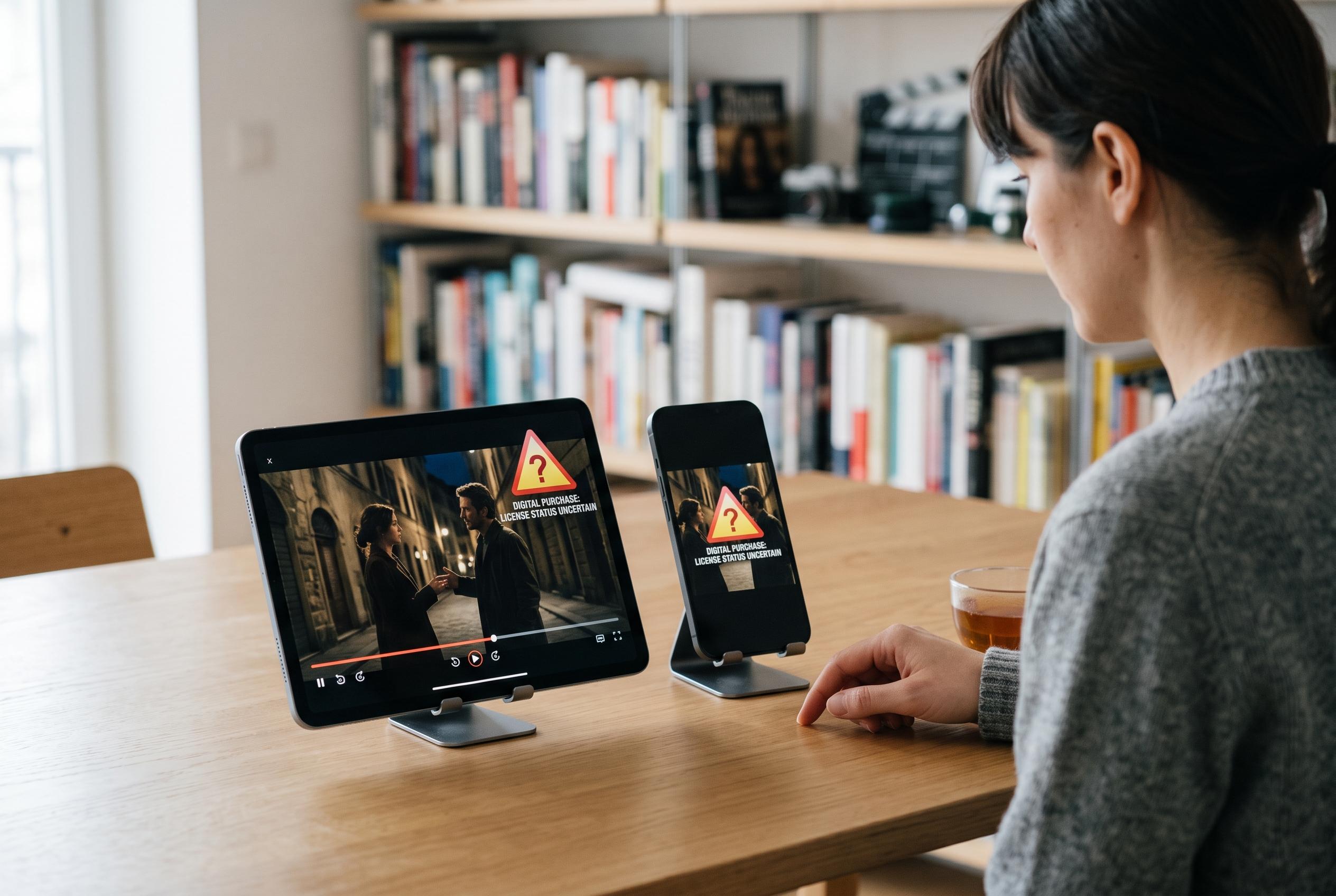

Consumers face variability in digital movie quality and access, as platform policies, device support, and licensing agreements increasingly dictate the viewing experience, highlighting the importance of cautious purchasing choices.
A digital movie can look straightforward at checkout and still arrive in a reduced form once playback starts. That is the core problem with buying films online: the store page may advertise 4K, Dolby Vision or Dolby Atmos, but the version you actually receive can vary by device, app, account tier and even by later licence changes. In practice, the purchase is often an entitlement to access a title, not a fixed master copy.
The issue is not theoretical. Apple’s support material says a film bought in HD may later gain 4K, HDR, Dolby Vision or Dolby Atmos on a compatible device, and that higher-quality playback can also be added later if it was not available at the time of purchase. That flexibility can work in buyers’ favour, as libraries are sometimes upgraded for free. But it also means the format is not locked in. If the platform, codec support or distribution agreement changes, the viewing experience can change with it.
Amazon Prime Video has already shown how easily quality can be tiered. From February 2024, its ad-supported plan stopped including Dolby Vision HDR and Dolby Atmos, leaving subscribers with HDR10 and Dolby Digital 5.1 unless they paid for the ad-free version. Amazon confirmed that the higher-end formats were reserved for the pricier tier on eligible titles. The change underlined a simple point: the format is increasingly determined by subscription level, not by the label on a title page.
The same pattern applies to playback hardware and software. Many streaming services still limit browser playback to 1080p or 720p because of content protection rules, while Dolby Vision, HDR10+ and Atmos often remain app-only features. Netflix recently added 4K in Chrome on Windows 11, but not on Linux, which remains capped at 720p. That means the same film can legitimately play back in markedly different quality depending on whether it is opened in an app or a browser, and most storefronts do not make that downgrade obvious before purchase.
The more serious risk is that a title can disappear altogether. Sony has said it will remove 551 StudioCanal films from purchased PlayStation video libraries in several European markets on September 1 because of expired licensing agreements. The list includes Terminator 2: Judgment Day, Hot Fuzz and Apocalypse Now: The Final Cut, and no refunds have been announced. It is a reminder that digital ownership is still shaped by contracts between studios and platforms, not by the consumer’s sense of having paid for a permanent copy.
For buyers, the practical response is caution rather than rejection. It makes sense to buy from the service that best matches the hardware you actually use, to test the badge on first play rather than trusting the product page and to avoid browsers when picture quality matters. Linking libraries through Movies Anywhere can help protect access if one retailer changes course, but it does not protect format quality. For the films that matter most, a disc remains the only version whose specification does not depend on a licence, a codec or a policy update.
Disclaimer: This content is intended for informational purposes only. Readers are advised to exercise their own judgement, conduct due diligence, or consult a qualified expert before acting on any information provided.