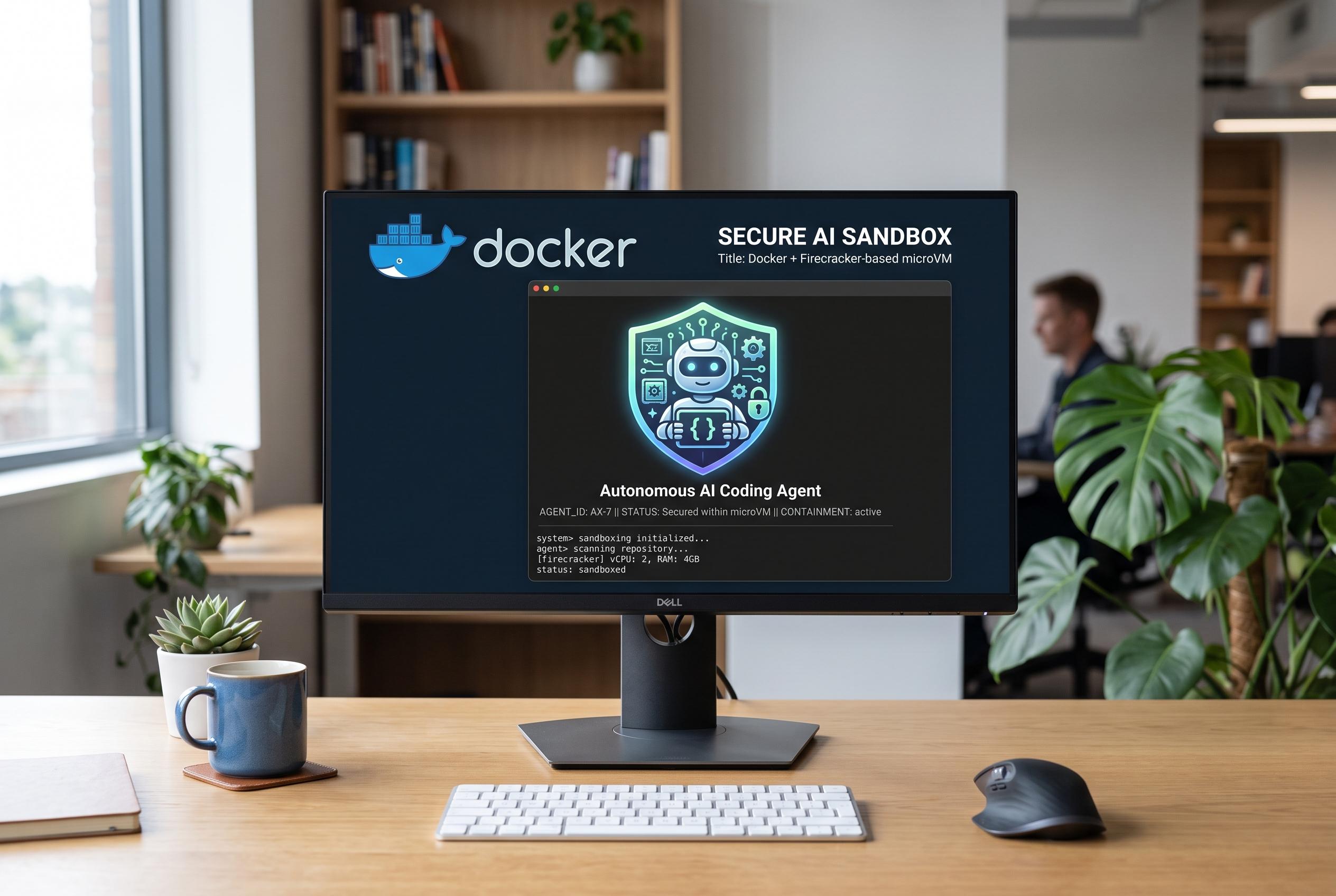

Docker unveils a new microVM-based sandboxing approach to mitigate risks posed by autonomous AI coding agents, aiming to prevent system compromise and safeguard sensitive data.
Autonomous AI coding agents have moved well beyond simple code completion. Tools such as Claude Code, Aider and other custom agents can now open shells, inspect files, run commands and change code with very little human intervention. That makes them useful, but it also means they can inherit the full privileges of the developer account under which they run, including access to local secrets, credentials and active system resources.
That is the central risk described by Docker in its recent guidance on AI coding agents. When an agent runs natively on a host machine, it can touch the user’s home directory, global package managers, shell configuration files and background services. In practice, that creates three recurring problems: accidental environment damage, unsafe cleanup behaviour and exposure to malicious third-party code during installs or build steps.
The company argues that safety prompts alone are not enough. An agent may refuse an explicitly harmful request, but that does not stop it from executing a dangerous dependency script, running an over-broad test command or following a poisoned instruction hidden in external code. According to Docker’s security guidance, the real control point is not the model’s intent but the execution boundary around it.
Docker Sandbox is presented as the answer to that boundary problem. Its model is based on hard isolation rather than soft policy: autonomous agents run inside an isolated microVM, with filesystem access limited to an assigned workspace and network access constrained by explicit allowlists. Docker says this approach adds layers of protection through the hypervisor, the network and the container runtime, so even a confused or compromised agent cannot freely reach the host system.
The practical difference is straightforward. On a normal workstation, an agent can see host binaries, install global packages and attempt outbound connections with few restrictions. Inside the sandbox, the same actions are contained, making the environment disposable and easier to reset after each task. For teams using autonomous coding agents in daily development, the appeal is less about convenience than about keeping the host machine clean, reproducible and harder to compromise.
Disclaimer: This content is intended for informational purposes only. Readers are advised to exercise their own judgement, conduct due diligence, or consult a qualified expert before acting on any information provided.