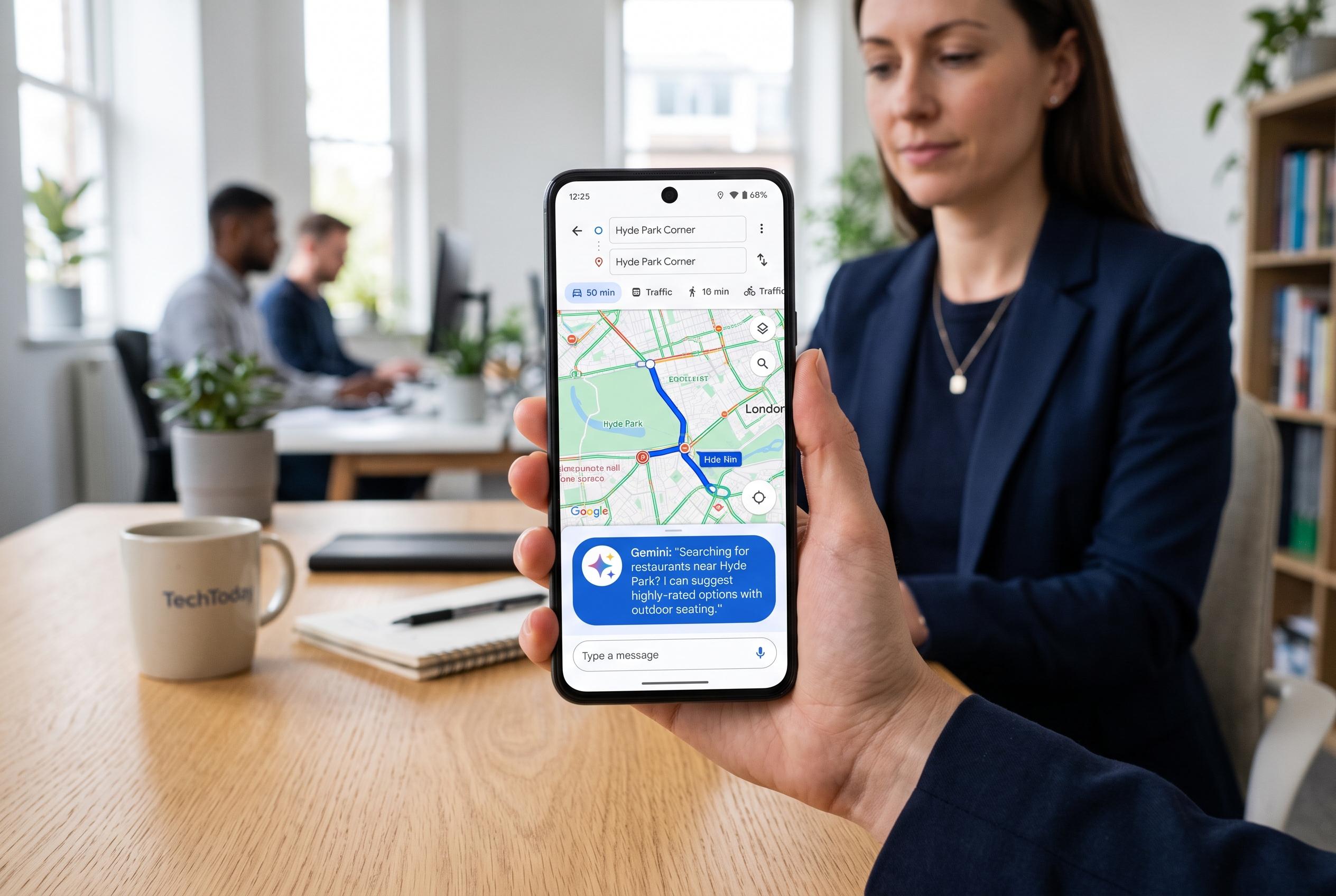

Google is expanding Maps’ capabilities by integrating Gemini AI to offer multi-step, conversational assistance and personalised recommendations, transforming the app into a virtual concierge while maintaining safety boundaries.
Google is widening the role of Maps, turning the app from a routing tool into something closer to a personal concierge. The latest Ask Maps features use Gemini to handle multi-step requests such as finding restaurants, comparing hotels, surfacing events and helping prepare food orders, while still stopping short of letting the system complete purchases or bookings without human approval, according to TechRepublic and Google’s product materials.
The design is deliberately limited. Ask Maps can interpret a conversational request, search across nearby options and pre-fill carts or reservation flows, but users must still confirm the final action themselves. That matters because it keeps Google on the safer side of agentic AI, where software can do preparatory work without taking over high-stakes decisions, a boundary the company has drawn across other products as well.
Google is also adding a personalisation layer it calls Personal Intelligence for Maps. The feature is opt-in and can use information from connected Google services, beginning with Gmail and later Calendar, to make recommendations that fit a user’s plans. If a flight confirmation is in Gmail, for example, Ask Maps could suggest hotels near the destination or places to eat after arrival, reducing the need to repeat details already available elsewhere in the Google ecosystem.
The broader strategy is clear: Gemini is being positioned less as a standalone chatbot and more as the intelligence layer that connects Search, Gmail, Calendar, Android, Workspace and Maps. Google has already said Gemini can help users find places, retrieve business details and get directions with context from Maps data, while its Maps platform team is also offering grounding tools for developers who want to anchor AI outputs in location data and imagery.
Third-party reports suggest the rollout is becoming more practical for everyday tasks. Tom’s Guide reported that Ask Maps can already help users place food orders through services such as Toast and Square, with Uber Eats support due later, while Search Engine Journal said the feature is available on Android and iOS in the US and India, with a desktop version coming soon. The same report said Ask Maps can personalise results using saved places and search history, underlining Google’s push to make location search more conversational and more predictive at the same time.
Disclaimer: This content is intended for informational purposes only. Readers are advised to exercise their own judgement, conduct due diligence, or consult a qualified expert before acting on any information provided.