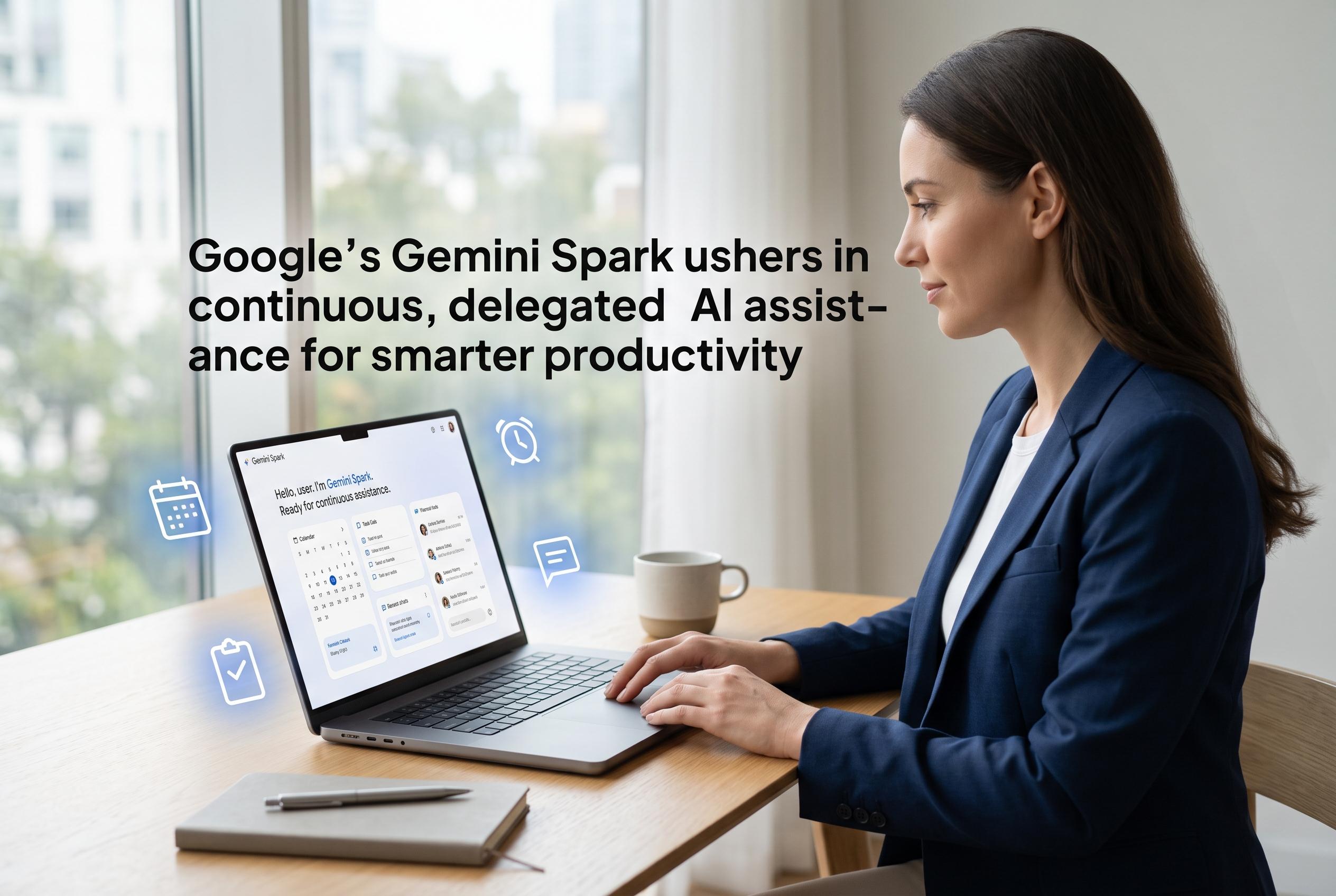

Google unveils Gemini Spark, an always-on, agentic AI assistant designed to handle background tasks across devices, marking a significant shift in digital productivity tools with its multi-step, integrated, and privacy-conscious approach.
Google’s latest push into agentic artificial intelligence is designed to move the technology beyond chat. Gemini Spark is presented as an always-on digital assistant that can work in the background, handle repetitive online tasks and keep going even when a phone is locked or a laptop is closed. According to Google’s announcement at I/O 2026 on May 19, the system is built to act more like a delegated helper than a conversational bot, with the aim of reducing the amount of routine work users still have to do themselves.
The company says Spark is powered by Gemini 3.5 and runs on Google Cloud infrastructure, allowing it to complete multi-step tasks without requiring constant supervision. TechCrunch reported that Google is positioning it as the next stage in digital assistance, with deeper integration across Gmail, Google Docs and other Workspace products. That means a user can set an objective, then let the system work through the steps rather than responding to each prompt manually.
In practical terms, that could include drafting emails from information pulled from documents, organising schedules, comparing options online or preparing summaries from multiple sources. Google says Spark can connect directly with its own services, while Tom’s Guide noted that it is intended to operate continuously across devices. The company has also described the assistant as being built on its Antigravity agent framework, which is meant to keep execution rules tighter than those used by a standard chatbot.
The feature is not framed as fully autonomous. Google says it will ask for permission before sensitive actions such as sending emails or making purchases, a safeguard that also came through in TechRadar’s testing. The review found Spark able to browse, compare and fill in forms with little intervention, but it still paused before submitting information or completing transactions. That balance between convenience and control is likely to be central to how widely users trust the tool.
For now, access remains limited. Google has said Spark is being tested internally and will roll out first to trusted testers, then to Google AI Ultra subscribers in the United States. One report said the beta launch began with a lower-priced Ultra tier, while another noted that broader support for third-party apps is expected later through the Model Context Protocol, which would let Spark link to services such as GitHub, Notion, Uber and Dropbox. That broader ecosystem support could determine whether Spark becomes a useful productivity layer or remains mainly a showcase for Google’s own platforms.
Disclaimer: This content is intended for informational purposes only. Readers are advised to exercise their own judgement, conduct due diligence, or consult a qualified expert before acting on any information provided.