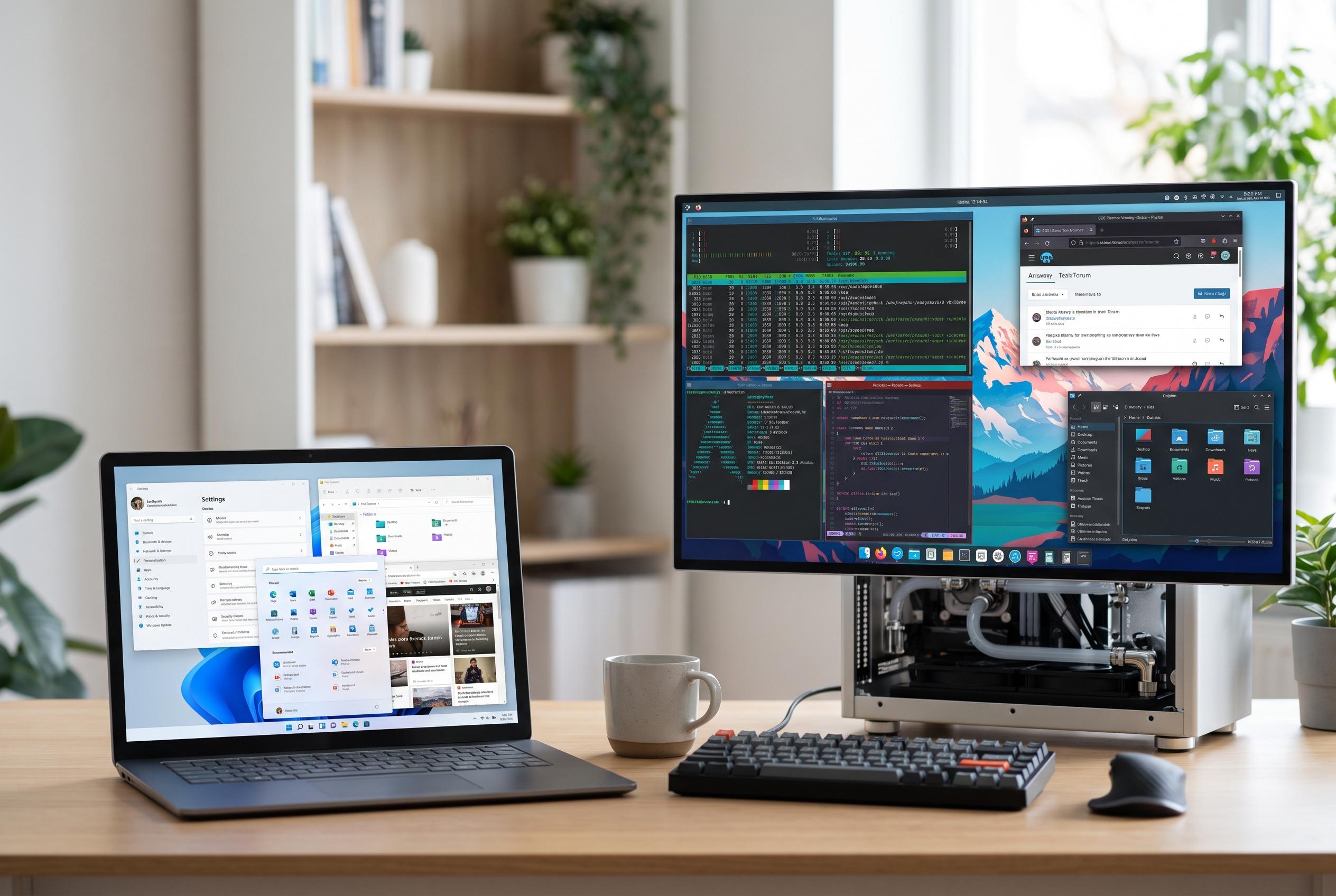

As Windows 11 faces criticism for its constrained design and AI integration, Linux emerges as a flexible and customisable alternative, emphasising user choice and experimentation over uniformity.
Windows has lost some of the sense of discovery that once made it feel like a living platform rather than a fixed product. Windows 11, according to criticism voiced by Windows Central and TechRadar, has become more constrained, more standardised and more tied to Microsoft’s broader push into AI, which has left some users feeling that the operating system is being shaped for a generic audience rather than for people who want deeper control.
That frustration is not only about design. Windows Central has reported anger over the removal of local account setup options, the blocking of familiar workarounds and the hardware demands of Windows 11, including TPM 2.0 requirements that exclude older machines. The same reporting points to growing unease over Copilot, Windows Recall and other AI features, which some users see as intrusive because of their reliance on telemetry and data collection. TechRadar has also noted backlash to Microsoft’s description of Windows as an “agentic OS”, with critics arguing that the company is prioritising AI branding over basic usability and customisation.
By contrast, Linux is presented as a platform built around difference rather than uniformity. The lead article argues that there is no single dominant Linux distribution, only a wide field of projects aimed at different kinds of users. Ubuntu is framed as a broad general-purpose option, while CachyOS targets performance, Fedora serves as a proving ground for Red Hat’s work and openSUSE appeals to users who value easy rollback tools such as Snapper. In that model, choosing a distribution is less about adapting to a preset environment and more about finding one that matches a user’s preferred workflow and values.
The variety does not stop at the distribution level. Fedora’s different spins can radically alter the desktop experience, from GNOME to KDE and newer environments such as COSMIC. System76 has also shown how theming can make a desktop feel tightly branded and highly personal, while projects such as Tucana and Nyarch Linux illustrate how far Linux customisation can go, from building and redistributing a tailored system to shipping a heavily themed, media-focused desktop. That range is what gives Linux its appeal in the article: even after choosing a distro, users can keep reshaping it until it feels like their own.
For users who value experimentation, that is the central contrast. Windows is increasingly defined by consistency, compatibility and Microsoft’s attempt to serve everyone at once. Linux, by comparison, continues to reward curiosity, choice and deep customisation. According to the article’s argument, that is what keeps Linux interesting while Windows feels flatter than it once did.
Disclaimer: This content is intended for informational purposes only. Readers are advised to exercise their own judgement, conduct due diligence, or consult a qualified expert before acting on any information provided.