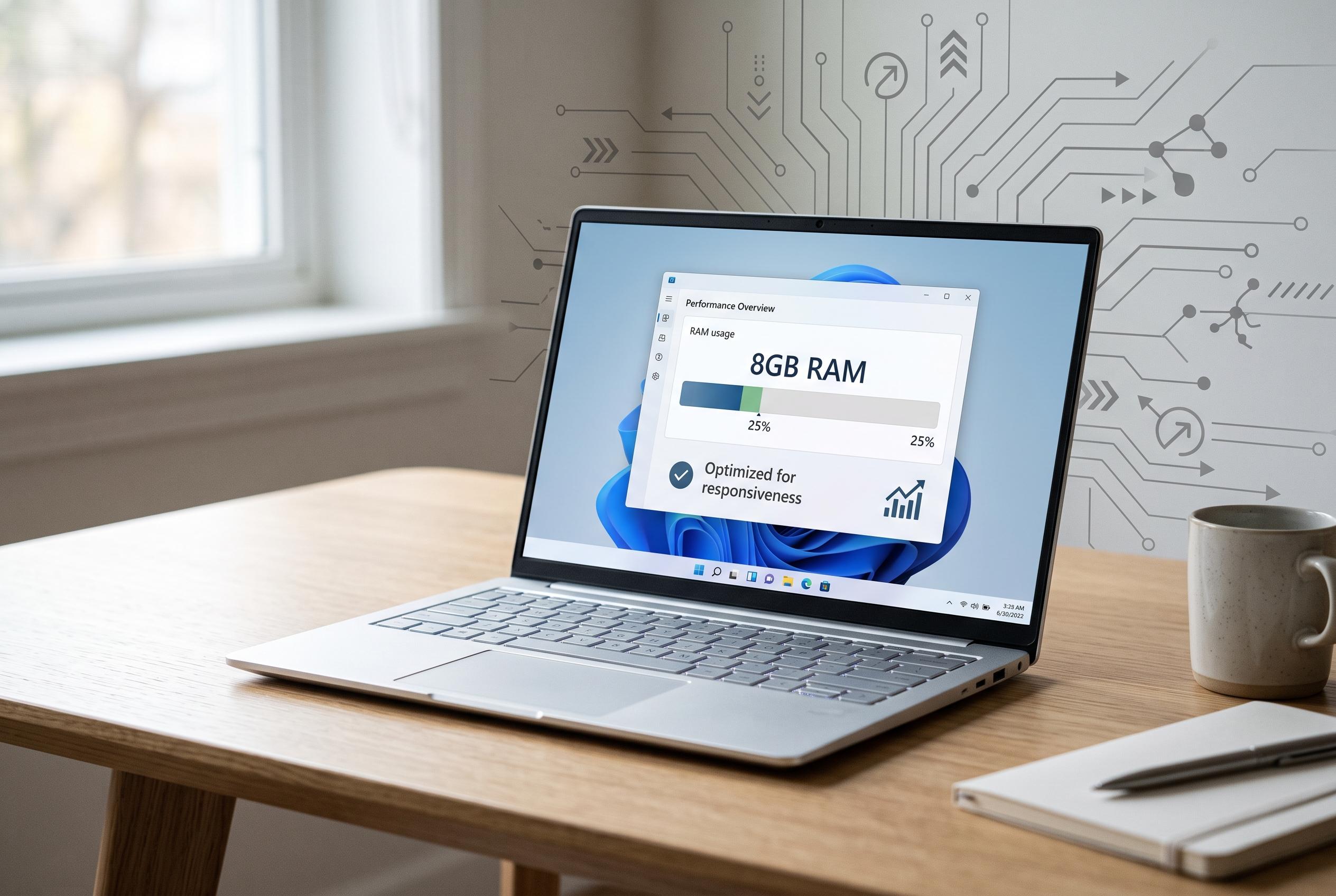

Microsoft is reducing Windows 11’s memory footprint to ensure responsive performance on laptops with 8GB of RAM, influenced by industry trends and Apple’s MacBook Neo launch, signalling an industry shift towards leaner hardware requirements.
Microsoft is sharpening Windows 11 for a market in which 8GB of memory is becoming the new baseline. According to Windows Central, the company’s vice-president for design and research, Marcus Ash, said Microsoft is working across the software stack to cut the operating system’s memory footprint, from the interface to kernel-level processes and drivers. The aim is to make the system feel responsive on lower-cost laptops without forcing buyers into higher-spec configurations.
That effort reflects a wider shift in the PC market. Hwupgrade reported that the arrival of Apple’s MacBook Neo, despite its 8GB base configuration, has become a warning sign for Microsoft and the wider Windows ecosystem. Industry analyst Jitesh Ubrani said the launch would put pressure on PC makers to respond with more efficient processors, leaner software and aggressive pricing. At the same time, higher memory costs are pushing manufacturers towards smaller RAM allocations, even as buyers continue to expect smooth performance.
Microsoft appears to be adjusting its own messaging as well. TechRadar and Tom’s Hardware reported that the company has quietly withdrawn older guidance that treated 32GB as the preferred setup for gaming and performance PCs, while also scaling back recommendations that framed 16GB as the practical minimum for a smooth Windows 11 experience. Those changes coincide with Microsoft’s decision to ship some Surface models with 8GB as the base option, suggesting that the company is aligning product design with market reality rather than continuing to assume memory will remain cheap and abundant.
The broader picture is more nuanced than a simple downgrade in expectations. A Windows Central test found that Windows 11 can still handle everyday work well on 8GB machines, including browser-heavy use, photo editing and productivity apps, though more demanding workloads can still expose limits. Microsoft is expected to begin rolling out the optimisation work before the end of the year, but the timing may prove important: if memory prices keep rising, the company may gain room to improve Windows 11 before low-cost laptops are forced to absorb even tighter hardware constraints.
Disclaimer: This content is intended for informational purposes only. Readers are advised to exercise their own judgement, conduct due diligence, or consult a qualified expert before acting on any information provided.