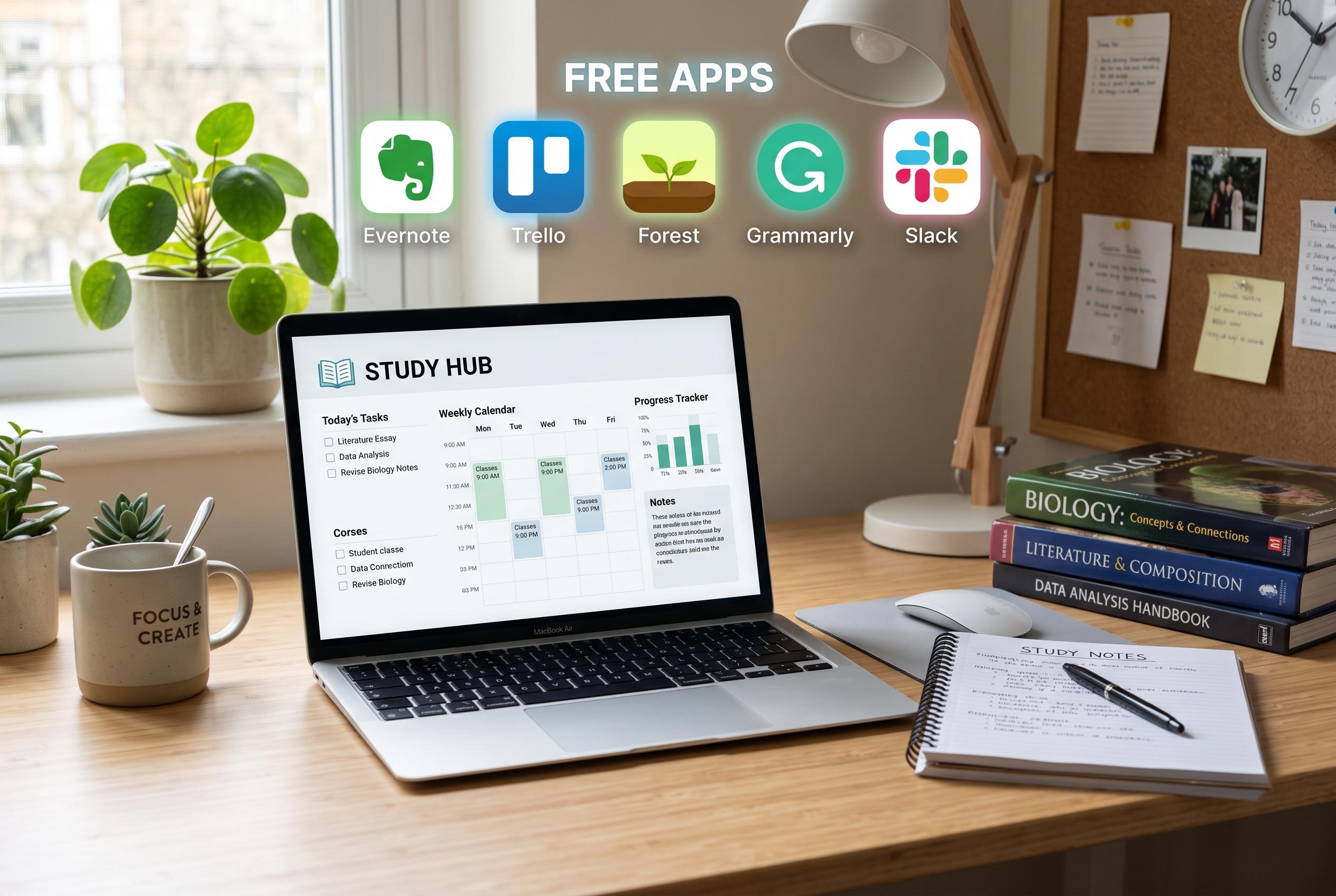

A growing suite of free apps is revolutionising student workflows in 2023, enhancing organisation, research, and revision amid mounting digital demands.
For students trying to keep pace with online submissions, digital research and constant deadlines, the right free apps can make daily academic life far easier. The aim is not to replace hard work but to cut the friction around it: storing files safely, taking better notes, planning revision and producing cleaner assignments.
Google Drive remains one of the most practical starting points. According to Google, it lets users store files online, share them, edit documents and access work from different devices, with offline access also available. For students, that means lecture notes, essays and project files are less likely to disappear if a phone or laptop fails.
Microsoft OneNote is another strong option for organising course material. Microsoft says the app supports typed notes, handwriting, voice recordings and multimedia content, and it works across multiple devices. That makes it useful for students who want one place for class notes, revision plans and shared group work. Microsoft also provides guidance on copying work out of school accounts, a reminder that students should keep personal backups of their academic material.
For writing and presentation work, Grammarly and Canva can save time. Grammarly’s free version helps with spelling, grammar and clarity, while Canva offers templates for slides, posters and other visual materials. Both are aimed at students who need to communicate clearly, whether that is in an essay, a seminar presentation or a simple class handout.
Planning tools matter as much as writing tools. Google Calendar can be used to track lectures, exams and assignment dates, while Notion combines notes, task lists and project tracking in one workspace. Together, they can help students build a routine that is less reactive and more organised, especially when several deadlines fall in the same week.
For revision and problem-solving, Quizlet and Wolfram Alpha are especially useful. Quizlet is built around flashcards and practice quizzes, which makes it handy for memorising definitions and testing recall. Wolfram Alpha goes further by showing step-by-step workings for subjects such as algebra, calculus, statistics, chemistry and physics. That makes it more than a calculator; it is a learning aid.
Google Lens and ChatGPT round out the list. Google Lens can scan text, translate languages and identify objects through a phone camera, which can speed up research. ChatGPT can help students explain difficult concepts, outline ideas, summarise reading and draft study plans, although its answers should be checked against textbooks and reliable academic sources. Used well, these free tools can make study more efficient without adding to students’ costs.
Disclaimer: This content is intended for informational purposes only. Readers are advised to exercise their own judgement, conduct due diligence, or consult a qualified expert before acting on any information provided.