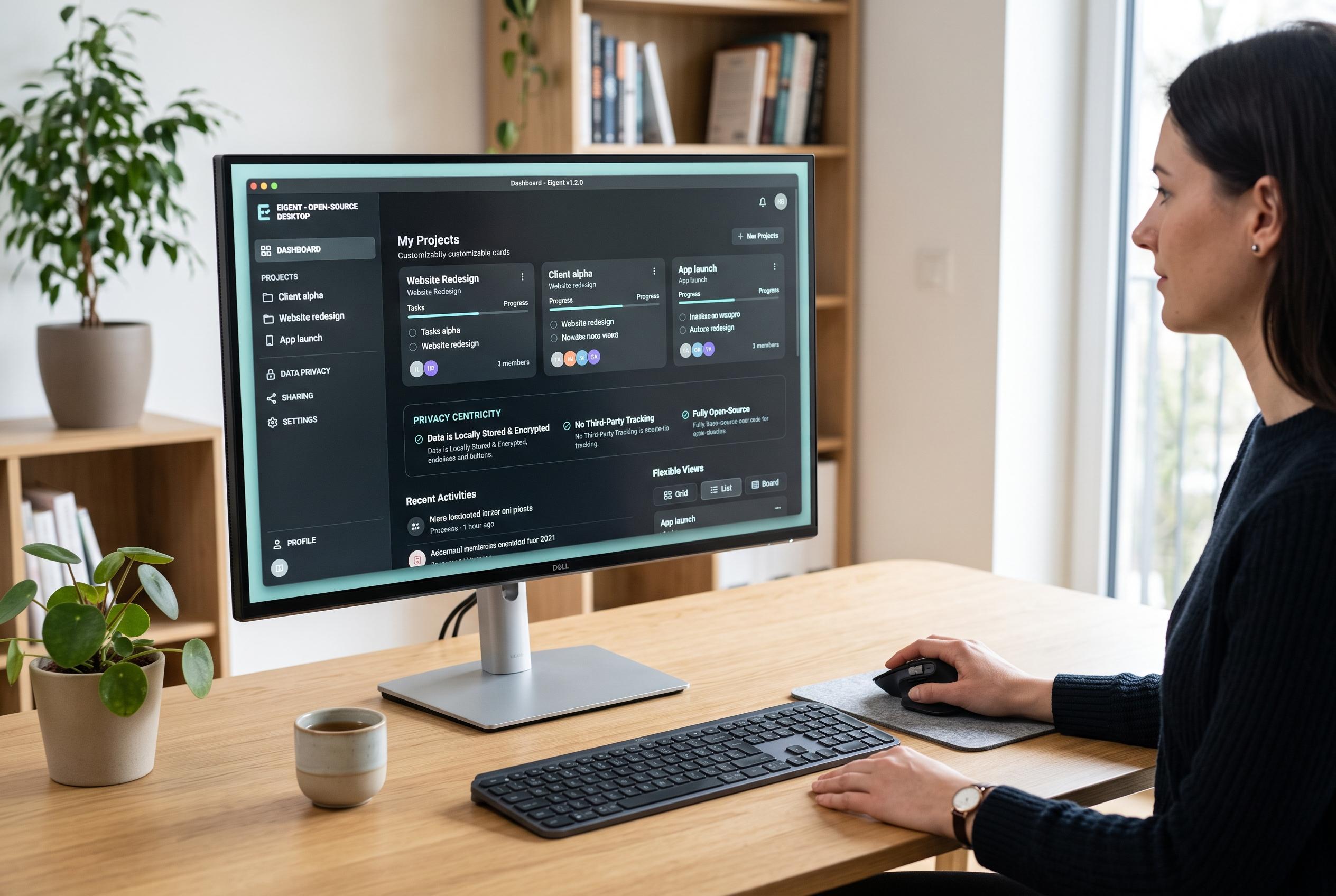

Eigent, an open-source desktop application, is gaining attention as a local, model-agnostic AI assistant that offers enhanced privacy, customisation, and enterprise-ready features, challenging the subscription-heavy players in the AI coworking space.
Open-source coworking software is starting to look like a serious answer to the subscription-heavy tools that now dominate the category. Eigent, an open-source desktop application, positions itself as a local alternative to Claude Code and Codex, while also avoiding the tighter platform lock-in that comes with Anthropic, OpenAI and Google’s own ecosystems. Its pitch is straightforward: users can run it on their own hardware, choose between local and cloud models and keep more control over where data lives. According to Eigent’s own getting-started and download pages, the app is available on macOS, Windows and Linux and can be used with personal API keys or local models.
The app is built on the CAMEL-AI multi-agent framework and uses an Electron front end with a Python backend, according to the project’s GitHub repository. That structure matters because it gives Eigent a more general-purpose design than a single-provider assistant. The company says the software is model-agnostic and supports a wide range of providers, including local runtimes such as Ollama, LM Studio, vLLM, SGLang and LLaMA.cpp, as well as hosted models from Anthropic, OpenAI, Google, DeepSeek, Qwen, Grok and others.
What sets Eigent apart is the way it packages its agent tools. The project says it includes specialist agents for development, search, documents, multimodal work and social media, each with its own toolkit. The GitHub listing also describes built-in browser and terminal tools, plus support for enterprise features such as single sign-on and access control. In practice, that makes it closer to a workflow platform than a simple chat interface.
Eigent also leans heavily on the Model Context Protocol, or MCP, the standard now used by several AI assistants to connect to external services. The company says it ships with more than 200 built-in MCP tools, including integrations for Notion, Google Calendar, Slack and GitHub. It also supports custom tools, which gives users a way to adapt the system to internal processes instead of waiting for a vendor to add a connector.
The skill system is another notable part of the offering. Eigent describes Skills as folders containing a SKILL.md file that defines when a workflow should run and what it should do, closely resembling the structure used by Claude Skills. That makes it possible to automate repeatable jobs without building everything from scratch. The app’s own documentation says it can be used with personal API keys or local models, while the open-source licence and self-hosting support are meant to give users more transparency and control.
Security and privacy are central to the product’s pitch. Eigent says local deployment keeps data on the user’s machine, and its browser tool uses an isolated Chromium session rather than a user’s existing browser profile. The project says each task starts in a fresh disposable browser, which avoids carrying over cookies, logins or browsing history. For users concerned about account access and cross-session tracking, that is a meaningful design choice, even if the company also offers paid plans and enterprise deployment options.
Disclaimer: This content is intended for informational purposes only. Readers are advised to exercise their own judgement, conduct due diligence, or consult a qualified expert before acting on any information provided.