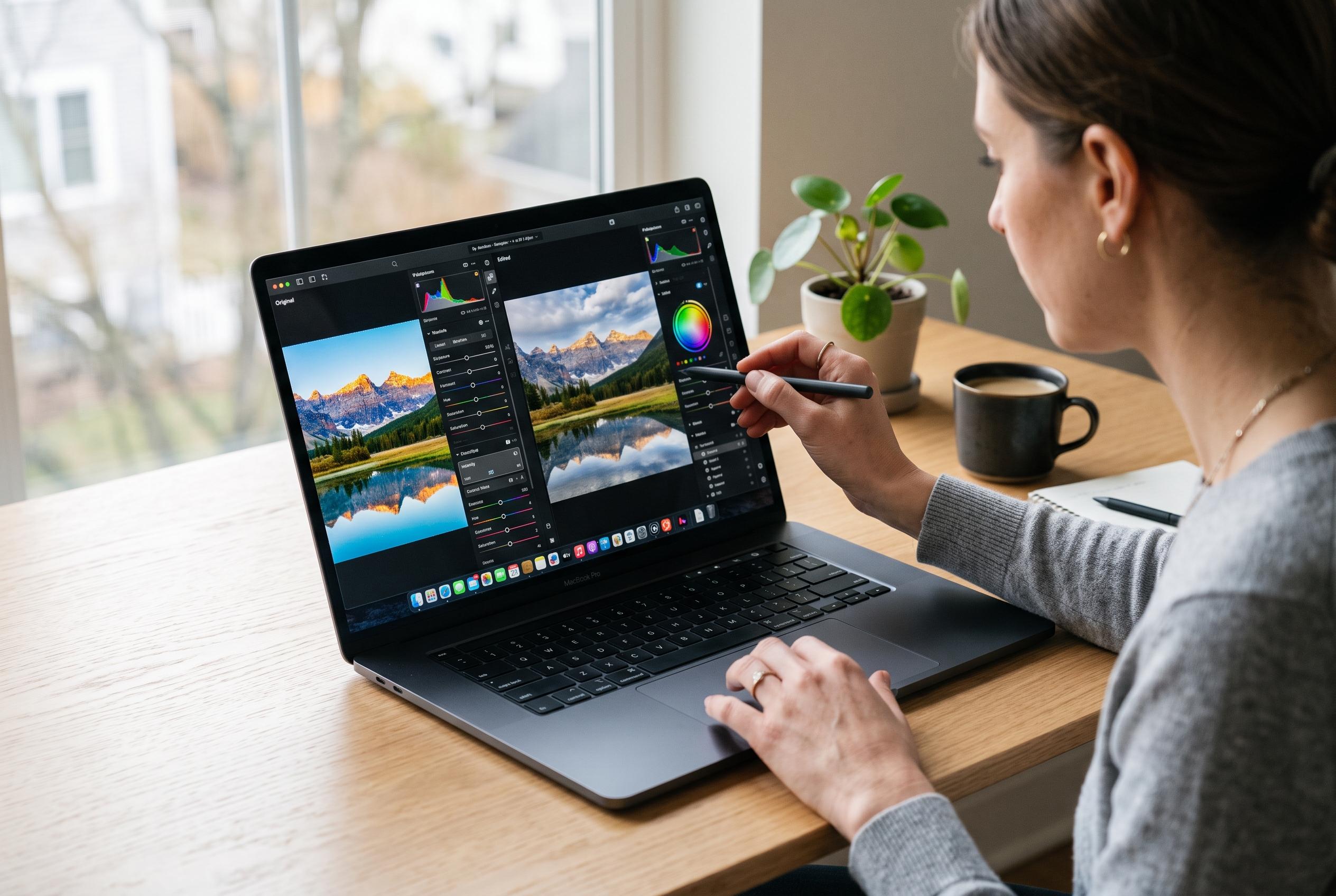

OpenAI has launched Images 2.5, enhancing ChatGPT’s image editing capabilities with improved preservation, natural lighting, and new user-directed editing features, while emphasising safety and provenance markers.
OpenAI has updated ChatGPT’s image tools with a version designed to make editing less destructive. According to the company, Images 2.5 is meant to preserve more of an original picture when users change a scene, a style or the placement of objects, while also improving detail and speed. OpenAI says the model follows revision instructions more reliably across multiple turns and can render more natural lighting and richer textures. (openai.com)
The practical change is in how users direct edits. OpenAI has added comment-based editing, allowing people to pin instructions to a particular part of an image rather than restarting with a fresh prompt each time. It has also introduced Sketch, which lets users draw directly in ChatGPT as a visual reference, and Templates, which provide starting points for common formats such as posters and merchandise. OpenAI says the tools are available across desktop, mobile and the web for ChatGPT, ChatGPT Work and Codex users. (openai.com)
The company is also splitting the API offer into two models aimed at different workflows. GPT-Image-2.5 Flare is positioned for faster generation, while GPT-Image-2.5 Sunburst is intended for more exacting edit work. OpenAI says both accept text and images, and the more precise variant is designed for cases where fine control matters more than speed. It also says the API and ChatGPT variants share the same broad pricing structure, with image costs depending on token use. (openai.com)
OpenAI has paired the launch with a stronger emphasis on provenance and safety. Its safety assessment says greater realism can make fabricated people and events more convincing, which raises the stakes for misuse. The company says it uses checks on prompts, input images and outputs, and that generated images carry provenance signals through C2PA metadata and SynthID watermarking. Those markers can help show how an image was made, although they do not prove that the scene itself is real. (openai.com)
Disclaimer: This content is intended for informational purposes only. Readers are advised to exercise their own judgement, conduct due diligence, or consult a qualified expert before acting on any information provided.