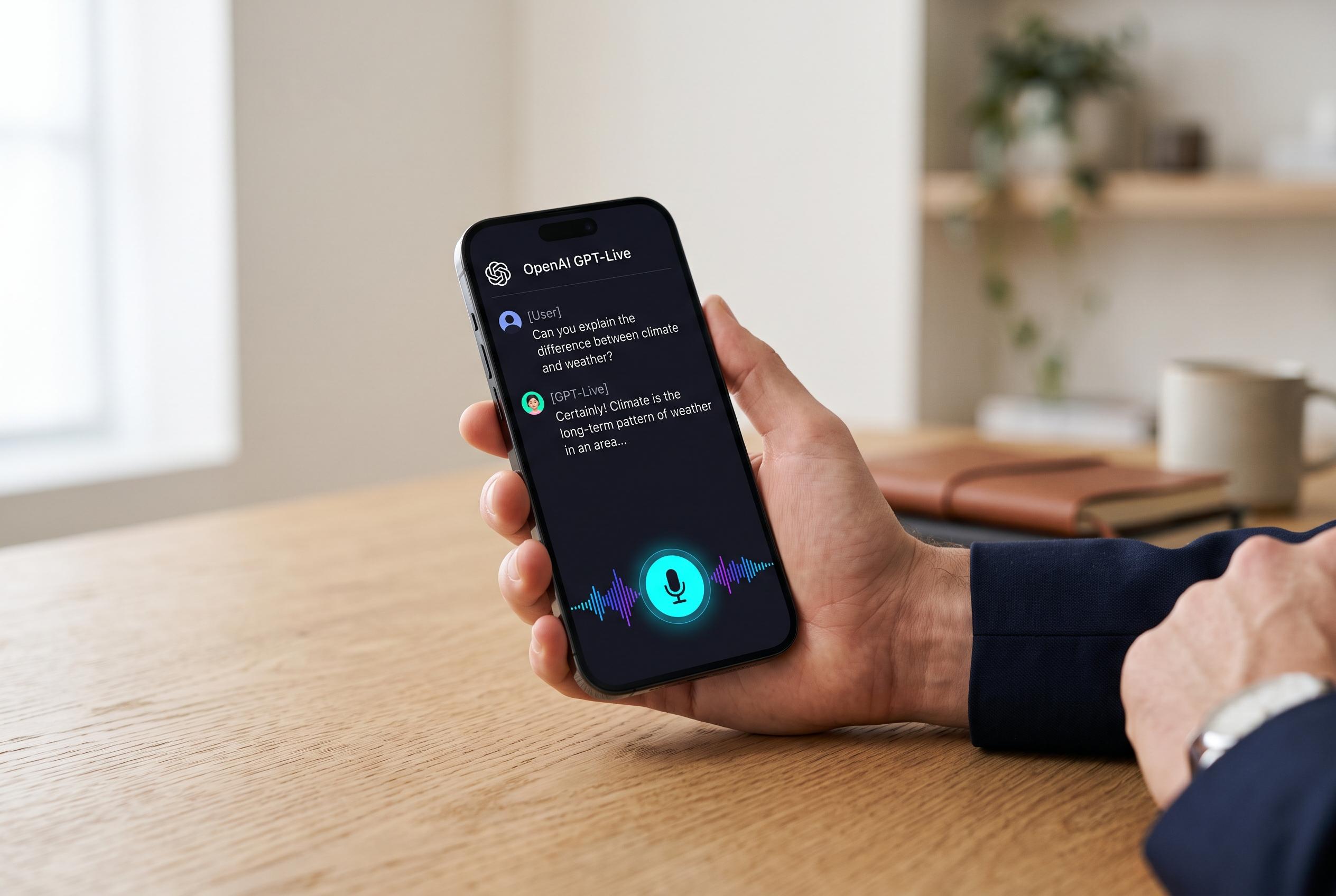

OpenAI has launched GPT-Live, a new voice feature that enables more natural, uninterrupted, and conversational AI exchanges by listening and responding simultaneously, marking a significant leap from previous voice modes.
ChatGPT’s voice feature has moved well beyond simple speech-to-text. OpenAI’s latest version, GPT-Live, is designed to make spoken exchanges feel closer to a real conversation by listening and responding at the same time. The company says the system can now handle interruptions, pauses and changes of pace more naturally, while also producing brief verbal acknowledgements such as “mhmm” or “got it” as the user speaks.
That marks a clear break from the original Voice Mode introduced in 2023, which depended on three separate steps: converting speech into text, generating a reply and then converting that reply back into audio. According to OpenAI’s help material, the new Live mode combines those functions into a more fluid voice experience and can also draw on web search, memory and visual responses when those features are enabled on an account.
The practical effect is a system that is less likely to cut users off mid-sentence and better able to handle natural turn-taking. OpenAI says users can interrupt, ask the assistant to slow down or continue speaking while following the answer in text. For more demanding prompts, GPT-Live can pass work to stronger models in the background, which helps it deal with reasoning-heavy or research-based questions without forcing the voice session to feel slow or broken.
Reports from tech sites say the rollout began in July 2026, with GPT-Live-1 becoming the default for paid users and GPT-Live-1 mini for free users across iOS, Android and ChatGPT.com. OpenAI has also said it plans to bring the models into its API for developers, which would extend the voice technology beyond the consumer app and into third-party products.
Disclaimer: This content is intended for informational purposes only. Readers are advised to exercise their own judgement, conduct due diligence, or consult a qualified expert before acting on any information provided.