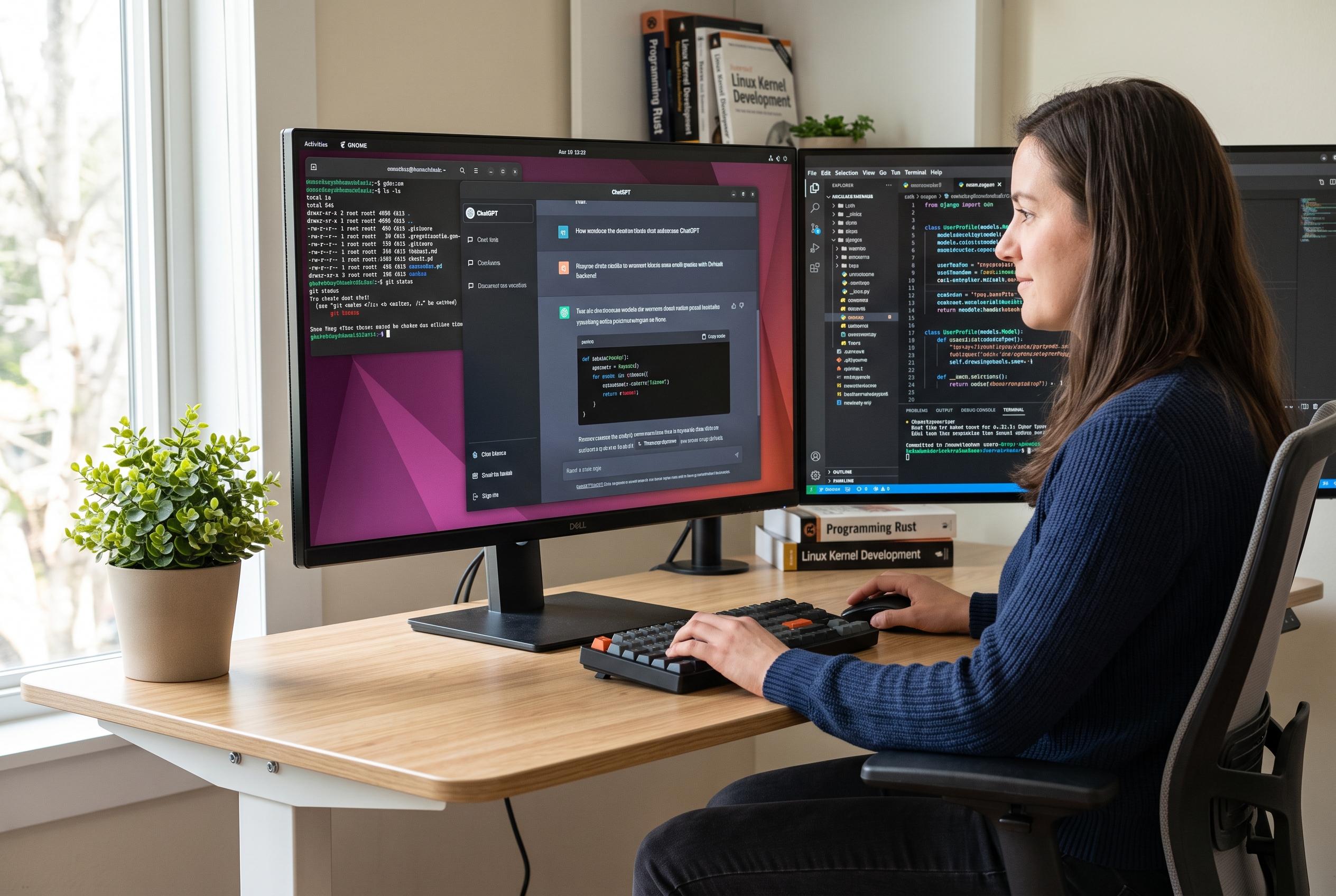

OpenAI releases a Linux preview of its ChatGPT desktop app, targeting developers with new workspace features, but faces limitations in compatibility and open-source appeal, signalling a strategic push into desktop and developer markets.
OpenAI has released a Linux preview of its ChatGPT desktop app, extending the company’s desktop presence to a platform long favoured by developers but often treated as an afterthought by AI vendors. According to OpenAI’s own help material, the broader desktop product now brings Chat, Work and Codex into one application, with Codex positioned as the coding-focused agent layer and the built-in browser available on macOS and Windows for handling sign-ins, downloads and page review inside the app. The Linux release is therefore less a simple ChatGPT wrapper than an attempt to make the desktop client a workspace for files, browser tasks and software projects. The company says Linux support was one of the most requested additions.
That ambition, however, comes with clear limits. The preview is distributed as DEB and RPM packages for Ubuntu 24.04 and 26.04, Debian 13, and Fedora 43 and 44 on x86-64 and Arm64 hardware. That leaves out several popular distributions, including Arch Linux and NixOS, and it also means the app is not yet as broadly portable as some users would like. OpenAI has not published a Linux parity chart against the macOS and Windows builds, and the company’s own documentation still indicates that some desktop features remain tied to other platforms.
For developers, the most significant element is Codex. OpenAI says the app is designed to let the agent work on local projects, inspect and change files, run commands and operate within a selected directory under permission controls chosen by the user. The app also supports review-oriented workflows such as inline diffs and pull-request checking, while connected services must be approved one by one. That makes the Linux preview strategically important because it gives OpenAI a native route onto the desktops of many software engineers who already use Linux for local development and infrastructure work.
The downside is that the first Linux build appears rough around the edges. ZDNET reported that the app is proprietary, built with Electron and closed source, which will deter many open-source users. The review also described heavy memory use, including behaviour that eventually pushed a machine with 16GB of RAM into swapping after a few hours. Electron itself is not unusual for cross-platform software, but it is often criticised for higher memory use than native applications, and that complaint fits the experience described in the review.
There are also practical compatibility concerns. ZDNET said early community reports point to Wayland input problems, especially with Fcitx5 on Fedora 44 KDE Plasma, and noted that OpenAI now describes native Wayland support as experimental. The app currently falls back to XWayland when available unless launched with native Wayland flags from a terminal. ZDNET also found that Linux shell jobs did not always appear properly inside the app’s project list, which weakens the promise of a single workspace that can tie together terminal work, repositories and agent sessions.
Security and privacy remain part of the trade-off. OpenAI’s help material says the built-in browser uses its own browser state and asks before using a new website unless access has already been granted. The company also warns that conversations may be used to improve models by default on consumer accounts unless users turn that off in settings. In ZDNET’s view, the right way to approach the app is with tight scope: a narrow project folder, cautious permission settings and separate accounts or browser profiles for sensitive work. For now, that caution may be as important as the app itself.
Disclaimer: This content is intended for informational purposes only. Readers are advised to exercise their own judgement, conduct due diligence, or consult a qualified expert before acting on any information provided.