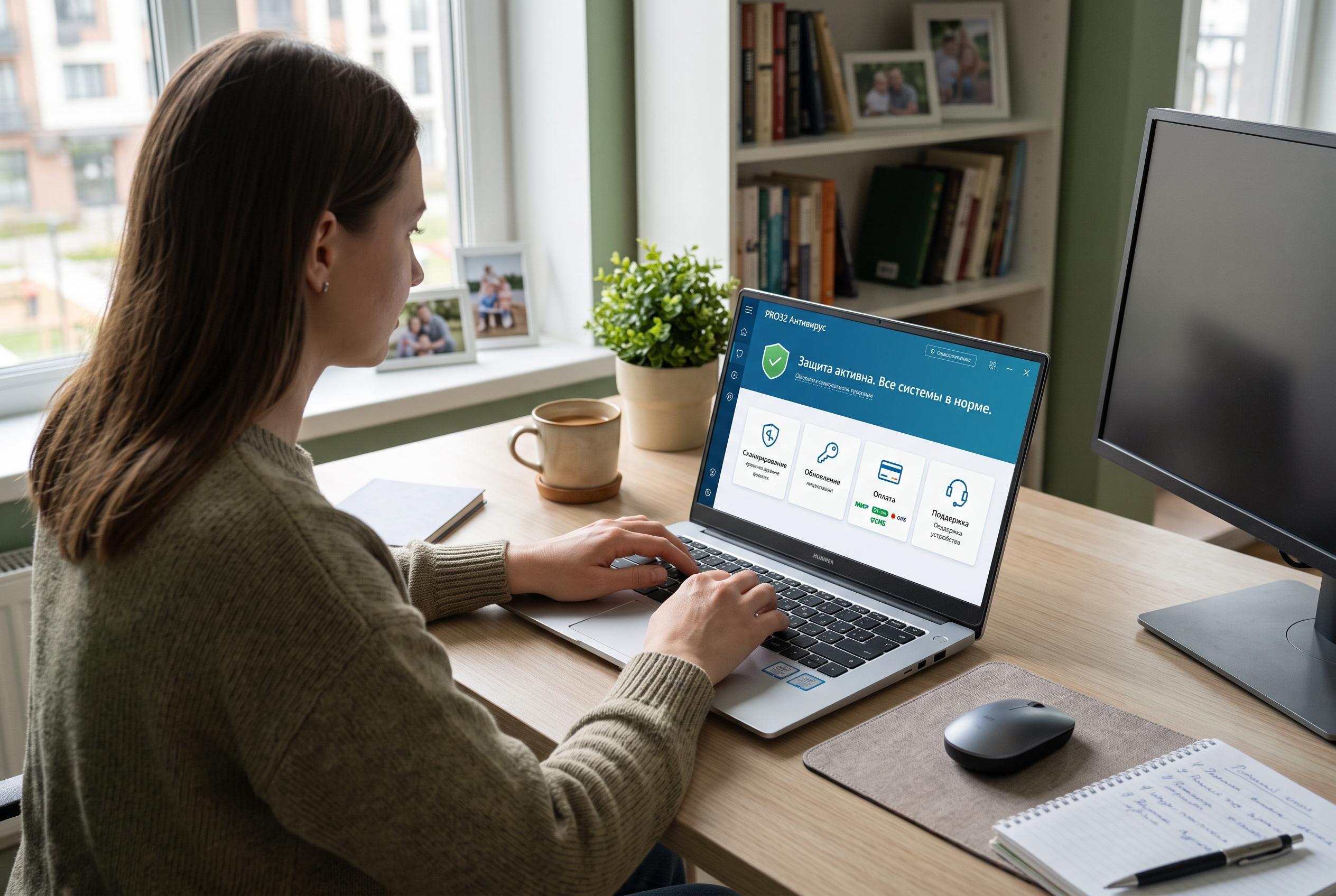

As foreign antivirus vendors retreat from the Russian market, local and cost-effective solutions like PRO32, Kaspersky, Dr.Web, NANO Antivirus, and Avast Free are reshaping consumer choices with new features, local payment options, and broader device support.
Russia’s antivirus market has shifted sharply over the past few years. Several well-known foreign vendors have either left the market or become difficult to pay for from Russia, leaving users to choose between local suppliers and a handful of free tools that still download and update without major barriers. In that environment, the most practical products are increasingly the ones that combine broad device coverage, local payment options and enough protection features to justify a subscription.
PRO32 has emerged as one of the clearest examples of that shift. According to the company, its Ultimate Security package was built with Indian developer K7 Computing and is designed to cover Windows and Android under a single licence for three or five devices. The product includes real-time scanning, heuristic detection, cloud checks for suspicious files, phishing protection for online payments, webcam control, Wi-Fi monitoring, local backups and parental controls. It also stands out for supporting older systems such as Windows XP SP3 and Android 5.0, while offering a 30-day trial and annual pricing that remains low by international standards.
Kaspersky remains the most established name in the group. Reviews from Tom’s Guide and other security sites describe it as a strong performer in malware detection with limited system impact, while the company’s broader consumer suites add tools such as password management, parental controls, anti-phishing and banking protection. It also remains the most cross-platform choice in the field, covering Windows, macOS, Android, iOS and Linux. The trade-off is price: the fuller feature set sits in higher tiers, and the cheapest entry-level plans are more modest in scope than the company’s premium bundles.
Dr.Web continues to appeal to users who want a purely Russian product with a formal domestic compliance profile. The company’s software is included in Russia’s register of domestic software and has certifications from technical and security agencies, which helps explain its popularity in government and institutional settings. Its long-standing strength is remediation as much as prevention: Dr.Web can be installed on already infected systems, and its free CureIt utility is often used for one-off clean-ups. The consumer suite covers Windows, macOS, Linux and Android, but it offers fewer extras than the biggest international brands.
NANO Antivirus is the budget outlier. NANO Security presents it as a free Windows product with continuous real-time protection, cloud functions and heuristic analysis, alongside frequent database updates. The paid Pro tier adds more control, offline updates and a gaming mode, but the defining feature is the pricing model, which lets users spread licence days across multiple computers. For households that only need basic Windows protection, it is a credible low-cost option, though the product lacks mobile support and the wider ecosystem built around more established brands.
Avast Free occupies a different niche. It is still downloadable from Russia, updates normally and, according to recent AV-Test results cited in the source material, performs well on Android. Its free edition is unusually generous, with real-time protection, Wi-Fi checks, anti-phishing and ransomware defence included without payment. The weakness is commercial rather than technical: premium upgrades are difficult to buy from Russia, the software repeatedly pushes paid tiers and the company’s reputation still carries the shadow of its 2020 Jumpshot data-selling scandal.
For most Russian users, the choice now depends less on brand recognition than on practical fit. PRO32 looks strongest for mixed Windows-and-Android households that want a reasonably priced all-round package. Kaspersky remains the safest bet for those who want the broadest platform support and a long record in testing. Dr.Web suits users who value domestic certification and repair tools, while NANO and Avast Free cover basic protection for those who need a free or near-free solution.
Disclaimer: This content is intended for informational purposes only. Readers are advised to exercise their own judgement, conduct due diligence, or consult a qualified expert before acting on any information provided.