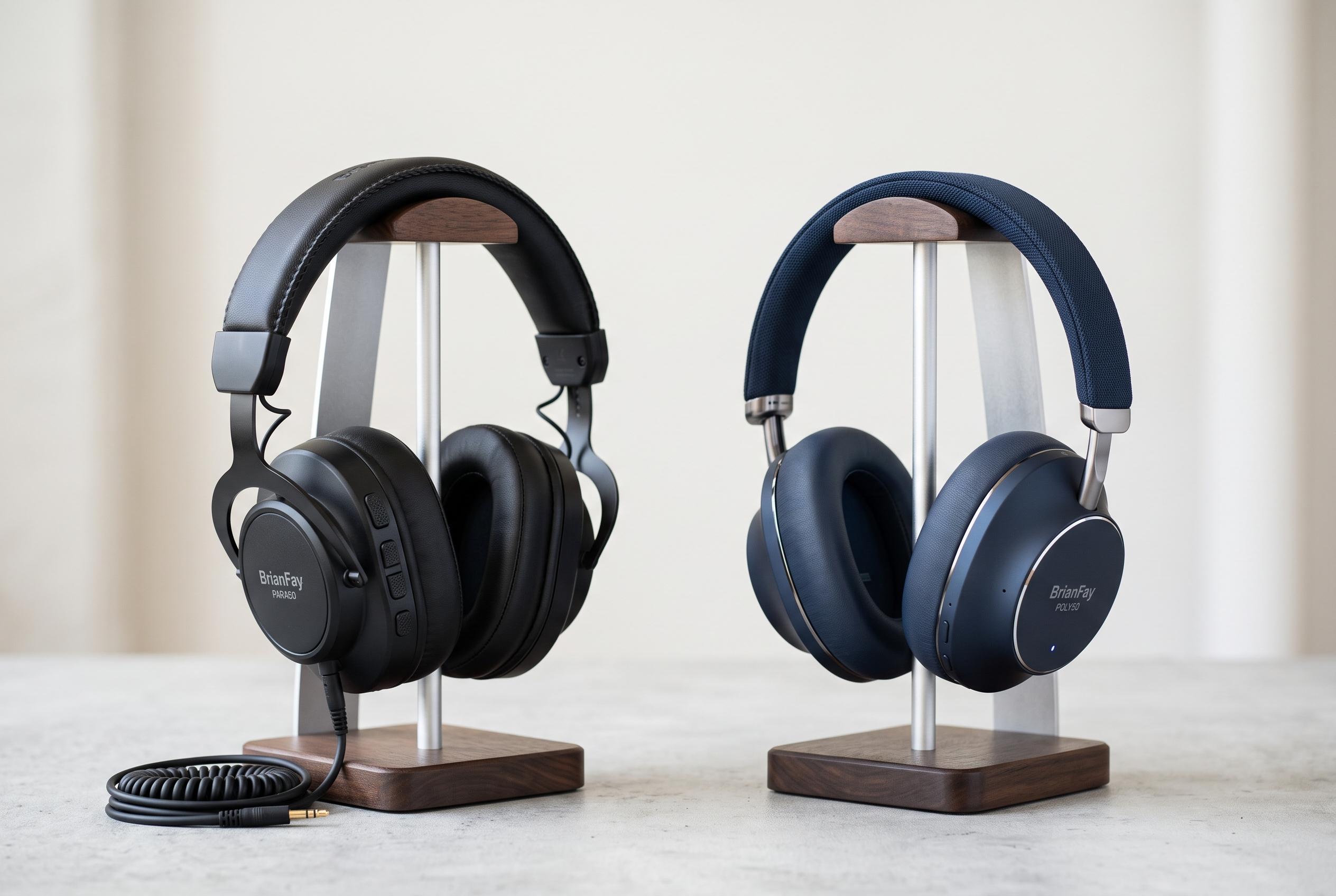

BrianFay introduces the Para50 and Poly50, two wireless headphone models designed for everyday listeners and musicians, highlighting the industry shift towards specialised audio solutions with significant performance differences.
BrianFay’s two wireless headphones are aimed at very different buyers, and that is the point. The Para50 is positioned as an everyday Bluetooth headset, while the Poly50 is built for musicians who need wireless monitoring with extremely low delay. That split matters because the two models are not trying to solve the same problem, even if they sit in a similar product family.
The Para50 is the more conventional option. According to the reviews, it delivers strong total harmonic distortion performance, meaning it keeps unwanted noise and signal distortion unusually low for its price class. Battery life is also described as relatively long. At roughly $100, it enters a crowded market that includes established mid-range headphones from Anker Soundcore, Sony and JBL. It may not match those brands for comfort or brand recognition, but its sound quality is said to be competitive and its distortion figures better than most rivals in the segment.
The Poly50 serves a much narrower purpose. It is designed for keyboardists, synthesiser players and other musicians who need wireless instrument monitoring with latency below 5.6 milliseconds. In practical terms, that low delay is meant to make wireless use feel close to a cable connection, which is important on stage or in rehearsal. The trade-offs are familiar: transmitter battery life and real-time controls are described as imperfect, and the build quality is not a selling point. Even so, the wireless performance is presented as good enough to replace a cable in many live setups.
Taken together, the two models show a clear product strategy. The Para50 is the safer consumer buy for listeners who want a reliable Bluetooth headset at around $100. The Poly50 is the more specialised choice, and its roughly $160 price tag makes sense only if low-latency instrument monitoring is the priority. For buyers comparing them with better-known names, the question is not which one is more polished, but which problem they are actually trying to solve.
Disclaimer: This content is intended for informational purposes only. Readers are advised to exercise their own judgement, conduct due diligence, or consult a qualified expert before acting on any information provided.