
GL.iNet’s palm-sized Comet Q device promises direct control of phones, tablets, and laptops without software installation, gaining rapid support on Kickstarter and attention for its sleek design and advanced features.
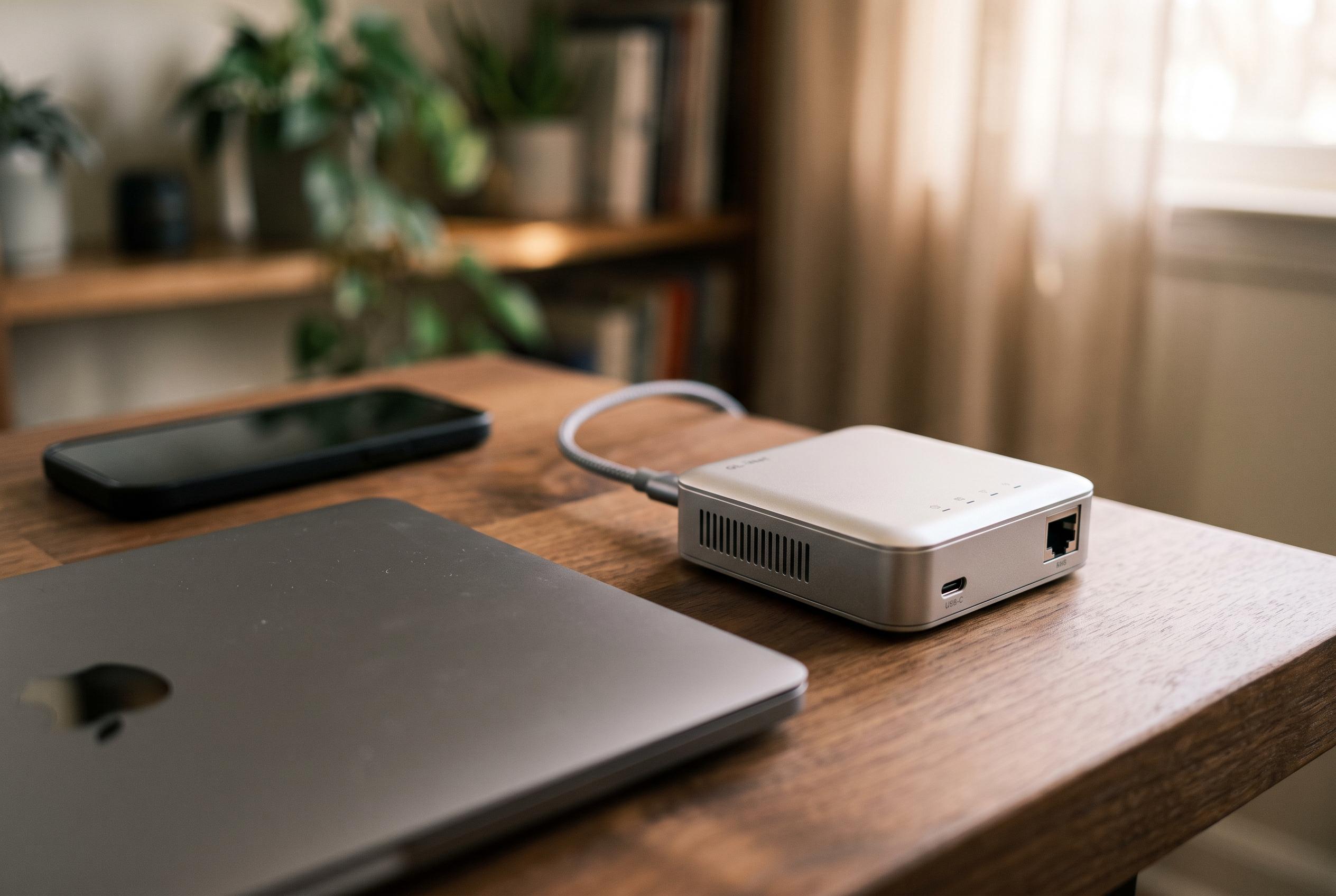
GL.iNet’s Comet Q, model GL-RMQ1, is a palm-sized remote KVM device aimed at users who want direct control of a phone, tablet, Mac mini or laptop without installing software on the target machine. The unit connects over a single captive USB-C cable, while a 1.8-inch touchscreen handles setup and management on the device itself. GL.iNet says the product supports DisplayPort Alternate Mode, two-way audio and remote access through its cloud relay, Tailscale or ZeroTier.
The hardware is compact and light at 78.5g, with a round body and an orange silicone cover that protects the edges and leaves room for ventilation. Inside are a dual-core ARM Cortex-A53 processor, 512MB of LPDDR4 memory and 512MB of NAND storage. GL.iNet lists Wi-Fi 6, a maximum video input of 2K QHD at 60fps, and a second USB-C port for external power if the attached device also needs charging.
In practice, the Comet Q depends on the host device supporting video over USB-C, which means DisplayPort Alternate Mode is the key compatibility check. That matters because many USB-C ports are data-only or power-only. GL.iNet says support includes iPhones from the iPhone 15 family onwards, together with iPads, Android handsets and laptops with the right video-capable USB-C port. Its documentation also says remote access can be used without installing software on the target device.
The product drew strong interest on Kickstarter, where GL.iNet says it reached its US$10,000 goal within two minutes and ultimately closed with 6,741 backers pledging US$1,155,193. The company’s store now lists the Comet Q at US$139.99, although it is sold out. A user who backed the campaign reported receiving the device after the August shipping window and found local use responsive, while remote access over the internet was slower, as expected.
Disclaimer: This content is intended for informational purposes only. Readers are advised to exercise their own judgement, conduct due diligence, or consult a qualified expert before acting on any information provided.