
IKEA enhances its smart lighting range by adopting Matter, enabling better interoperability with other brands and simplifying control for users with mixed-brand homes.
IKEA’s smart lighting range has become more credible in recent years, not least because the company has paired attractive design with broader interoperability. Its app is straightforward, and its newer kit increasingly fits into mixed-brand homes rather than forcing buyers into a closed ecosystem. TechRadar noted that this matters for anyone who already uses Philips Hue or wants a single control layer for several brands, and IKEA’s own documentation now places Matter at the centre of that strategy.
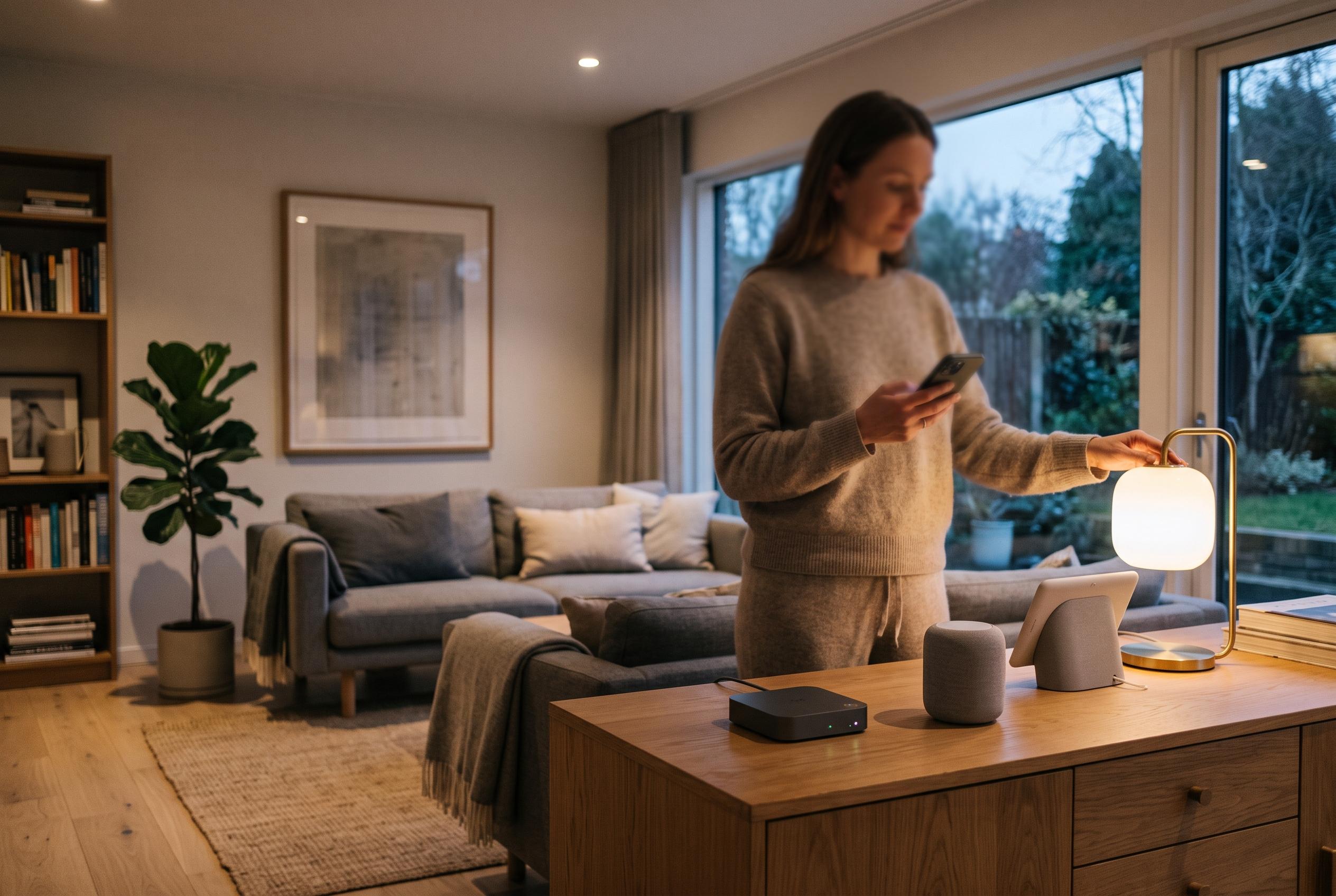
The cleanest route is Matter, the cross-industry standard designed to reduce compatibility problems between smart-home products. IKEA says its Matter-compatible system is intended to let devices from different manufacturers work together more reliably, with the company’s DIRIGERA hub acting as a Matter bridge for Zigbee-connected products. In practical terms, that means compatible IKEA lights can be brought into a wider setup and controlled through apps and voice assistants that support Matter, alongside products from other major brands.
For households already built around Philips Hue, direct pairing through a Hue Bridge remains a useful alternative. IKEA’s smart lights can talk to Hue because both use Zigbee Light Link, and IKEA’s support guidance says users should first confirm the light is on software version 1.2.x or later, keep it near the bridge, search for new devices in the Hue app, and then reset it by toggling the main switch six times. That allows basic control, scheduling, grouping and sensor-triggered actions, although IKEA warns that some advanced Hue features will not be available.
There is also a more experimental route for people willing to modify hardware. TechRadar pointed to the Varmblixt lamp as a favourite among do-it-yourself lighting fans because its frosted enclosure can hide a Philips Hue strip, producing a more sculptural effect than a standard bulb swap. The appeal is obvious: it can deliver Hue-style lighting inside an IKEA shell. The risk is equally obvious, however, because a tightly coiled strip may run too hot and could damage the LEDs.
A safer option is to choose IKEA lamps that are designed for ordinary bulbs and fit them with Philips Hue lamps instead. IKEA’s own product advice and TechRadar’s examples both point to diffused fixtures such as the Fado table lamp, Vindkast and Simrishamn, which help spread light more evenly and can be grouped in the Hue app for scene control. Used this way, the combination keeps IKEA’s styling while giving users the broader functionality and app support of Hue, without the need for any modification at all.
Disclaimer: This content is intended for informational purposes only. Readers are advised to exercise their own judgement, conduct due diligence, or consult a qualified expert before acting on any information provided.