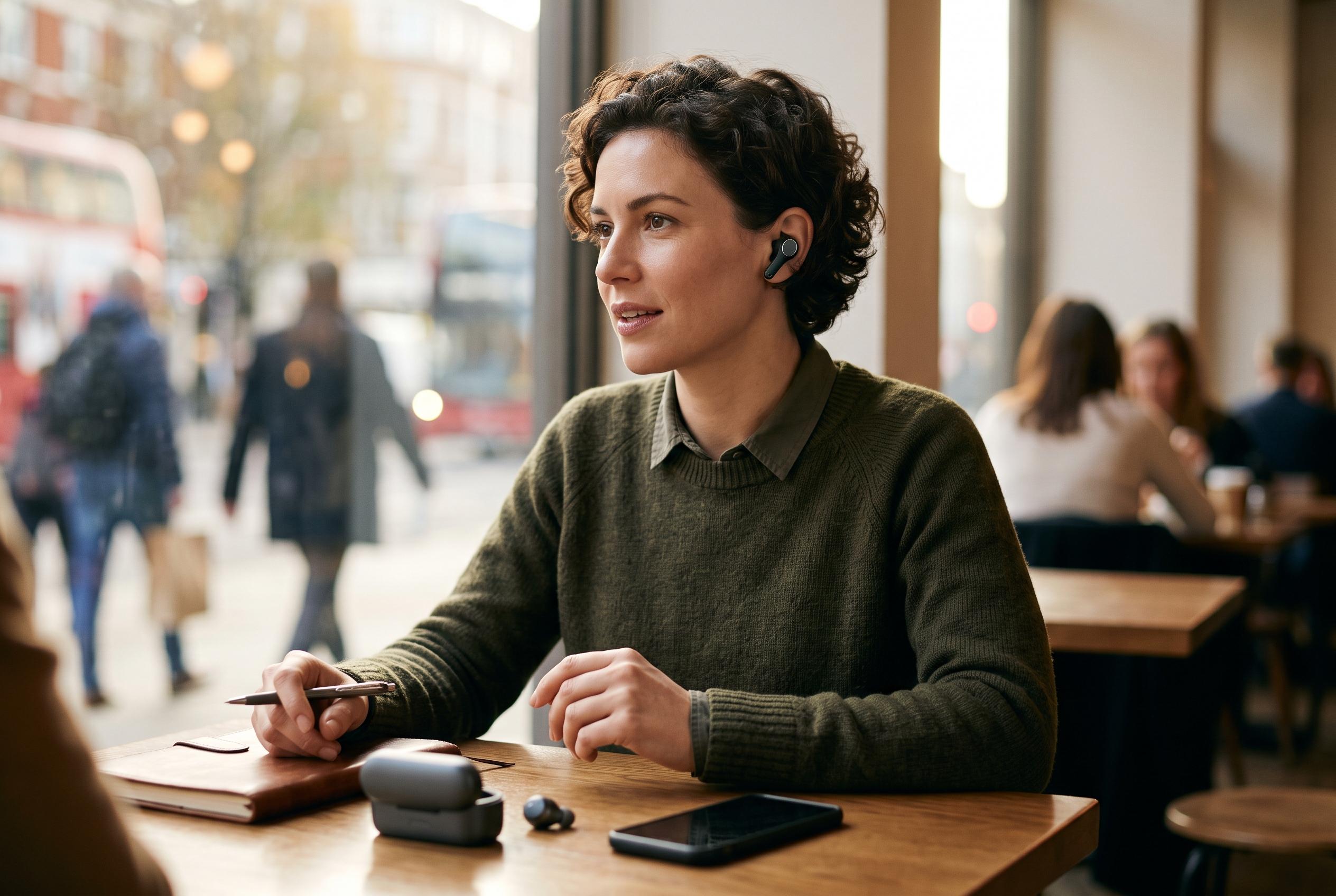

New mid-range earbuds from Huawei and Anker outperform premium competitors like Apple and Bose in call quality, thanks to advanced AI processing and bone-conduction sensors, offering a cost-effective solution for clear communication even in noisy environments.
Two mid-priced true wireless earbuds are emerging as stronger choices for phone calls than better-known rivals from Apple and Bose. In testing and owner reports cited by BGR, the Huawei FreeBuds Pro 5 and Anker Soundcore Liberty 5 Pro stand out not just for sound, but for how clearly they transmit speech in noisy places. That matters because call quality is often the weakest point in TWS products, even when battery life, noise cancellation and music playback are well judged.
The Anker model appears to have the edge on versatility. Rtings says the Liberty 5 Pro are designed as premium earbuds at a mid-range price, with a touch-screen case, LDAC support and extensive customisation through the companion app. SoundGuys reports that the set uses eight microphones and two bone-conduction sensors to isolate the wearer’s voice, while Anker also adds an AI-based processing chip. The result, according to user accounts quoted by BGR, is call clarity strong enough to hold up even in very loud surroundings.
Huawei’s FreeBuds Pro 5 take a more opaque approach to the technology inside, but the company is also using bone-conduction sensing and AI processing to sharpen voice pickup. TechRadar says the earbuds use a dual-driver acoustic design that helps keep the sound balanced, though Rtings notes that microphone performance is weaker than on the Anker set and that battery life is limited to around 5.5 hours. That makes the Huawei pair more of a flagship audio product than a call-focused one.
Both makers claim their systems can analyse ambient noise about 400,000 times a second and cut background sound by as much as 100dB. Anker says its system can recognise speech at 30dB in quieter settings, while Huawei highlights wind-noise suppression in conditions of up to 35km/h. At roughly $170 each, the two models sit well below the price of many premium Bose and Apple alternatives, which helps explain why they are being framed as value-led options for people who spend a lot of time on calls.
Disclaimer: This content is intended for informational purposes only. Readers are advised to exercise their own judgement, conduct due diligence, or consult a qualified expert before acting on any information provided.