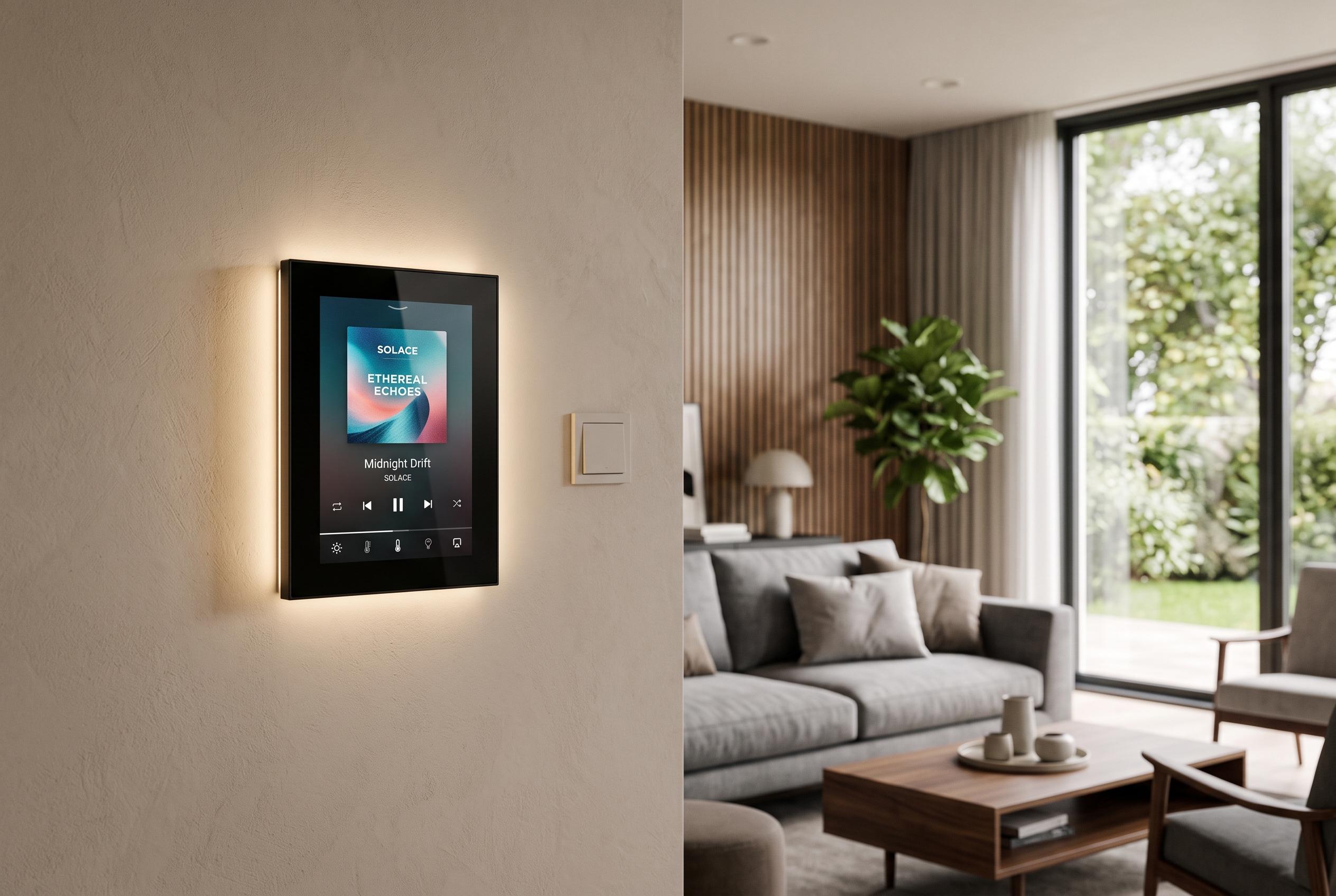

The latest firmware update to OpenAudio’s HOLO-WHAS range integrates live music information, such as track title, artist, and album, into KNX-compatible building controls, moving beyond basic commands and aligning audio control with lighting and security systems.
OpenAudio has broadened the KNX link in its HOLO-WHAS multi-zone audio line so compatible building controls can show live music information as well as basic commands. According to the company, the current firmware adds track title, artist, album, playback status and progress to KNX touch panels and visualisation software in Australia and New Zealand, where the range is sold through AVOZ.
The update moves the integration beyond the earlier KNX functions, which were limited to mute, volume, source selection and routing. In practical terms, that means a control interface can now show what is playing rather than only indicating that audio is active, a small but meaningful change for installers trying to make distributed audio feel closer to lighting, climate and security systems.
OpenAudio says the HOLO-WHAS platform combines streaming, amplification, matrix routing, digital signal processing and automation in one chassis. The range is built around a 16-channel architecture with eight independent zones and eight streaming sources, while the HOLO-WHAS Plus model delivers 16 x 100W of amplification, or 1,600W in total. Depending on the version, output is rated at up to 100W or 200W per channel.
The company positions the system as an alternative to assembling separate streamers, processors and amplifiers. It supports Qobuz Connect, AirPlay 2, Spotify Connect, DLNA and Bluetooth, and includes RCA, SPDIF, USB and HDMI ARC inputs. OpenAudio also supports one-to-many, many-to-one and many-to-many routing, and multiple units can be linked for larger projects.
AVOZ has been named exclusive distributor for OpenAudio in Australia and New Zealand, handling local distribution, dealer support and market development. The regional push reflects a wider shift in custom installation, where audio is increasingly treated as part of the wider automation stack rather than an isolated subsystem.
Disclaimer: This content is intended for informational purposes only. Readers are advised to exercise their own judgement, conduct due diligence, or consult a qualified expert before acting on any information provided.