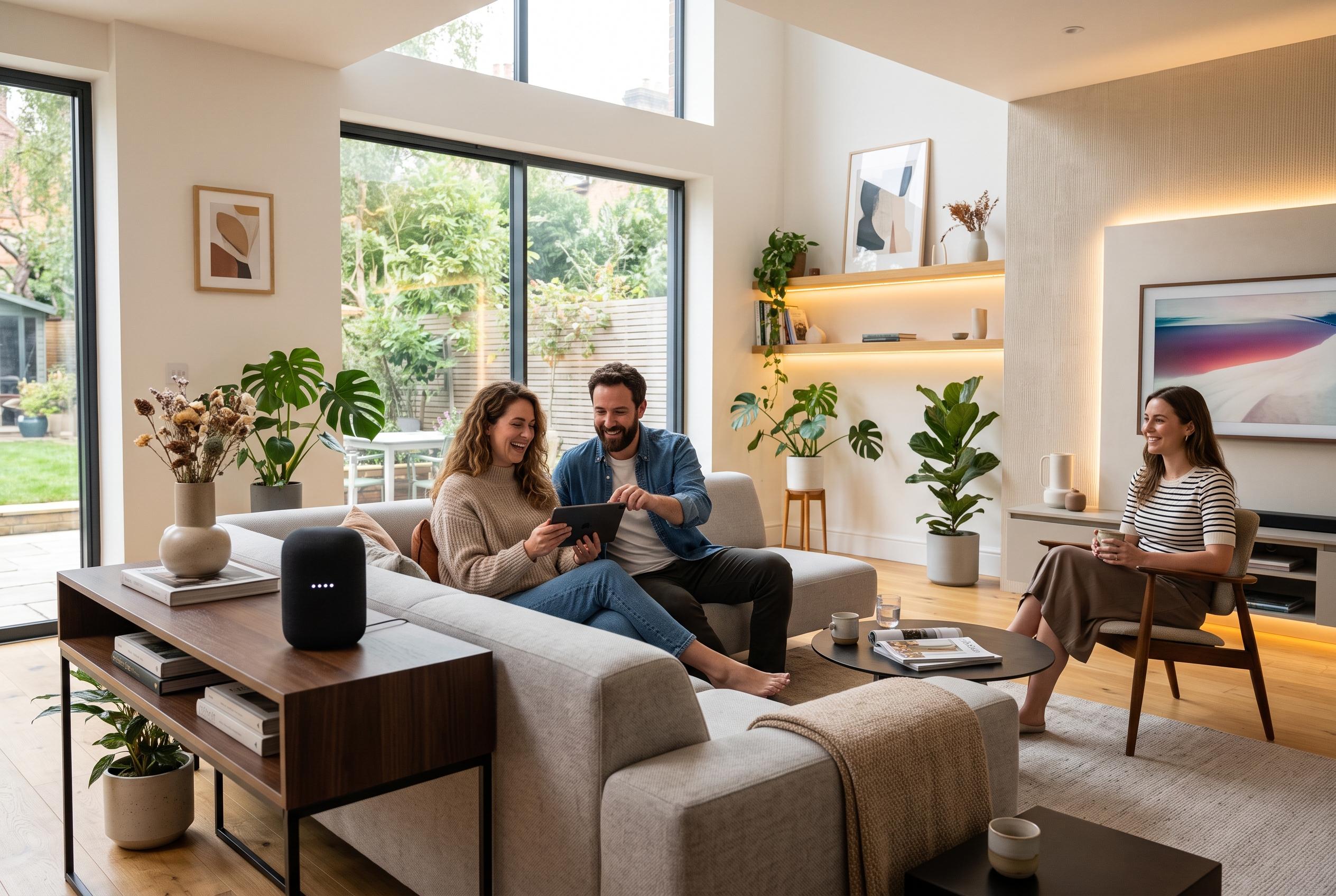

Smart home technology is evolving from a luxury feature to essential household infrastructure, driven by voice assistants and customised automation, but concerns over costs, compatibility and security remain prominent.
Smart home technology is moving from novelty to normal household infrastructure. It links lights, heating, cameras, locks and appliances through internet-connected devices that can be monitored and adjusted from a phone, tablet or voice interface. At its simplest, the system gathers information through sensors, then uses that data to trigger actions automatically or on command. TechTarget describes this as a networked home environment built around monitoring, automation and remote control, while Chase notes that the same basic model is now being used to manage everything from energy use to security.
Voice assistants sit at the centre of that shift. Systems such as Amazon Alexa, Google Assistant and Apple Siri act as spoken control layers for the smart home, translating ordinary language into device commands. According to Shipshape, they can run routines, switch devices on and off and provide hands-free access to information. That makes them useful not only for convenience but also for households that need simpler interfaces, including older people and users with limited mobility.
The appeal is practical. A well-designed smart home can reduce small daily tasks, adjust lighting and temperature automatically and improve awareness of what is happening inside the property. Industry explainers from Vivint and thehomesapiens.com both point to the same core advantages: convenience, remote access, energy efficiency and better home security. In theory, a thermostat that learns occupancy patterns or cameras that alert a homeowner to movement can make the house more efficient and responsive without constant manual input.
But the trade-offs are equally clear. Initial costs can be high, particularly if a household wants devices from different categories to work together. Integration can also be awkward because smart home products do not always share the same standards. TechTarget and Vivint both note that setup may require more technical knowledge than many buyers expect, especially when linking products across ecosystems. The original article also stresses that choosing compatible devices matters, because systems built around Zigbee, Z-Wave and Wi-Fi do not always behave the same way.
Security and privacy remain the most serious concerns. A home that is always connected can expose more data and create more entry points for attack if devices are poorly configured or left unpatched. Thehomesapiens.com and Technocolumns both warn that smart speakers and voice assistants can raise privacy issues, depend on stable internet access and sometimes misinterpret commands. Those risks do not make the technology unusable, but they do mean households need strong passwords, regular updates and a clear view of what data each device collects.
For most people, the question is not whether smart home technology is useful, but whether it is useful enough to justify the cost and complexity. A small setup with a voice assistant, a few smart bulbs and a connected thermostat may deliver most of the benefit without requiring a full overhaul. More ambitious systems can add comfort and automation, but they work best when planned carefully and built around actual household needs rather than marketing promises. As the field develops, the most successful homes are likely to be the ones that use automation selectively, not indiscriminately.
Disclaimer: This content is intended for informational purposes only. Readers are advised to exercise their own judgement, conduct due diligence, or consult a qualified expert before acting on any information provided.