
A new buyer’s guide puts the Audio-Technica AT2020 top for conventional XLR setups, but says connection type, room acoustics and future recording plans should drive the decision.
ThorstenMeyerAI.com has published a buyer’s guide to studio condenser microphones for home recording in 2027, with the Audio-Technica AT2020 placed first for buyers who want a conventional XLR setup. The guide frames its recommendations around practical decisions rather than laboratory results, comparing connection type, basic controls, bundled accessories and ease of installation. Its central message is simple: the best choice depends on the rest of the recording chain already in place.
That emphasis matters because microphone format determines how much extra equipment is needed. USB microphones connect directly to a computer, while XLR models require an audio interface or mixer before they can be used. The guide also highlights dual-connection designs, arguing that they offer a wider path for buyers who may start with a simple desktop setup and later move towards a more flexible recording chain. In its list of ten, it names the MAONO A04 Gen2 as the most adaptable option because it supports both USB and XLR.
The guide’s top pick, the Audio-Technica AT2020, is widely regarded as a capable entry-level XLR condenser, but reviews of the microphone also underline its sensitivity to room conditions. SpecDB says the model delivers detailed high frequencies and a low noise floor, while also picking up reflections and background sound, which makes placement and acoustic treatment important. SoundGuys likewise notes that the AT2020 needs an interface or preamp and that its low sensitivity can help it handle louder sources cleanly. That makes it a strong fit for controlled spaces, but less forgiving in untreated rooms.
ThorstenMeyerAI.com names the AKG P120 as an alternative for buyers who want onboard controls, and independent reviews support its appeal as a modestly priced project-studio option. Review-Rating describes it as a well-built microphone with a 2/3-inch low-mass diaphragm, a cardioid polar pattern and a 150 dB SPL ceiling, suggesting it can handle louder signals without distortion. Musician Nerd also presents it as a sensible choice for beginners building a first home studio, though not one that competes with more expensive microphones on noise performance. The guide’s positioning of the P120 therefore appears to rest on practicality rather than prestige.
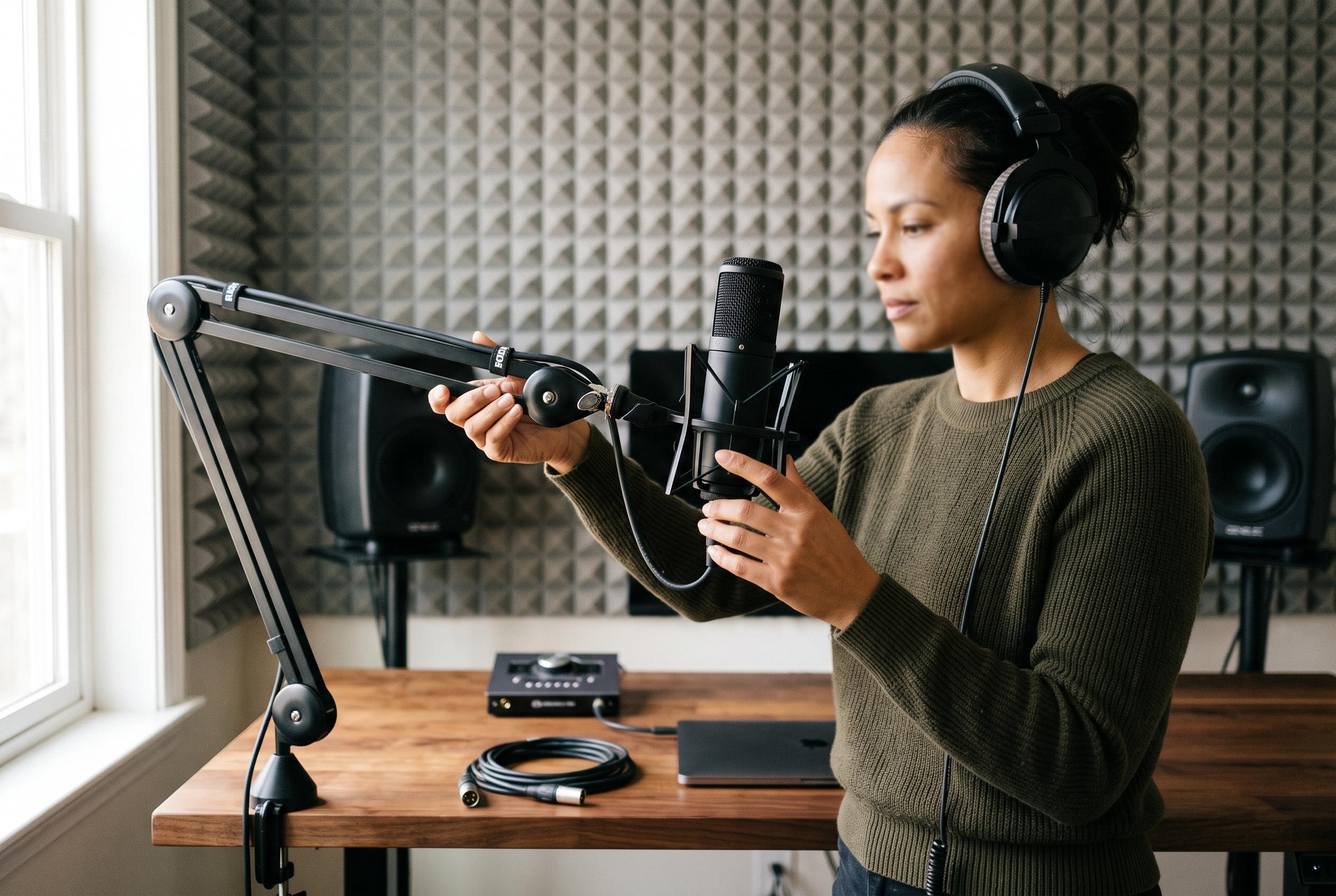
For buyers who want a direct-to-computer solution, the guide includes several USB models, among them the Rode NT-USB Mini, Blue Yeti, FIFINE K669B, HyperX SoloCast and Elgato Wave:3. Tom’s Hardware has described the AT2020USB+ as a strong USB option for home recording, streaming and podcasting, praising its monitoring and value, although it still sits within the trade-off that USB microphones favour convenience over expandability. The broader lesson in the guide is that accessories alone do not solve poor room acoustics: a boom arm, mount or cable may help with setup, but they will not remove reverberation, noise or bad microphone placement. For most buyers, the real decision is not simply which microphone looks best on paper, but which one fits the room, the computer, and the recording ambitions that are likely to follow.
Disclaimer: This content is intended for informational purposes only. Readers are advised to exercise their own judgement, conduct due diligence, or consult a qualified expert before acting on any information provided.