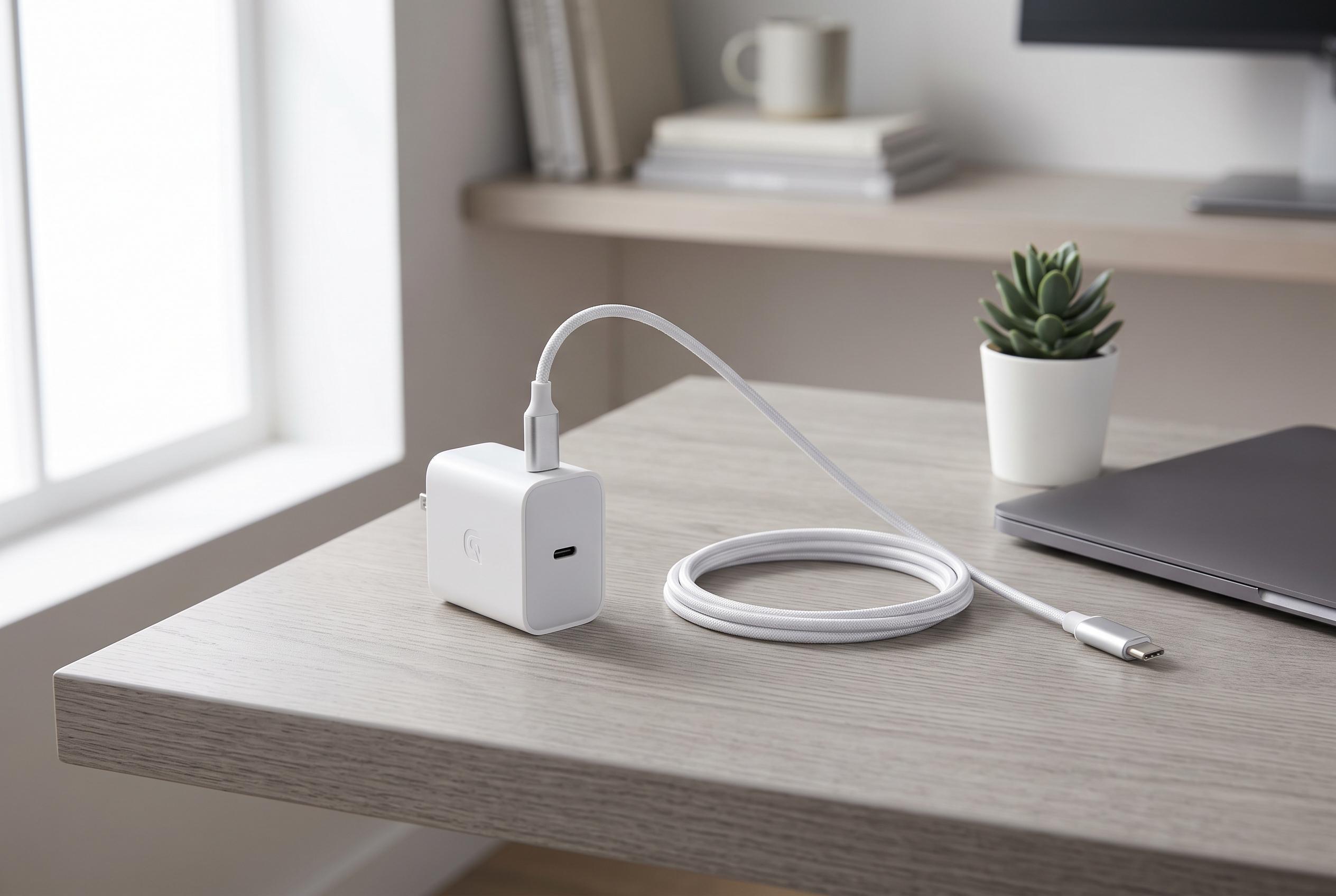

Beyond wattage ratings, compatibility with USB Power Delivery and Programmable Power Supply standards, along with certified cables, are crucial for fast, safe, and reliable charging across a range of devices.
The number printed on a charger is only part of the story. A 30W, 65W or 100W rating matters, but so does whether the charger, cable and device all support the same charging standard. In practice, the difference between a quick top-up and a long wait often comes down to USB Power Delivery, the USB-C charging system that lets devices negotiate how much power they should safely draw before charging begins.
According to technical guides on USB standards, USB Power Delivery is designed to let a device and charger agree on voltage and current rather than forcing a fixed output. That is why a phone that can handle 25W will not simply take 65W from a more powerful adapter if both are using the standard correctly. It will draw only what it is built to accept. The same logic has helped USB-C become a common charging connector across smartphones, tablets, handheld consoles and many laptops.
A more advanced feature, Programmable Power Supply, or PPS, pushes that idea further. Infineon’s white paper on USB-C charger design says PPS was added in USB Power Delivery 3.0 and allows small voltage adjustments in 20mV steps, with output ranging from 3.3V to 21V. That finer control helps reduce wasted energy and heat, which can improve charging efficiency and reduce stress on the battery, especially during the earliest and fastest part of a charge cycle.
The cable is often the weak link. USBGear and consumer product listings from retailers such as Best Buy and CDW show that higher-wattage charging depends not just on the adapter but also on the right certified cable and, in some cases, an e-marked cable built to handle greater current. If the cable is too old, too cheap or not rated for the required power, the system can throttle charging for safety. That may still work, but it can be much slower than the charger’s label suggests.
Tom’s Hardware notes that USB-C’s appeal is not only power delivery but also versatility, with the same port increasingly used for data, video and charging across different device classes. That has made one charger suitable for a wider range of equipment, from phones to notebooks, provided the specifications match. The practical lesson is simple: for fast, reliable charging, look beyond the wattage on the box and check USB PD support, PPS compatibility and the cable rating. Those details determine whether a device charges in minutes or drags on for hours.
Disclaimer: This content is intended for informational purposes only. Readers are advised to exercise their own judgement, conduct due diligence, or consult a qualified expert before acting on any information provided.