
Travellers relying on their vehicle’s built-in USB ports for laptop power may face slow or failed charging due to wattage limitations. Experts recommend high-quality USB PD car chargers or power inverters for reliable on-road laptop use.
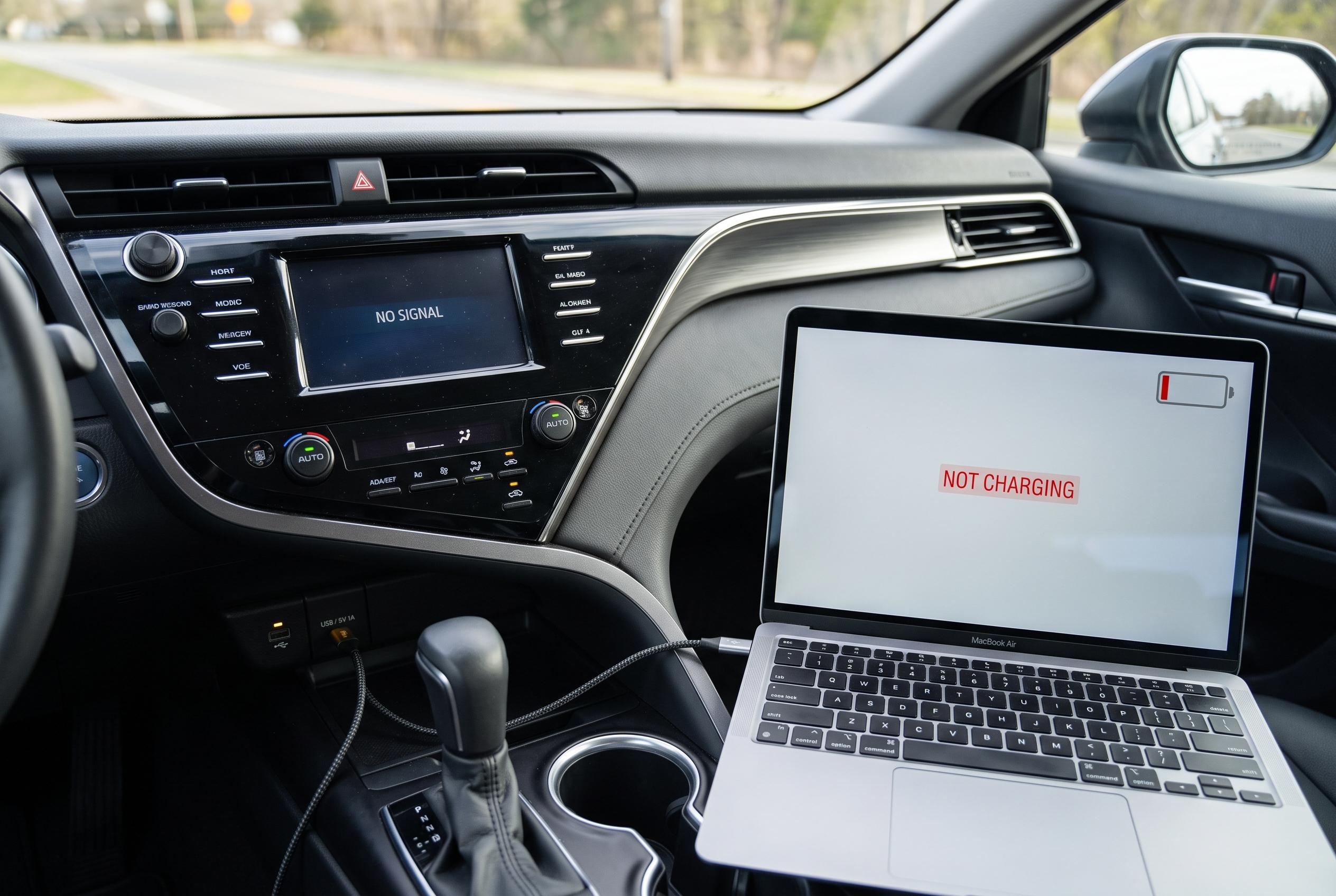
Travellers who rely on a laptop for work or study often try to top up the battery from a car on the move. But the built-in USB socket in most vehicles is usually designed for phones, music players or light data use, not for powering a laptop. As a result, charging may be slow, inconsistent or fail altogether, according to technology guidance published by TV9 Hindi and supporting explainers from other manufacturers and repair sites.
The main issue is wattage. Standard car USB-A ports and some older USB-C sockets typically provide low power, often around 5V and only enough for about 5W to 15W. Many laptops need far more, with common charging requirements of 45W, 65W, 90W or higher. Alibaba’s product guide notes that basic USB-A charging is usually insufficient for most laptops, while USB-C Power Delivery, or USB PD, is the standard to look for if a car charger is expected to keep up with a laptop’s demand.
A USB-C port in a car is not automatically a fast-charging port. Some only handle data transfer or low-power output. That is why the presence of USB-C alone is not enough; the important detail is whether the vehicle supports USB PD and whether the charger can match the laptop’s required output. Guidance from product and technical explainers also points to 65W as a practical baseline for many modern laptops, with higher outputs needed for performance machines.
For people who need to charge while travelling, a better option is a high-quality USB PD car charger that plugs into the vehicle’s 12V socket. If the laptop draws more power, a power inverter can be used instead, converting the car’s direct current into alternating current so the original laptop charger can be connected. That approach is more flexible, though it adds another component and depends on the inverter’s power rating.
There is also a practical warning for drivers: the car battery matters too. Charging a laptop with the engine off can drain the vehicle’s battery if left running for long periods. Repair guides on faulty car USB ports also recommend checking the cable, the port for debris, the fuse and the output if charging does not work as expected. Good-quality cables and chargers are important, because weak accessories can make charging slower and less reliable.
In short, the ordinary USB port in a car is usually not the right tool for laptop charging. For reliable use on the road, USB PD car chargers or, where needed, a suitable power inverter are the safer and more effective choices.
Disclaimer: This content is intended for informational purposes only. Readers are advised to exercise their own judgement, conduct due diligence, or consult a qualified expert before acting on any information provided.