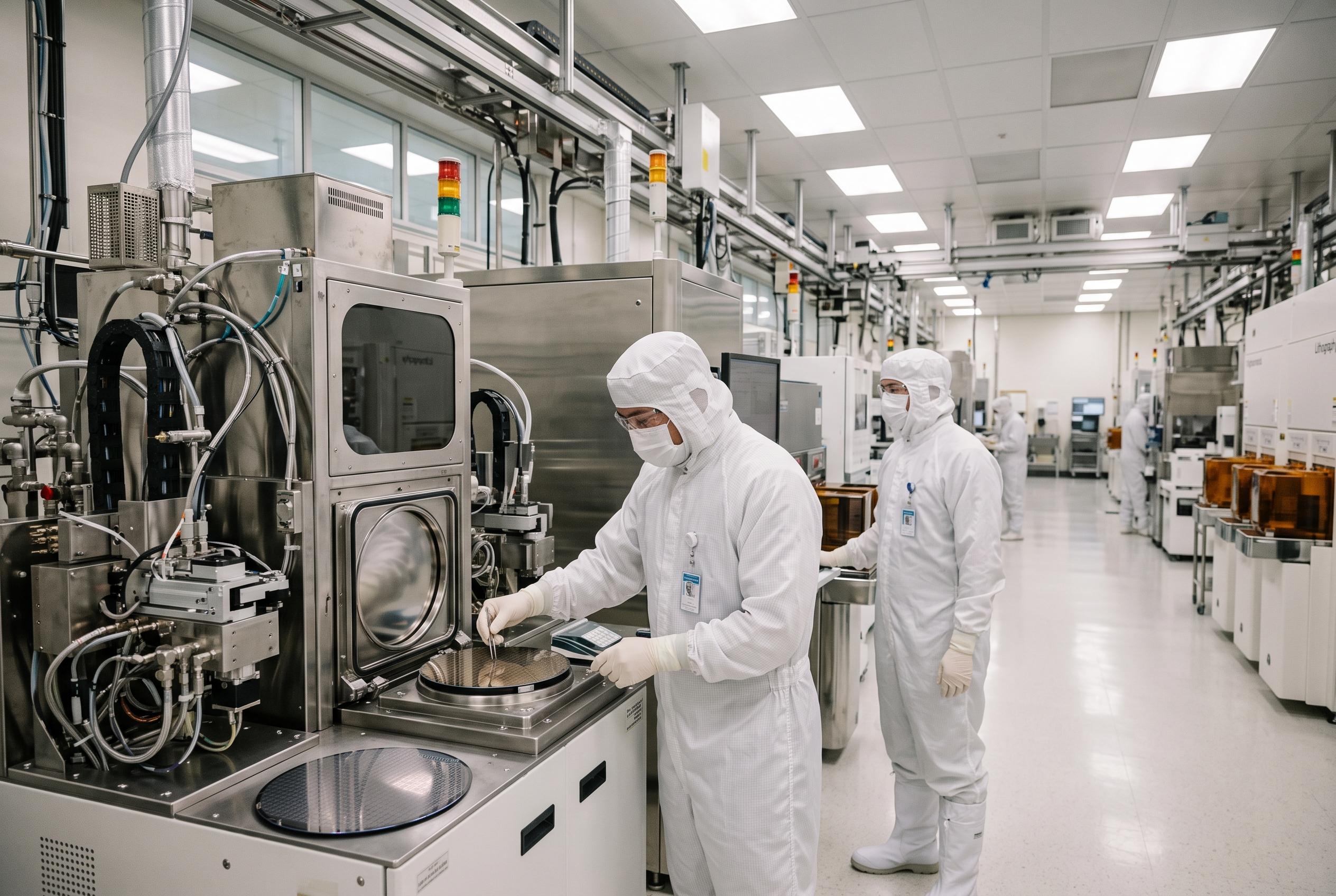

Global spending on equipment for 300mm chip fabs is forecast to reach $149 billion in 2026 and $227 billion by 2029, as AI, high-performance computing and memory demand accelerate factory expansion.
SEMI expects global spending on front-end equipment for 300mm chip fabs to reach $149 billion in 2026, a rise of 31% from the previous year, with the market still climbing at double-digit rates to $227 billion by 2029. The forecast points to a sector that is moving beyond announcements and into sustained physical expansion, as demand tied to artificial intelligence, high-performance computing and advanced memory is increasingly translating into new fabrication capacity, according to SEMI’s latest 300mm Fab Outlook.
The trade body said the build-out is broad-based, with 20 new 300mm fabs or production lines expected to begin construction worldwide in 2026, followed by 18 more in 2027, excluding pure research and development sites. In the United States, three projects are forecast to start construction in 2026 and four in 2027, underscoring the country’s growing role in the global manufacturing map. SEMI also projects 13 new 300mm fabs or lines worldwide to begin operations or ship first silicon in 2026, rising to 23 in 2027.
Construction spending itself is set to rise sharply. SEMI forecasts global fab construction outlay across 300mm facilities will increase 23% to $47.5 billion in 2026, then climb another 33% to $63.3 billion in 2027 before reaching $68.4 billion in 2028. The organisation said the figures reflect continued investment in leading-edge logic, memory and other 300mm technologies, as chipmakers prepare to add capacity across several regions rather than concentrate activity in a single market.
The Americas stand out as a major beneficiary of that shift. SEMI projects equipment investment in the region will more than double, from $18.1 billion in 2026 to $40.6 billion in 2029. That trajectory is consistent with recent company plans. Micron, for example, has said it will raise planned US spending to more than $250 billion through 2035, while also committing up to $3 billion to the domestic semiconductor supply chain, including support for a GlobalWafers plant in Texas that supplies silicon wafers for advanced chip manufacturing.
Other industry signals point in the same direction. TSMC, the world’s largest contract chipmaker, has said demand for production equipment has nearly doubled within six months as AI orders accelerate, even as global shortages of manufacturing tools complicate procurement. SK hynix has also placed a record order for EUV lithography machines from ASML to support AI memory production and new facilities in South Korea. Taken together, these developments suggest the current investment cycle is being driven not only by optimism about demand, but by a need to secure tools, materials and cleanroom capacity well ahead of future production.
Disclaimer: This content is intended for informational purposes only. Readers are advised to exercise their own judgement, conduct due diligence, or consult a qualified expert before acting on any information provided.