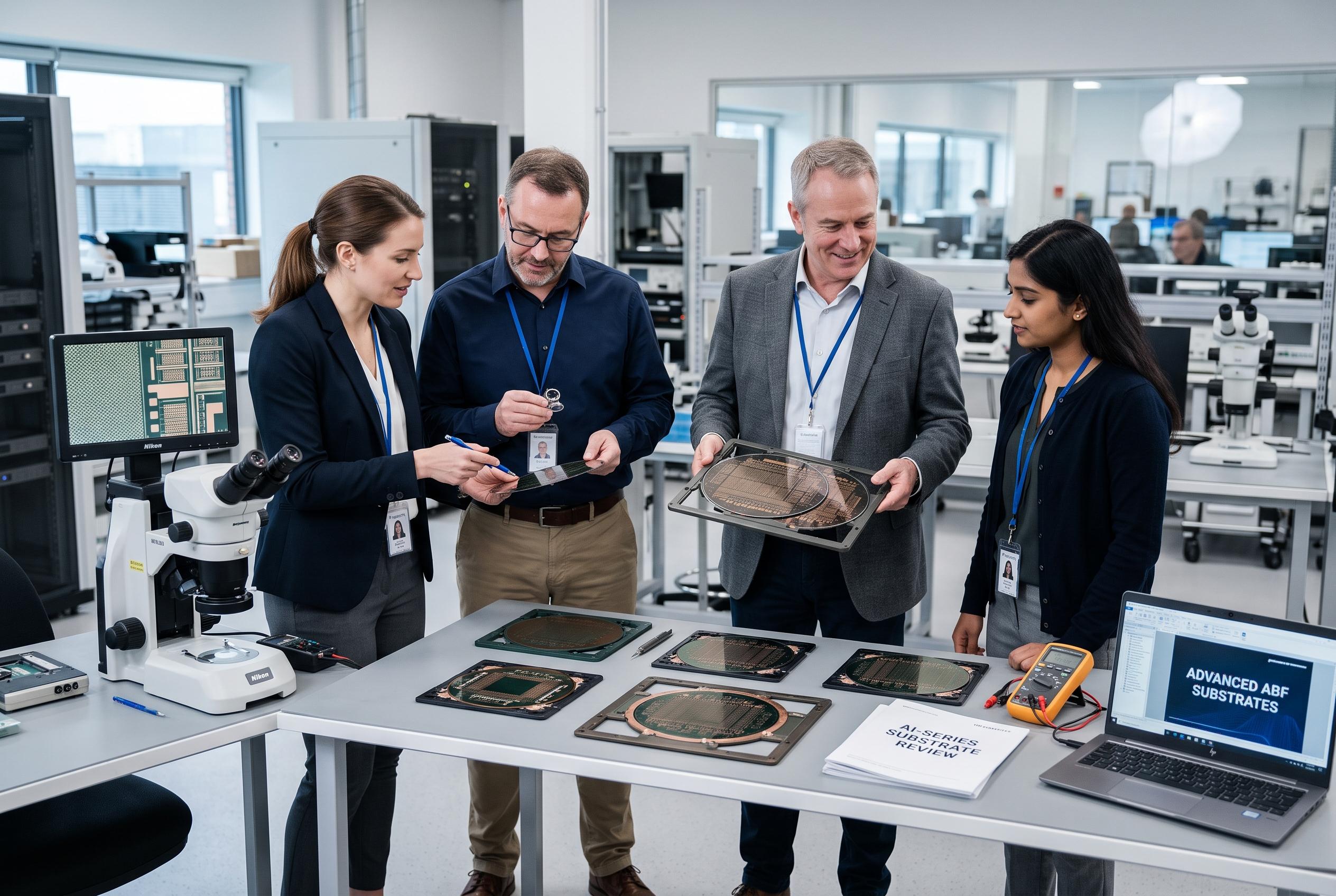

Rising AI chip demand is driving a surge in high-end ABF substrate prices and capacity expansion, positioning Taiwan’s electronics industry for a transformative shift amid shifting supply dynamics and technological innovations.
Artificial intelligence infrastructure is reshaping Taiwan’s electronics supply chain, with Cathay Securities saying demand for high-end ABF substrate, 800G switches and related server hardware is tightening supply and supporting prices. The brokerage highlighted makers of PCB substrates, server rails and networking gear as among the clearest beneficiaries, while also pointing to a recovery in mature-node and specialist manufacturing that is lifting Union UMC and Getac. It was more cautious on handset application processors, where memory inflation is weighing on near-term demand, and on textile maker Eclat, which faces a slower second half.
The clearest pressure point remains ABF, the laminated material used in advanced chip packaging. Atlas PCB said Ajinomoto, one of the key suppliers of ABF build-up film, plans a 30% price increase from the third quarter of 2026, citing AI server demand that it expects to run through the end of 2027. The same report said substrate makers are running at full capacity and lead times have stretched to 20 to 30 weeks, adding that finished ABF substrate costs could rise 3% to 6% and packaged AI chip costs by 1% to 2%.
That backdrop helps explain why Cathay Securities remains upbeat on Unimicron, Kinsus, Nan Ya PCB and Zhen Ding Tech, saying AI chip demand will account for an estimated 52% of ABF demand area by 2027. Atlas PCB also said the global ABF substrate market is set to reach $7.19 billion in 2026, with lead times for advanced products still running at 12 to 16 weeks despite capacity expansion. Industry analysis cited by Atlas PCB suggests chipmakers are securing production slots years ahead because ABF capacity takes 18 to 24 months to add.
Among the individual names, Longwell stands out as a key equipment supplier. Cathay Securities said the company controls about 95% of the global market for PCB vacuum lamination machines in the ABF segment and is benefiting from higher-end substrate expansion and the introduction of new materials. The brokerage also pointed to a 90-ton three-stage machine as a major growth driver, implying that ABF and advanced packaging demand should keep the order pipeline healthy.
Other companies are also tied closely to the AI build-out. Cathay Securities noted that Cubic Precision posted a record NT$74.38 earnings per share in the second quarter of 2026, helped by high-load, highly customised AI server rails, while its July revenue jumped 44.2% month on month. The firm also said Accton’s second-quarter earnings hit a new high, supported by 800G switches and AI accelerator cards, and that Gigabyte’s second-quarter results benefited from defence, ground control stations and unmanned vehicle demand. UMC, meanwhile, logged July revenue of NT$23.844 billion, up 18.9% from a year earlier, with utilisation expected to rise above 90% by year-end.
Disclaimer: This content is intended for informational purposes only. Readers are advised to exercise their own judgement, conduct due diligence, or consult a qualified expert before acting on any information provided.