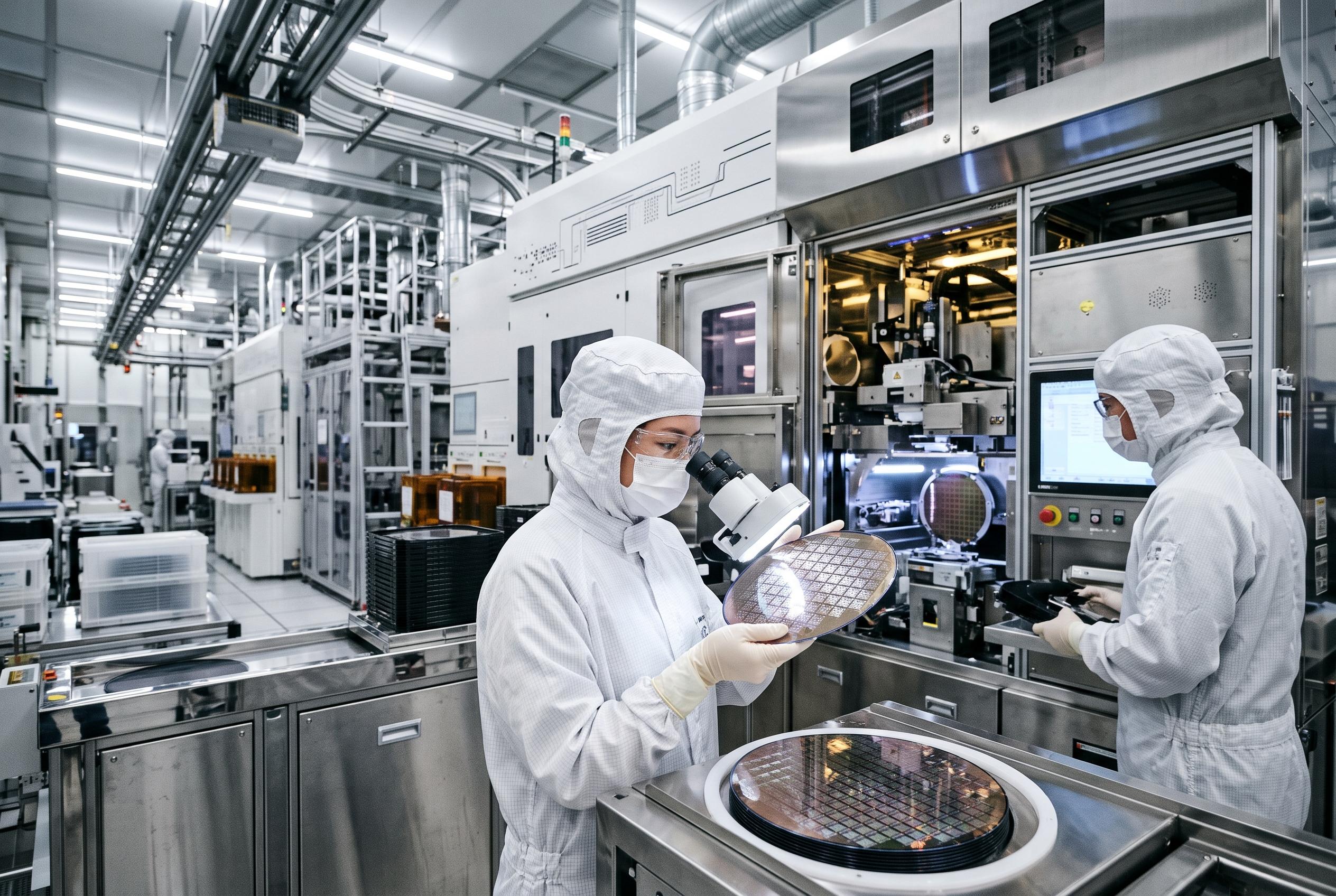

Surging demand for high-bandwidth memory is driving record profits for SK Hynix and tightening supplies of conventional DRAM, but a wave of new capacity could test the boom.
SK Hynix’s latest results have underlined how central high-bandwidth memory has become to the AI trade. In the company’s third quarter, operating profit jumped to about 83 trillion won, roughly seven times the level a year earlier, while margins approached 80%, according to the lead article. The headline numbers were driven by pricing strength across memory, but the clearest engine was HBM, the specialised DRAM that sits close to AI processors and feeds them data at very high speed.
HBM is not ordinary memory in a more expensive package. It stacks multiple thin DRAM dies vertically and links them with thousands of tiny connections, creating a much wider data path between memory and processor. That design matters because AI accelerators can spend as much time waiting for data as they do calculating. Nvidia’s chips and other leading AI processors rely on HBM because bandwidth, not raw compute, is often the limiting factor. As Tom’s Hardware reported, SK Hynix’s earnings revival began when premium products such as HBM3 and HBM3E started to dominate demand, helping the company return to operating profit in late 2023 and then deliver record revenue and profit through 2024.
The effect stretches well beyond a single product line. Industry estimates suggest HBM consumes roughly three times as much wafer capacity per bit as standard DRAM, so shifting output towards AI memory reduces supply for ordinary chips used in PCs, phones and servers. That tightening has lifted prices across the broader DRAM market and helped drive a stronger cycle for Samsung Electronics and Micron as well as SK Hynix. Tom’s Hardware reported that SK Hynix’s HBM sales surged sharply in 2024, while the company also committed major capital to expansion, including a record order for ASML EUV tools to support new HBM production lines and future capacity.
For investors, the main question is how long the imbalance can last. Only SK Hynix, Samsung and Micron are making HBM at scale, and Counterpoint Research says SK Hynix still leads the market even as Samsung has narrowed the gap and Micron has built share. The next contest is HBM4, which is being prepared for Nvidia’s Vera Rubin platform. But the same forces that have made memory makers unusually profitable also create risk: if new capacity arrives quickly, or if competition intensifies faster than AI demand grows, pricing power could fade just as abruptly as it has in earlier memory cycles. The concentration of HBM supply also means Korea’s wider equity market remains especially sensitive to changes in AI spending and in the relative positions of SK Hynix and Samsung.
Disclaimer: This content is intended for informational purposes only. Readers are advised to exercise their own judgement, conduct due diligence, or consult a qualified expert before acting on any information provided.