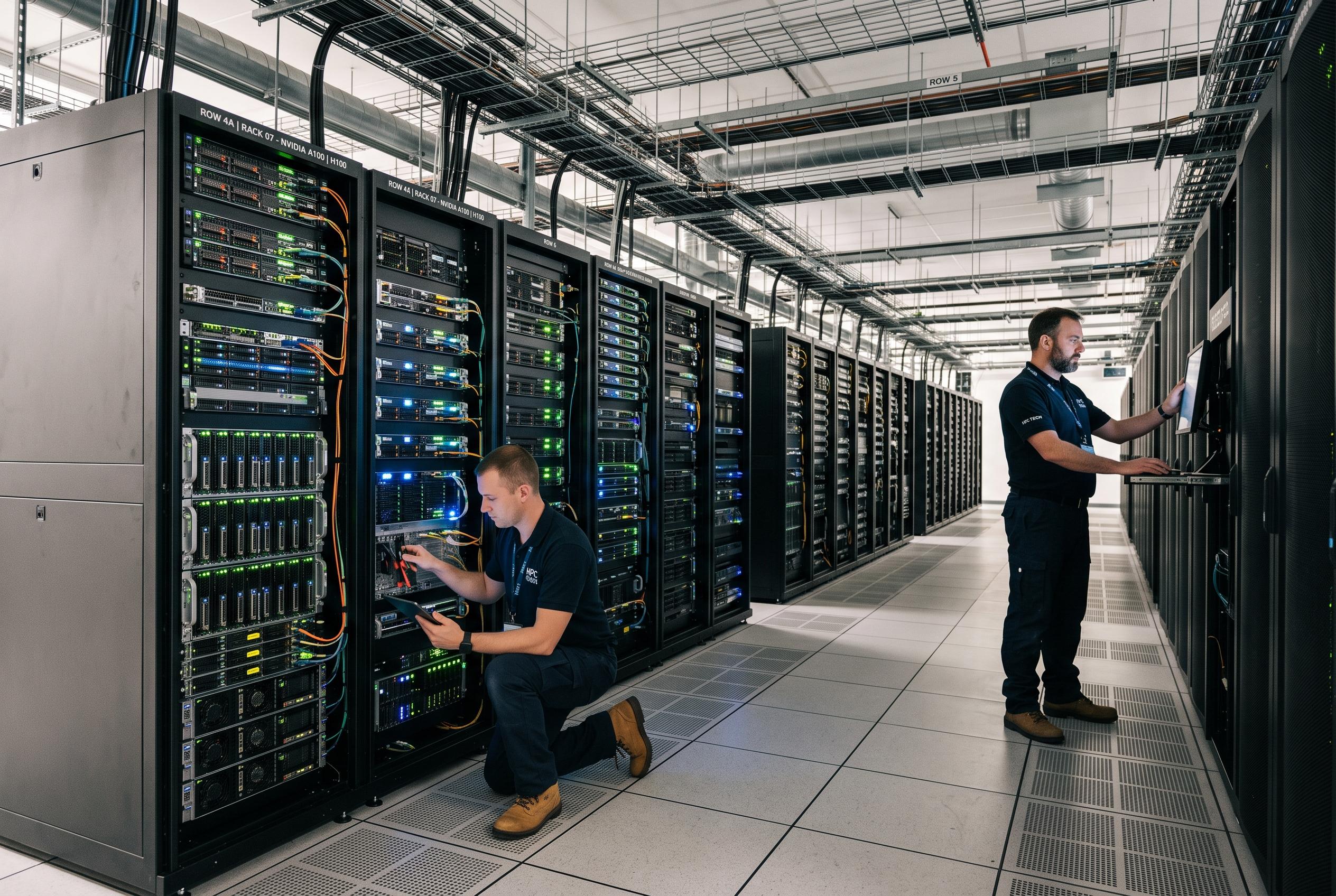

As companies ramp up AI deployment, increasing demand for hardware, software, and electricity is pushing prices higher, threatening to sustain inflation despite long-term productivity gains.
Artificial intelligence is increasingly being sold as a productivity breakthrough, but its near-term effect may be to push everyday costs higher. As companies race to build and deploy AI systems, demand is rising for the chips, software and electricity needed to run them, and that is feeding through into prices. The result is an economic paradox: a technology expected to lower costs over time is, for now, adding to inflationary pressure.
That tension matters because inflation is still above the Federal Reserve’s target. In July, headline inflation was 3.4% year on year and core inflation, which strips out food and energy, was 2.5%, according to the figures cited in the lead commentary. Goldman Sachs has estimated that AI-related price pressures could add 0.5 percentage points to core inflation by the end of the year. Mark Zandi of Moody’s Analytics said inflation remains worryingly elevated, even if it is moving in the right direction.
Electricity is one of the clearest examples. CNBC reported in July that a Federal Reserve Bank of Dallas study found AI had lifted US wholesale power prices by 2% to 6%, with some regions seeing larger increases. Northern Virginia, home to the country’s largest concentration of data centres, has been especially exposed. The same Dallas Fed research suggested that if proposed data-centre construction continues at a moderate pace, wholesale electricity prices could rise another 20% by 2028, with a larger build-out potentially driving gains of 50%.
Hardware markets are also feeling the strain. Reuters reported in June that the AI boom has intensified shortages of key memory chips, particularly dynamic random-access memory, or DRAM, and that prices could reach five times their 2004 levels by year-end. That has already reached consumers through higher prices for laptops and other electronics. Apple, Samsung and Dell have all raised prices on selected products, while Microsoft has increased Xbox prices, reflecting a broader squeeze across the technology supply chain.
There are some offsetting signs. A survey cited in the lead commentary found that slightly more than half of workers had used AI in at least one of 11 routine tasks, and around one-third said it saved them one to two hours a day. But the productivity gains may take years to filter through fully, and central banks may struggle to read the economy in the meantime. The Bank for International Settlements has warned that AI can blur the signals policymakers rely on because it may raise demand and supply at the same time. For now, the balance of evidence suggests the inflationary effects are arriving faster than the deflationary ones.
Disclaimer: This content is intended for informational purposes only. Readers are advised to exercise their own judgement, conduct due diligence, or consult a qualified expert before acting on any information provided.