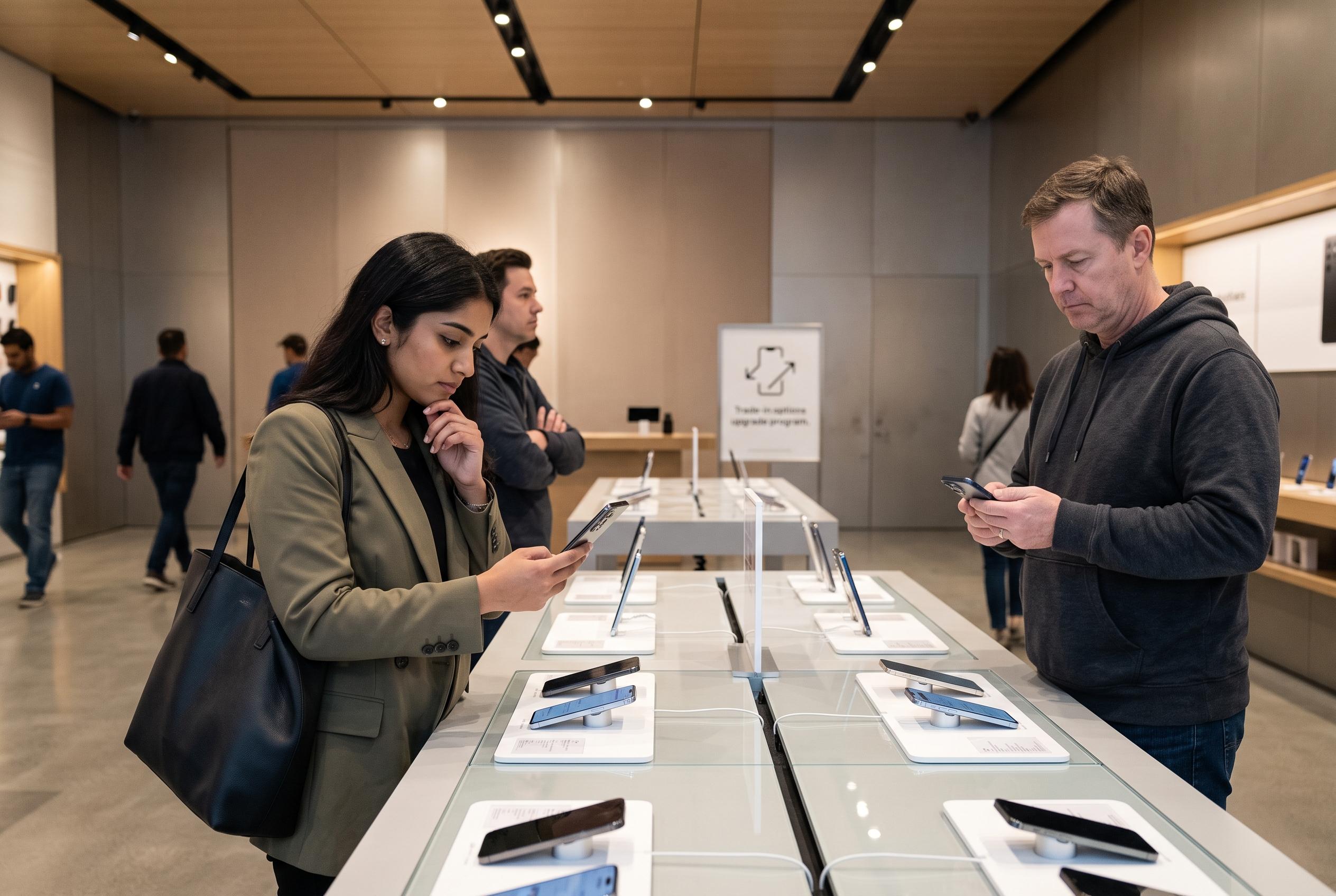

Global smartphone shipments suffered their steepest quarterly decline on record, while Apple nearly matched Samsung as soaring memory costs squeezed manufacturers and delayed upgrades.
The third quarter of 2026 delivered an unusually sharp warning for the smartphone market. According to preliminary data from IDC, global handset shipments fell to 255.3 million units, a decline of 22.0% year on year and the steepest quarterly contraction the research firm says it has ever recorded. Yet at the top of the market, the shake-out produced an almost level race: Samsung Electronics and Apple ended the period with virtually the same share, even as smaller vendors lost ground.
IDC said Samsung shipped 57.8 million smartphones in the quarter, giving it 22.6% of the market, while Apple moved 57.3 million units for a 22.4% share. Xiaomi, OPPO and vivo all posted steeper declines, underscoring how the slump is hitting Android makers that rely more heavily on lower-priced handsets. The figures measure shipments into distribution channels rather than direct consumer sales, so they are a forward-looking indicator rather than a final reading of retail demand.
The immediate problem is memory. Artificial intelligence data centres are absorbing large volumes of DRAM, the working memory used in phones, pushing component prices sharply higher. IDC said memory costs have risen by about 350% from a year earlier, a shock that is filtering through to handset pricing and making consumers hold on to existing devices for longer. Francisco Jeronimo, IDC’s vice president for worldwide devices, said the quarter showed “the full impact and damage of the memory crisis”, while senior research director Nabila Popal warned that “the worst is yet to come” and said growth is likely to remain constrained through 2027.
Apple is better positioned than most rivals to absorb that pressure, but it is not immune. Wealthier customers are typically less sensitive to price increases, and Apple’s scale gives it stronger purchasing power than smaller brands. Even so, Chief executive Tim Cook said on the company’s July earnings call that Apple had “reluctantly raised prices” during what he called “a 100-year flood on the memory pricing”. The company’s services division, which brought in $30.74 billion last quarter, continues to cushion the business, but the iPhone still depends on upgrade cycles that can lengthen when hardware becomes more expensive.
That tension matters for investors because Apple’s strength is already reflected in its valuation. The company’s shares have risen 26.15% so far this year, and the stock trades at about 45 times earnings, a demanding multiple for a business facing higher component costs and fewer unit shipments. Cook has already warned that memory prices were still rising beyond September, raising the risk that the squeeze will persist into future quarters. In that setting, Apple can still win share without growing shipments, but the market may eventually need stronger evidence that premium positioning can offset a prolonged industry downturn.
Disclaimer: This content is intended for informational purposes only. Readers are advised to exercise their own judgement, conduct due diligence, or consult a qualified expert before acting on any information provided.