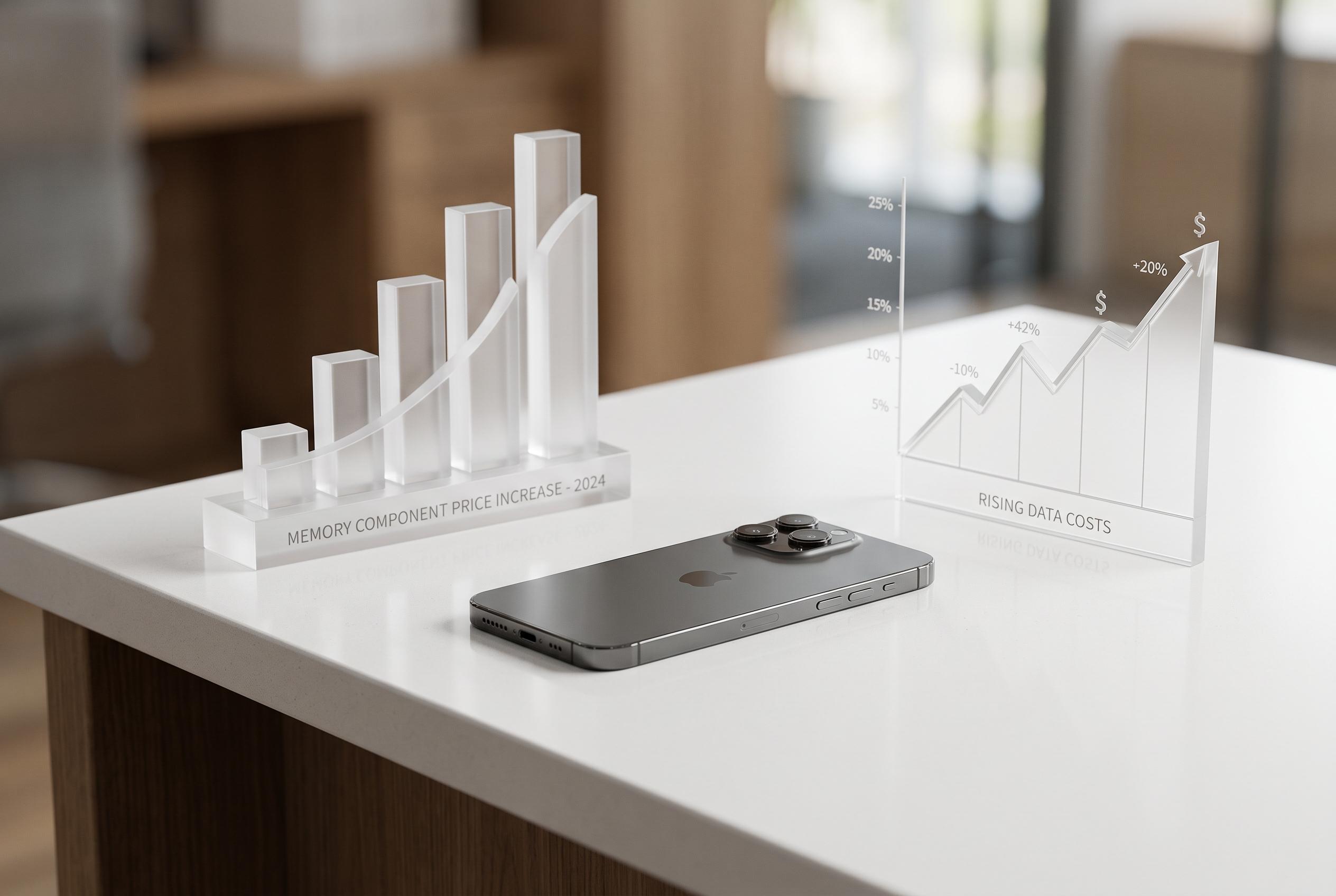

Despite record revenues in the June quarter, Apple’s margins are under pressure from soaring memory component prices, prompting the tech giant to consider diversifying suppliers and raising product prices amid cost shocks.
Apple’s biggest near-term risk is not weaker demand for its devices but a rising memory bill that is starting to weigh on margins, according to Trefis. The company’s latest results show record June-quarter revenue across every reporting region, yet that strength is being offset by higher costs for DRAM and storage components used in iPhones, iPads and Macs.
In the June quarter, Apple reported gross margin of 50.1%, helped by tariff refunds. Excluding those refunds, Trefis said margin was 48.1%, down from 49.3% in the March quarter. Apple’s finance chief, Kevan Parekh, has also said the sequential decline was driven more by memory costs than by currency. That pressure is expected to continue: the company’s September-quarter margin guide points to a further decline, with memory again expected to account for most of the drop.
Tim Cook has already acknowledged the strain. In earnings commentary earlier this year, he said rising RAM and SSD prices were beginning to have a greater effect on the business, and later said Apple was lifting prices on some products to offset the cost shock. Reports from MacRumors in July said Apple has also been testing DRAM chips from China’s CXMT as part of a wider effort to diversify supply, although any commercial use would need U.S. government approval because of trade restrictions.
The problem for Apple is not availability alone. Even if alternative suppliers ease shortages, they may not bring prices down quickly. Trefis said Apple’s own inventory buffer is likely to fade after the September quarter, while memory costs keep climbing. Tom’s Hardware reported that Apple’s inventory reached $11.09 billion as of June 27, up sharply over nine months, and that Parekh said the carry-in benefit from that stock would diminish.
That leaves investors weighing robust sales against a valuation that already assumes a lot of good news. Trefis said Apple’s stock trades at about 9.6 times sales, near the top of its decade-long range, while net margin remains elevated. The issue is that a business priced for durability has little room for another cost shock if memory prices stay high longer than management expects.
Disclaimer: This content is intended for informational purposes only. Readers are advised to exercise their own judgement, conduct due diligence, or consult a qualified expert before acting on any information provided.