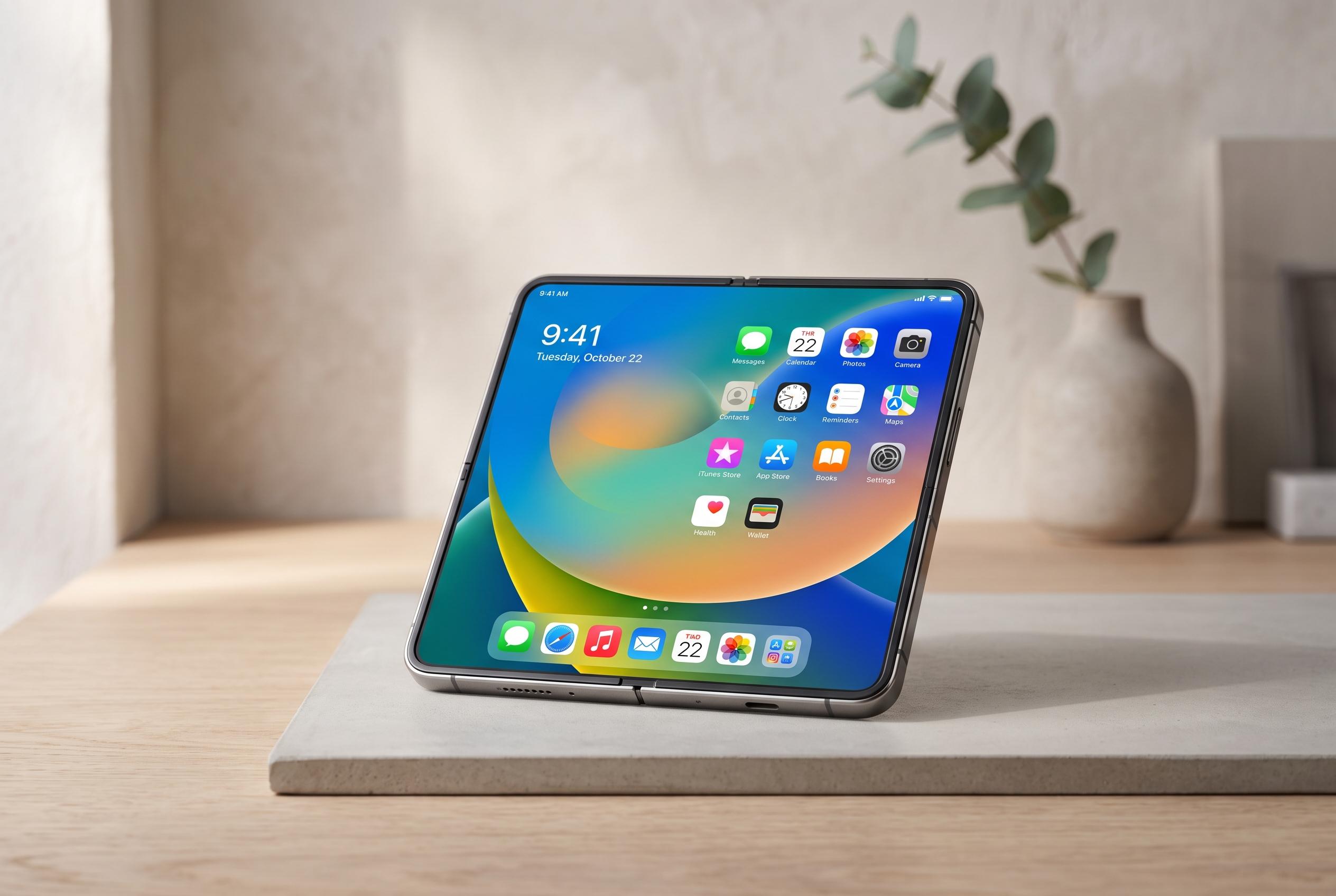

After over five years of research and prototype testing, Apple appears poised to launch a premium foldable iPhone in 2026, signalling a strategic shift in a maturing smartphone market seeking innovative form factors.
Apple’s long reluctance to join the foldable-phone market now looks less like hesitation and more like timing. For years, the company watched Samsung, Huawei, Google and others test devices that could switch from handset to tablet-sized screen, while Apple kept its distance. But with reports now suggesting a foldable iPhone is moving through advanced development, the question is no longer whether Apple will enter the category. It is why the company appears ready only now.
The answer begins with the smartphone market itself. The category matured, upgrade cycles lengthened and the standard slab phone became harder to improve in obvious ways. Camera gains, faster chips and better displays still matter, but they no longer deliver the same sense of leap year to year. That left manufacturers searching for a genuine form-factor change, and foldables became the most visible option.
Early foldables, however, were not an easy sell. They were expensive, thick, delicate and often undermined by visible screen creases and awkward software. The hardware looked futuristic, but the experience frequently did not justify the cost. That helped explain Apple’s caution. A new product category with obvious trade-offs was never likely to fit the company’s usual preference for arriving after the rough edges have been reduced.
According to MacRumors, Apple has spent more than five years working on folding iPhone concepts and was still developing at least two prototypes in early 2024. By July 2025, the site reported that Apple had moved the project into the prototyping phase in June and was aiming to complete prototype testing by the end of 2025 before progressing through later validation stages. That would place the company broadly in line for a possible launch in the second half of 2026.
The most recent reporting points to a device that is closer to a premium book-style foldable than a novelty product. MacRumors says the design is expected to resemble Samsung’s Galaxy Z Fold, with a display that shows less of a crease when open. Its latest summary says the phone may measure about 5.5 inches when closed and 7.8 inches when unfolded, use a titanium and aluminium frame, rely on Touch ID rather than Face ID, and ship with an A20 chip and 12GB of RAM. The same reporting says the price could exceed $2,000.
Apple’s own software work also makes a foldable more plausible now than it would have been a few years ago. The company has spent several release cycles making iPadOS and macOS more flexible, with features such as resizable windows, better multitasking and improved support for different screen states. Those changes do not prove a foldable iPhone has been driving the roadmap, but they do suggest Apple’s platforms have become better suited to a device that can switch between phone and tablet-like modes.
That wider context matters because foldables have moved from experimental hardware to a recognised premium segment. In markets where the category has gained traction, they have become status products as much as practical devices. Apple has rarely needed to be first, but it has often entered once a category is large enough, stable enough and profitable enough to matter. The foldable iPhone, if it arrives in 2026 as expected, would fit that pattern closely.
Disclaimer: This content is intended for informational purposes only. Readers are advised to exercise their own judgement, conduct due diligence, or consult a qualified expert before acting on any information provided.