

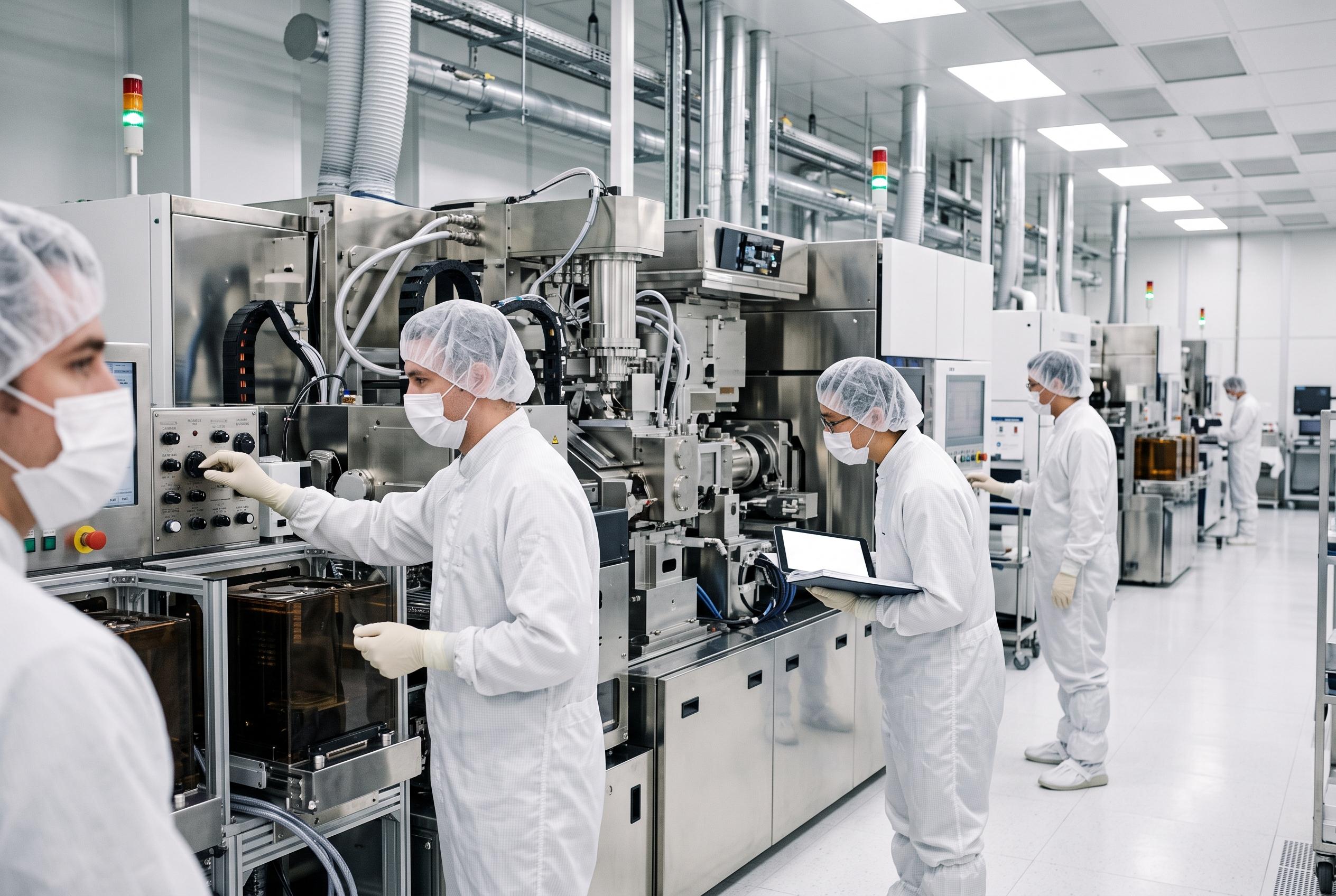

The Dutch equipment maker has raised its 2026 sales forecast and is exploring further capacity increases as customers expand plans for AI-related chip production.
ASML has warned that demand for its most advanced chipmaking tools is likely to outstrip supply in 2027 and 2028, underscoring how rapidly the artificial intelligence build-out is tightening the market for semiconductor equipment. In remarks accompanying its latest financial results, chief executive Christophe Fouquet said customers are revising their equipment plans upwards and that the company is now examining ways to expand capacity further in 2028 beyond the 30 per cent increase it had previously outlined. Reuters reported that the warning points to pressure not just on ASML’s order book, but on the wider supply chain that depends on its lithography systems.
The Dutch company also lifted its 2026 sales guidance, saying annual revenue is now expected to come in between €44 billion and €45 billion. That compares with an earlier forecast floor of €43 billion and reflects continuing demand from customers investing in AI infrastructure. ASML’s latest quarter was strong: the company reported record sales of €11.7 billion, gross margin of 57.5 per cent and net income of €5 billion, while installed base management revenue came in above expectations at €3.3 billion.
ASML’s machines are central to the manufacture of advanced semiconductors, particularly the extreme ultraviolet lithography systems used to etch the most sophisticated chips. Because the company is the only supplier of this category of equipment, its production constraints carry outsized importance for chipmakers racing to expand capacity for AI accelerators and other high-end processors. The company said it is trying to shorten the time between production and delivery in order to speed shipments to customers.
The company’s own planning suggests the mismatch may persist even after a substantial expansion of output. ASML has already spoken of a 30 per cent capacity increase in 2027, but its latest comments indicate that may still not be enough to satisfy demand in the following two years. Reuters reported that the company continues to see strong interest for 2029 and 2030, a sign that AI-related investment is likely to remain a structural driver rather than a short-lived cycle.
ASML is also investing in its manufacturing footprint. The company has begun work on a second industrial campus in the Netherlands, with the first phase due for completion in 2029. It said South Korea was its largest market for new system sales in the third quarter, followed by Taiwan and China, highlighting how demand remains concentrated among major semiconductor manufacturing hubs in Asia.
Disclaimer: This content is intended for informational purposes only. Readers are advised to exercise their own judgement, conduct due diligence, or consult a qualified expert before acting on any information provided.



