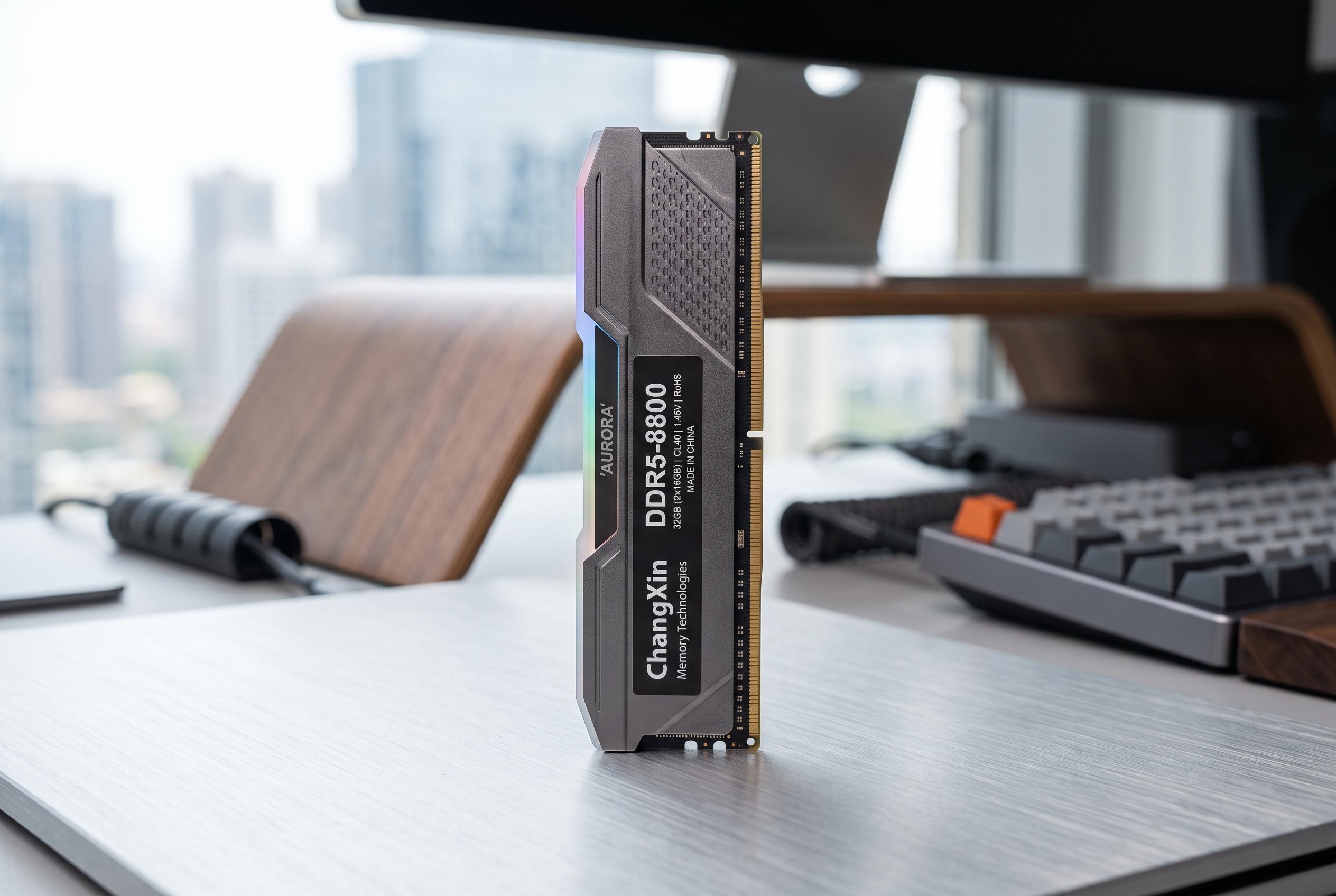

Chinese memory firm CXMT has demonstrated DDR5-8800 on AMD platforms and is rapidly increasing its market share, threatening established industry leaders and reshaping the competitive landscape.
ChangXin Memory Technologies is moving from a domestic Chinese supplier to a company with genuine influence in the global DRAM market. According to Computerra and Tom’s Hardware, the Shenzhen-based maker has now demonstrated DDR5-8800 on AMD’s X870E platform using its own chips, a result that puts it closer to the overclocking territory long associated with SK hynix. The showcase was carried out by Colorful with iGame Shadow II DDR5-6000 C34 kits and, unusually, relied on 16GB modules rather than the 24GB parts that often dominate the fastest enthusiast memory kits.
The technical significance is not that CXMT has overtaken the Korean leader, but that it has narrowed the gap faster than many in the industry expected. Tom’s Hardware noted that CXMT only introduced its first DDR5 chips in late 2025, yet those parts are already appearing in products from Chinese brands such as Asgard, Colorful, Gloway and KingBank, with some reported adoption by Corsair and by PC makers including HP and Acer. Early testing has also shown the other side of the story: overclockers say CXMT chips can reach high frequencies, but they respond less predictably to voltage increases and timing adjustments than SK hynix parts.
That tension reflects CXMT’s broader position in the market. PC Gamer reported that the company now holds about 7% of DRAM revenue, while Samsung, SK hynix and Micron still control the vast majority of the industry. GamesRadar said CXMT’s global share rose from 1% to 8% in the second quarter of 2026, making it the fastest-growing DRAM supplier at a time when the major incumbents have been concentrating on high-bandwidth memory for AI systems. In practical terms, that leaves more room for a competitor focused on conventional consumer DRAM.
CXMT’s rise has been helped by capacity expansion and by a successful capital raise. Tom’s Hardware and PC Gamer both reported that the company raised $8.6 billion in a public offering, and that it is building new fabrication plants in Beijing, Shanghai and Hefei. The company has said it wants to capture 30% of the memory market by 2030, a target that remains ambitious even as its chips spread into laptops and desktops sold in China. The more immediate conclusion is narrower: CXMT is no longer a curiosity, and its DDR5 progress suggests the established memory trio may face a more serious challenge than they did a year ago.
Disclaimer: This content is intended for informational purposes only. Readers are advised to exercise their own judgement, conduct due diligence, or consult a qualified expert before acting on any information provided.