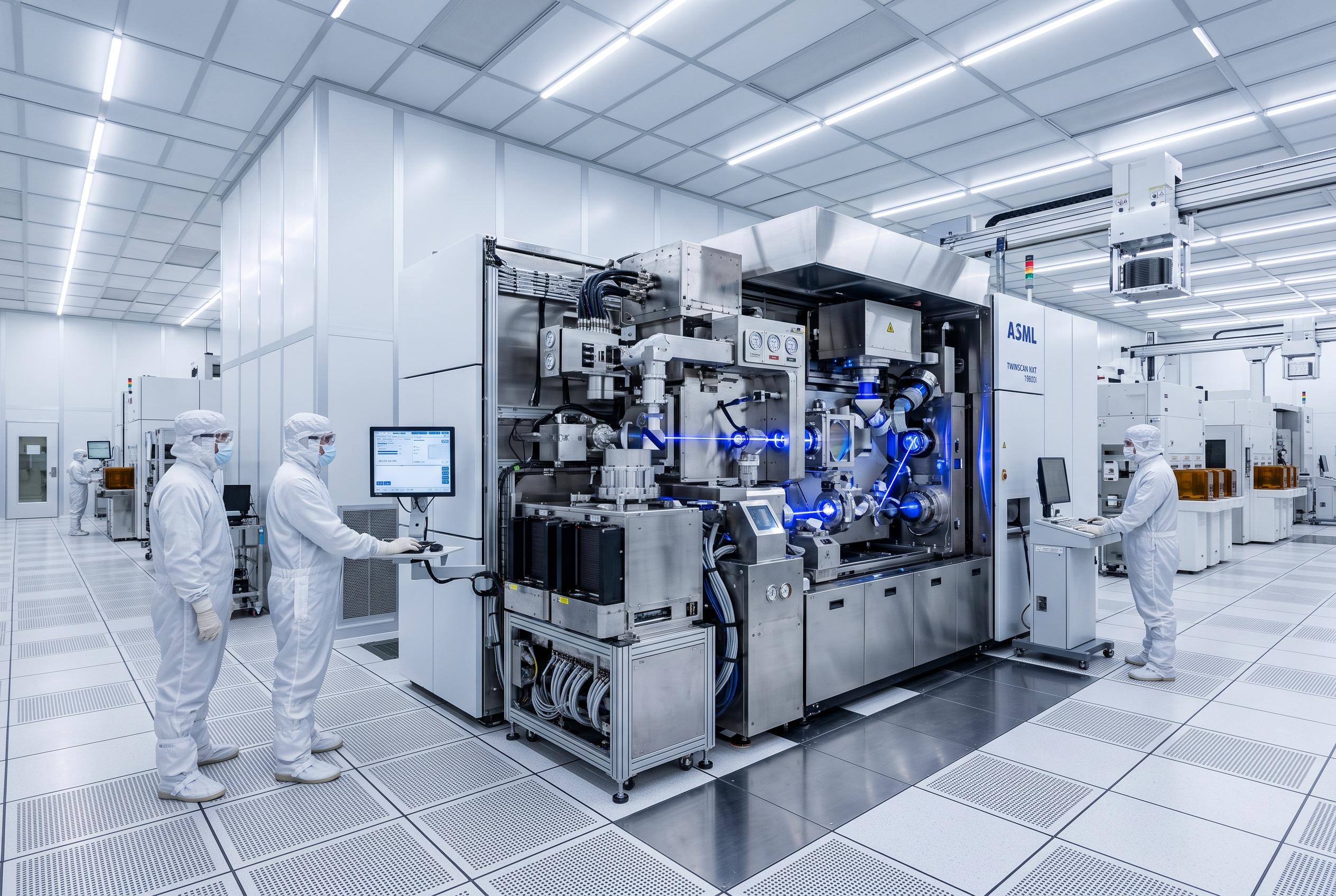

A Shanghai-based state-backed company has begun producing domestically developed immersion deep ultraviolet lithography systems, signalling China’s strategic move to bolster its chipmaking independence amid US-led export restrictions.
China has moved a step closer to building an independent chipmaking supply chain, with reports that a little-known state-backed company in Shanghai has begun producing domestically developed immersion deep ultraviolet lithography systems. According to Reuters, the push is being led by Shanghai Aishengna Electronic Technology Group, a firm that has operated largely out of public view despite being founded with substantial state capital in 2023.
The development matters because DUV lithography remains central to modern semiconductor production. It uses focused light to etch the fine circuit patterns that form a chip, and it sits below the even more advanced EUV, or extreme ultraviolet, technology that is required for the most advanced manufacturing nodes. ASML of the Netherlands is the only company that makes EUV machines, and its equipment remains tightly controlled by Western export restrictions.
Reuters reported that Aishengna’s early production is expected to go to major Chinese chipmakers including SMIC, Hua Hong Semiconductor and ChangXin Memory Technologies for testing. The Information, which first reported the breakthrough, said the company is aiming to build five such DUV tools by the end of this year and about 20 next year. If that timetable is met, it would suggest China is beginning to turn a long-running industrial policy into working equipment, even if the machines are not yet ready for full-scale commercial deployment.
The effort comes against the backdrop of years of US-led export curbs. Washington has restricted access to ASML’s most advanced systems, while Beijing has responded by pouring money and manpower into domestic alternatives. According to Reuters, Chinese researchers are also working on an EUV prototype in Shenzhen, with the project described by insiders as China’s version of the Manhattan Project because of its scale, secrecy and strategic importance.
Even so, analysts caution that the gap with ASML remains wide. Reports from Tom’s Hardware and other technology publications note that China is leaning heavily on DUV multi-patterning and home-grown scanners as a workaround, but that these efforts are unlikely to dislodge ASML’s lead in the near term. Still, the emergence of a domestic DUV line shows how far China has gone in trying to insulate its semiconductor industry from foreign pressure, and how much the global chip race is now being shaped by industrial policy as much as engineering skill.
Disclaimer: This content is intended for informational purposes only. Readers are advised to exercise their own judgement, conduct due diligence, or consult a qualified expert before acting on any information provided.