
With semiconductor shares retreating, South Korean investors are turning to e-skin technology for robots, amid broader reassessment of AI spending and a focus on physical AI products, including humanoid robots expected to emerge in the coming years.
After a sharp pullback in semiconductor shares, South Korean investors are turning their attention to a different possible growth theme: electronic skin, or “e-skin”, for robots. In a recent appearance on his YouTube channel, Hanyang University adjunct professor Kim Gwang-seok said the market was likely not abandoning the artificial intelligence trade, but rotating within it as concerns build over whether major cloud operators can keep funding heavy chip purchases.
Kim argued that the pressure on semiconductors reflects a wider reassessment of AI spending. He pointed to shrinking free cash flow at hyperscale data-centre operators, questions over the durability of capital expenditure, talk of an AI bubble and competition from Chinese companies. Even so, he said the broader AI value chain is still intact, spanning services, chips and the power and communications infrastructure needed to deliver them.
The next phase, he said, is physical AI: products rather than just services. That includes AI cars, robots, PCs, mobile phones and home appliances, with mass production of AI-enabled humanoid robots potentially beginning in 2027 or 2028. To explain the opportunity, Kim drew an analogy with Levi Strauss during the American gold rush, saying the most reliable money was often made by supplying the tools and clothing used by the people chasing the boom.
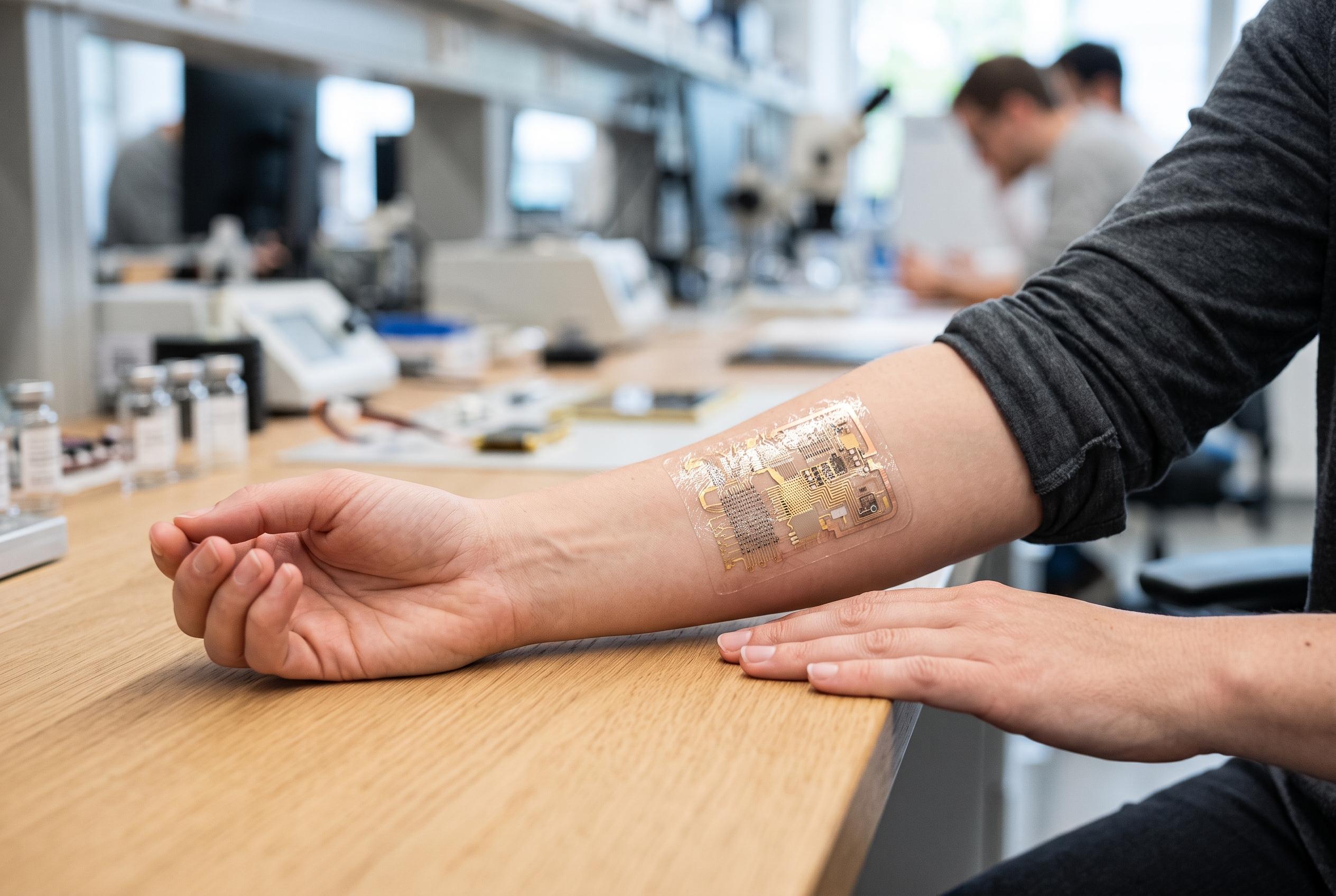
Against that backdrop, he highlighted electronic skin as a potential beneficiary. The technology is designed to give robots tactile sensing while also helping with joint movement, friction management and micro-crack repair. Kim said the global e-skin market should expand steadily, especially in North America and Asia-Pacific, and suggested robots will eventually “wear” smart leather-like materials with touch-sensing functions.
A domestic name that has surfaced in that context is Unicam, a Kospi-listed leather maker. The company is understood to have signed a term sheet to acquire all of Lumia Technologies, which holds tactile-sensing and smart-leather technology and participates in a Meta-Amazon consortium. Unicam already supplies seat leather for Hyundai Motor and Kia, raising the possibility that it could push further into robot exteriors and tactile sensors through links to Hyundai Motor Group’s robotics arm, Boston Dynamics.
Kim stressed that his remarks were meant as an analytical reading of the market rather than a stock recommendation.
Disclaimer: This content is intended for informational purposes only. Readers are advised to exercise their own judgement, conduct due diligence, or consult a qualified expert before acting on any information provided.