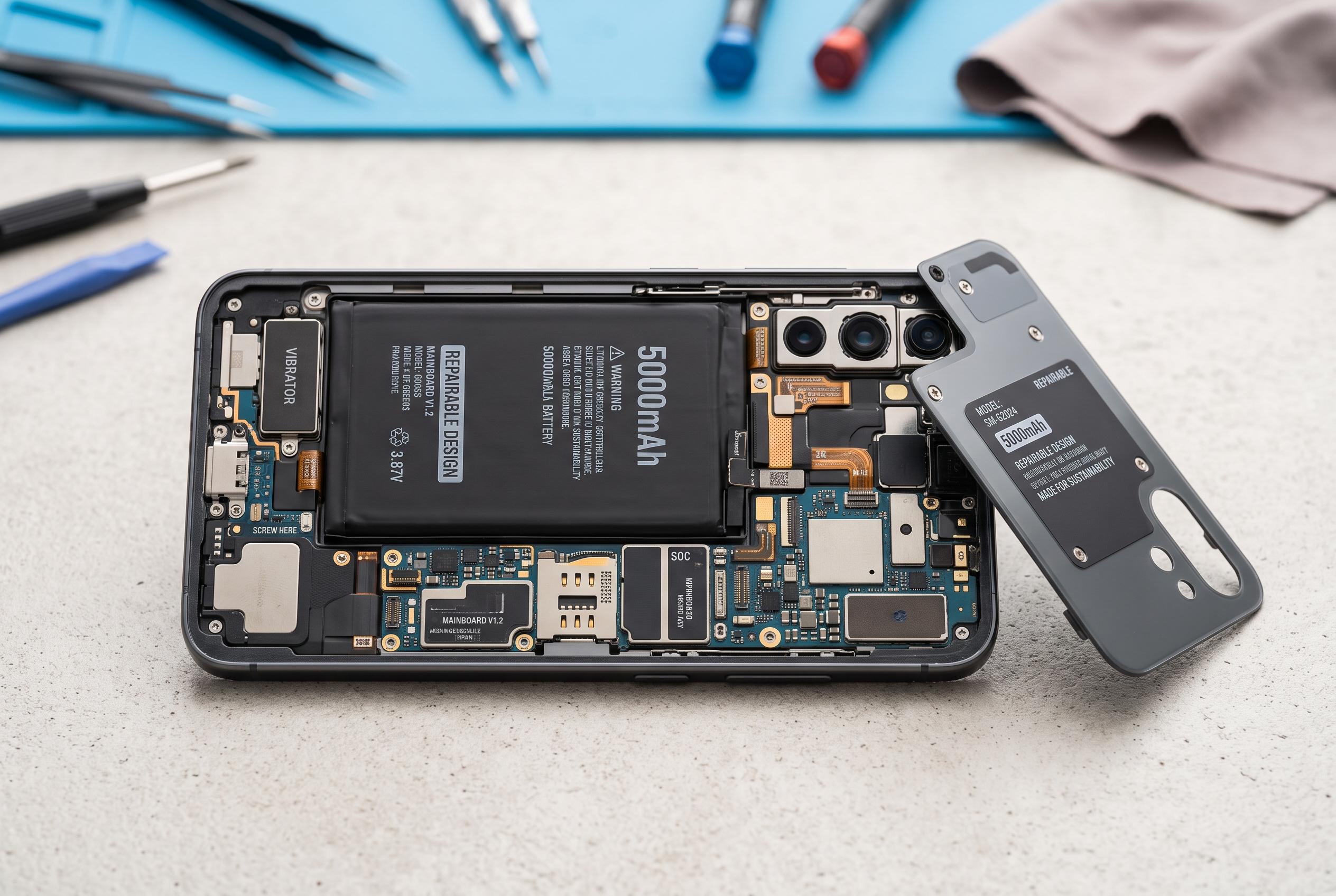

Brussels enacts new rules encouraging longer-lasting, easier-to-repair smartphones, shifting industry towards greater sustainability and consumer control.
A new phase is opening for smartphone design in Europe as Brussels pushes manufacturers towards devices that are easier to repair, dismantle and keep in use for longer. According to the European Commission, the policy shift is meant to support more sustainable consumption by improving repairability and the availability of spare parts, while the EU’s battery rules add pressure for portable batteries to be removable and replaceable by end users.
The practical effect is less about a full return to old-style removable batteries and more about redesigning handsets so that battery access is simpler and safer. The Commission’s repair directive, adopted on 13 June 2024 and in force since 30 July 2024, requires member states to transpose it into national law and apply it from 31 July 2026. It also complements the EU’s wider ecodesign framework, which already covers smartphones and tablets.
Under the ecodesign rules, manufacturers must meet durability and serviceability standards, including batteries that can withstand at least 800 charge cycles while retaining at least 80% of their original capacity. The rules also require critical spare parts to be available to repairers within 5 to 10 working days and for up to seven years after sales of a model end in the EU market, a requirement that should make longer device lifecycles more realistic.
Industry guidance on the battery regulation says portable batteries in devices must be removable and replaceable by end users during the product’s lifespan, with some exceptions for equipment designed for wet or underwater environments. Taken together, the measures point to a market where thin industrial design still matters, but so does the ability to fix a device, replace its battery and delay the need for a new phone.
Disclaimer: This content is intended for informational purposes only. Readers are advised to exercise their own judgement, conduct due diligence, or consult a qualified expert before acting on any information provided.