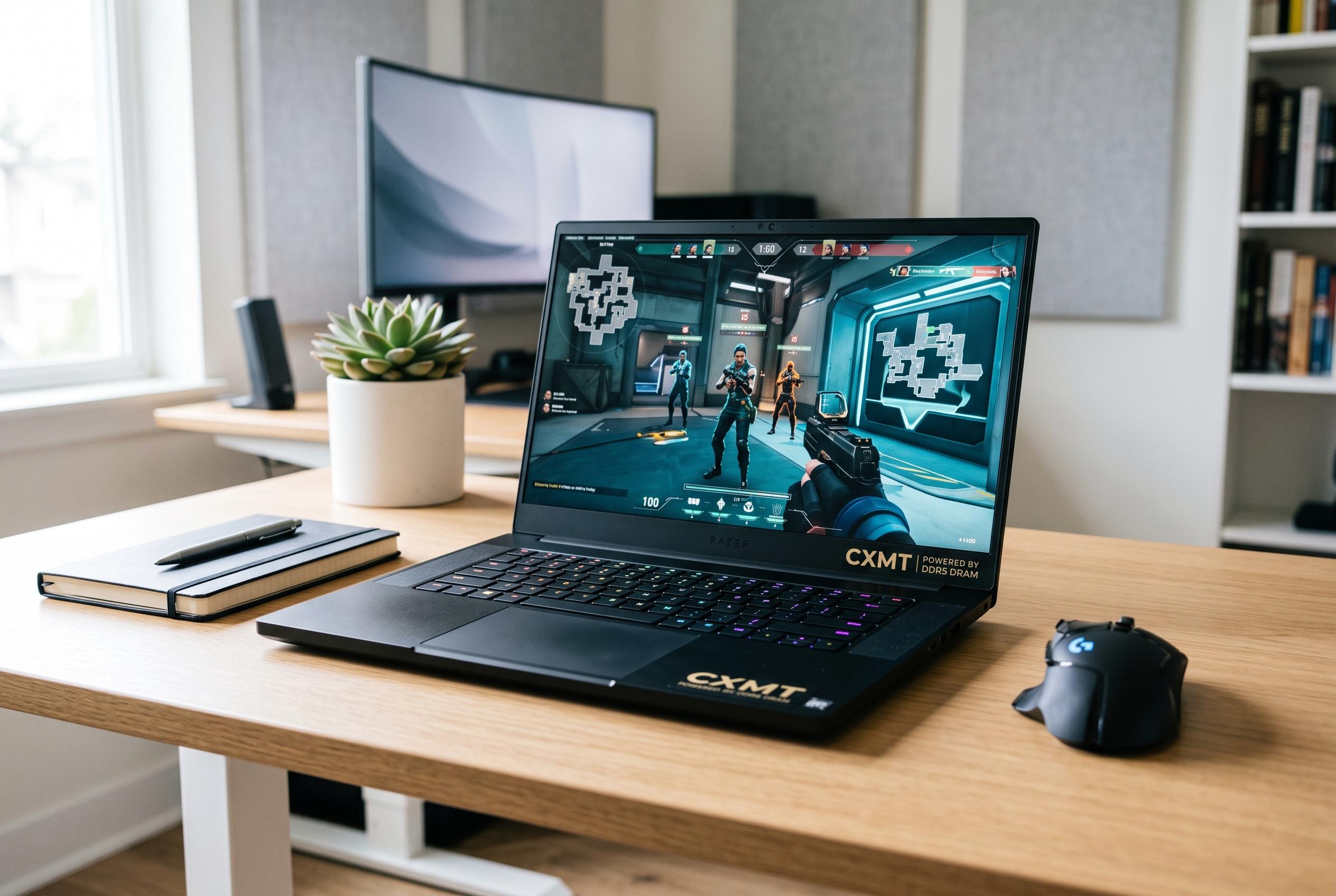

As the worldwide memory shortage worsens, HP, Asus, and Acer are cautiously incorporating Chinese supplier CXMT’s DRAM chips into select notebooks, signalling a shift in industry supply chains and potential price impacts.
Gaming laptop makers are beginning to test DRAM chips from ChangXin Memory Technologies, or CXMT, as the global memory shortage continues to tighten supply across the PC market. According to reports from Tom’s Hardware and TechRadar, HP, Asus and Acer have started using small quantities of CXMT memory in selected notebook models, mainly outside the US. The move is not framed as a cost-cutting exercise. It is a supply-management response to a market in which traditional memory output has been pulled towards AI data centres.
That shift reflects a broader imbalance in the industry. GamesRadar reported that the big DRAM suppliers have prioritised higher-margin products, particularly memory for servers and AI infrastructure, leaving less capacity for consumer devices such as laptops, tablets and smartphones. As a result, spot prices have risen sharply and manufacturers have been forced to look for alternative sources simply to keep production lines moving. In that environment, CXMT has emerged as a more relevant supplier than it was only a short time ago.
Even so, the impact on prices is likely to be limited in the near term. Tom’s Hardware said the CXMT content in current notebooks remains small and is restricted to non-US models, partly because of geopolitical concerns around the company. The wider market is still dominated by Samsung, SK hynix and Micron, which together account for well over 90% of global DRAM supply. That means CXMT can add flexibility, but it cannot yet offset the structural shortage on its own.
GamesRadar also reported that CXMT has been expanding quickly, with a rising share of the DRAM market and fresh investment in production and research. The company is said to be developing more advanced memory technologies, including LPDDR6, while planning additional manufacturing capacity in Beijing. For laptop buyers, the immediate effect is more likely to be higher prices than a sudden improvement in availability. For the industry, though, CXMT’s growing role suggests the market may slowly be moving towards a more competitive balance.
Disclaimer: This content is intended for informational purposes only. Readers are advised to exercise their own judgement, conduct due diligence, or consult a qualified expert before acting on any information provided.