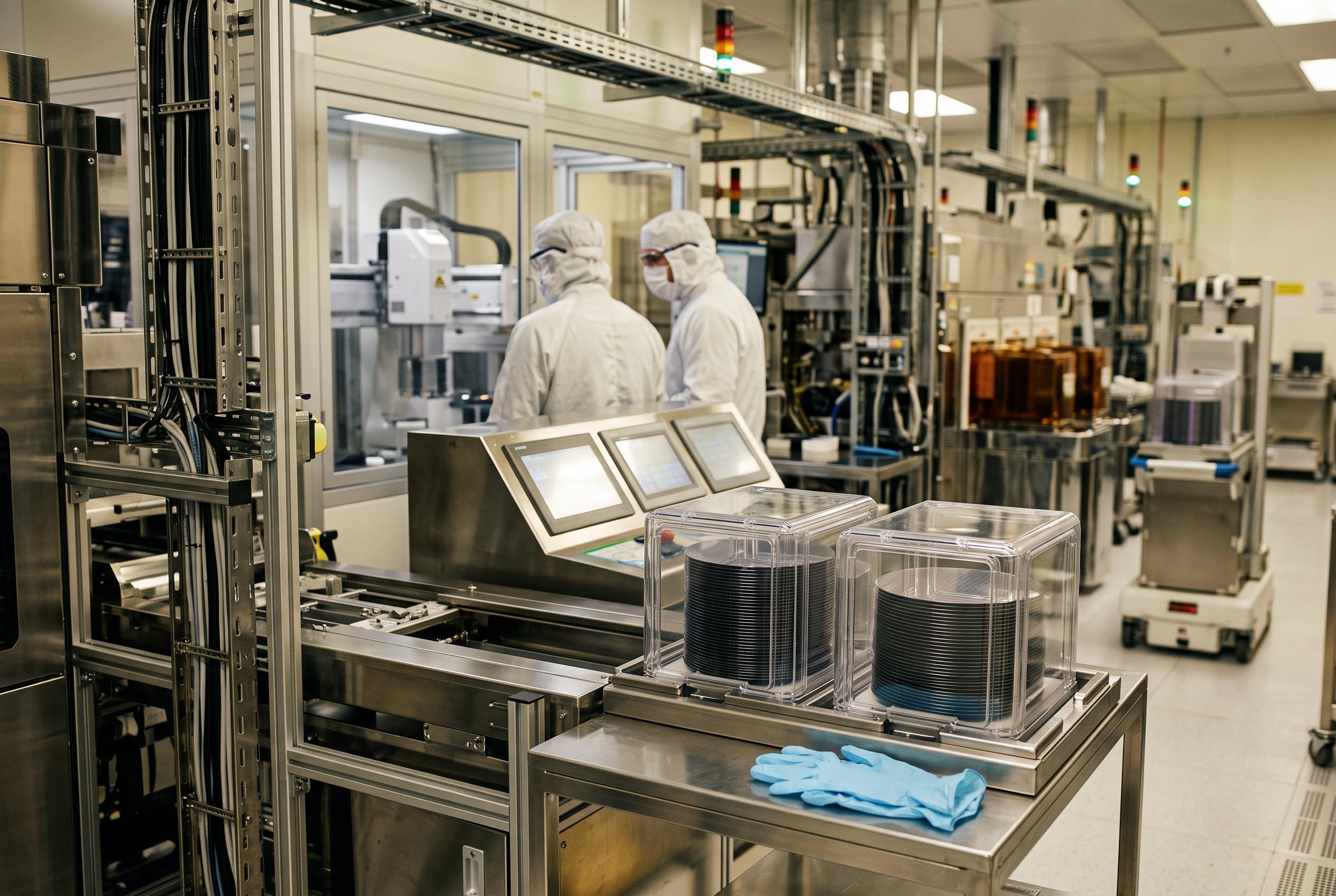

The semiconductor industry has surpassed its previous full-year sales record by July 2026, propelled by AI infrastructure investments and ongoing supply chain bottlenecks, with market analysts debating the sustainability of this unprecedented growth.
Global chip revenue in the first seven months of 2026 has already moved beyond the industry’s previous best full-year showing, after July sales climbed to $146.8bn, according to Semiconductor Industry Association data published on 4 September. July revenue was 6.4% higher than June’s $137.9bn and 135.1% above the $62.5bn recorded in July 2025, extending a sequence of month-on-month gains to 17 months. ChipNews and Japan’s TECH+ both highlighted the same milestone: the sector has crossed an annual-record threshold with five months of the year still to run. (semiconductors.org)
The strength of the market is being measured on a smoothed basis rather than as raw monthly billings. SIA said the numbers are compiled by World Semiconductor Trade Statistics, or WSTS, and reported as a three-month moving average, a method that reduces short-term volatility. UDN, citing the trade body, also noted that SIA says it represents 99% of US semiconductor industry revenue and nearly two-thirds of non-US chip companies. In June, WSTS raised its 2026 forecast to $1.51tn, saying the upswing was being driven overwhelmingly by memory, with logic the other large contributor, both linked to heavy investment in AI infrastructure and accelerated computing. (semiconductors.org)
The July regional breakdown shows how wide that expansion has become. The Americas remained the largest market at $54.44bn, followed by Asia Pacific and other territories at $40.51bn and China at $38.17bn, while Europe reached $8.15bn and Japan $5.52bn. On an annual basis, the Americas grew fastest at 171.3%, ahead of Asia Pacific and other regions at 134.9% and China at 123.6%. Month to month, Japan led with a 9.2% increase. ChipNews argued that the pattern points to AI-led demand spreading across more of the industry’s customer base rather than being confined to a single product niche or geography. (semiconductors.org)
Exactly how far beyond the old record the market has travelled is less straightforward than the headlines suggest, and some follow-up reports do not agree. TECH+ put January-to-July sales at $848.6bn and said that was roughly $50bn above 2025’s previous high-water mark. Semiconportal, by contrast, summed the published monthly moving-average figures and arrived at about $783.18bn, comparing that with a 2025 annual figure of $766.48bn. Official WSTS full-year data put 2025 sales at $795.6bn. The apparent mismatch matters because the monthly SIA releases are three-month moving averages, so adding them together does not produce a directly comparable annual sales total. The safer conclusion is the one SIA itself makes: the market is already running at a record pace by July, even if secondary outlets differ on the exact cumulative arithmetic. (news.mynavi.jp)
The July market report is also one of the last to be issued under John Neuffer, who said “the industry has already reached its highest-ever annual global sales total” just seven months into the year. SIA separately announced that Michael Robbins will take over as president and chief executive on 1 October. Robbins currently leads the Association for Uncrewed Vehicle Systems International, and Lisa Su, AMD’s chief executive and this year’s SIA board chair, said semiconductors “have never been more essential” to the world economy and technology competition. (semiconductors.org)
The scale of current demand is also visible outside the sales tables. In its broader industry round-up, Elettronica News pointed to comments made during Semicon Taiwan by Cliff Hou of TSMC, who said the foundry’s internal measure of equipment demand had risen from an index of 1 at the end of 2025 to 1.5 after the first quarter and 1.9 by July. Hou said TSMC had 13 fabrication plants under construction in Taiwan and another five or six overseas, yet customers were still signalling that supply was insufficient. The bottleneck, he said, was increasingly skilled construction labour rather than finance. That helps explain why sales can surge even as physical capacity remains tight. (elettronicanews.it)
That boom is also developing against a less stable geopolitical backdrop. The same Elettronica News briefing linked the sales record to a Reuters report that some Chinese rare-earth suppliers had paused shipments to the US despite holding export licences, after Beijing imposed sanctions in August on the Responsible Business Alliance and other US audit groups. Rare earths are not counted in semiconductor revenue, but the episode is a reminder that the chip market’s headline growth still sits inside a supply chain exposed to trade controls, materials bottlenecks and political retaliation. (elettronicanews.it)
For now, the direction of travel remains unmistakable: a market propelled by AI servers, advanced memory and leading-edge logic is still expanding at a rate far above the industry’s historical norm. The next official checkpoint will come on 1 October, when WSTS is scheduled to publish August data, on the same day Robbins is due to start at SIA. If the recent pattern holds, the debate will shift from whether 2026 is a record year to how durable a record built on AI spending, tight capacity and complex supply chains can prove to be. (wsts.org)
Disclaimer: This content is intended for informational purposes only. Readers are advised to exercise their own judgement, conduct due diligence, or consult a qualified expert before acting on any information provided.