
Despite contrasting reports on growth, the global TV industry remains under pressure from rising costs and regional fluctuations, with the 2026 World Cup providing a temporary boost that may soon give way to price hikes and shifting consumer preferences.
The World Cup gave television makers a badly needed lift in the second quarter, but the size of that rebound depends on whose tracker you use. Omdia said global TV shipments rose 3.6% year on year to 48.8 million units in the April-to-June period, helped by tournament buying and the timing of Amazon Prime Day. Counterpoint Research, looking at monthly shipment patterns, drew a more cautious conclusion: June itself was down 4% and left the quarter broadly flat at -0.4%, suggesting that some of the apparent strength was demand pulled forward rather than a clean recovery. (omdia.tech.informa.com)
That distinction matters because the industry is still operating under heavy cost pressure. Omdia said persistent consumer inflation and tighter memory supply pushed up input costs, even if brands were able to keep units moving by leaning on older product lines and existing stocks of cheaper memory. Trade coverage in Advanced Television and CSI Magazine focused especially on what happens next: higher retail prices later in 2026 and a faster shift away from lower-resolution sets as lower-capacity memory becomes harder to secure, leaving 4K models in a stronger relative position. (omdia.tech.informa.com)
The regional split was sharp. China remained the main drag, with shipments down 15.1% after the end of local stimulus schemes, while Western Europe grew 9.5% and North America 4.7%, according to Omdia. Eastern Europe rose 14.5% and Latin America and the Caribbean 12.8%; The Desk said that upswing was driven largely by Chinese brands pushing cheaper sets into overseas markets as domestic demand weakened. Counterpoint’s earlier April read showed that this pattern had been building well before the knockout rounds: Western Europe was up 48% in that month alone, North America rose 10%, and Xiaomi’s shipments in Western Europe jumped nearly 12 times year on year as it rolled out its TV S Mini LED 2026 range across Germany, Spain, Italy and the Netherlands. (omdia.tech.informa.com)
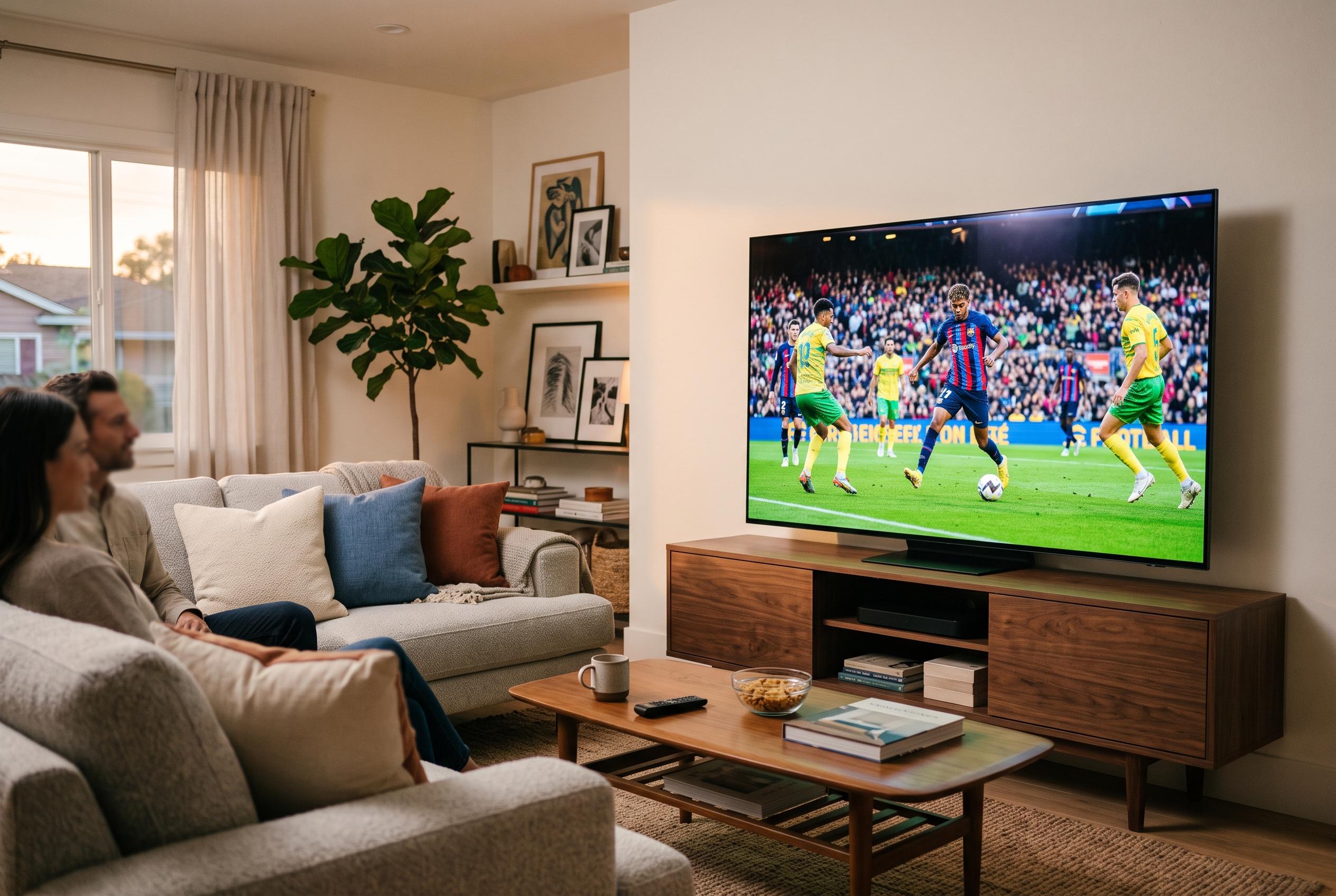
North America was not just another growth market; it became the key promotional theatre for premium LCD-based technologies. Counterpoint said the first North American World Cup in 32 years was expected to create a June demand spike, with World Cup-themed promotions running from late April. In that setting, Hisense entered 2026 as the previous year’s North America MiniLED leader with a 32% share, only just ahead of Samsung on 31%, but Samsung had retaken first place in the first quarter of 2026 and widened the gap to 13 percentage points, reaching 40% against Hisense’s 27%. Hisense tied its UR9 and UR8 RGB Mini LED models and its sports-focused U7 series to the tournament window, while Samsung countered with R95H and R85H Micro RGB flagships and an entry-level MiniLED M-Series. (counterpointresearch.com)
Globally, that contest is now visible in the numbers. Omdia said Mini LED sets accounted for 13% of all TV shipments in the second quarter, with Samsung and LG Electronics broadening their ranges and cutting entry prices. TCL had led the category in the first quarter with a 30.2% share, but Samsung moved from third place to the top in the second quarter with 28.2%. The broader industry reading in the trade press was that the competitive fight is no longer confined to flagship models: lower starting prices are pushing Mini LED further into the mainstream and forcing TCL and Hisense to defend positions they had built earlier in the cycle. (omdia.tech.informa.com)
RGB LED remains much smaller, but it is becoming strategically important because it sits closer to the premium end of the market. Omdia put second-quarter RGB LED shipments at 295,000 units. Hisense started the year in a dominant position, with 77.2% of shipments and China accounting for 88.8% of the market, but by the second quarter Hisense’s share had dropped to 42.9% as Samsung and Sony took meaningful ground. Matthew Rubin, Omdia’s research manager for TV set research, said: “Prominent promotion of RGB LED TVs during the World Cup has undoubtedly helped increase consumer awareness of the technology.” The Desk reported the same Omdia view that RGB LED is increasingly being positioned as an alternative to OLED in the premium segment. (omdia.tech.informa.com)
The disagreement between Omdia and Counterpoint does not necessarily mean one is wrong; it may reflect different measurement windows and what each firm is emphasising. Counterpoint said April’s strength came from “sell-in” and channel inventory build-up ahead of the tournament, not simply from final consumer purchases, and argued that June weakness looked more like a timing payback than a collapse in appetite. Omdia’s quarterly view, by contrast, points to a market that still managed modest annual growth despite inflation, memory shortages and a deep slump in China. Taken together, the two readings suggest a market that was stabilised by a major sporting event, but not fundamentally cured by it. (counterpointresearch.com)
What comes next is likely to be less forgiving. Omdia expects memory costs to keep rising and says that will put upward pressure on TV prices during the rest of the year. If that happens while the World Cup effect fades, brands that relied on promotions, older stock and aggressive overseas expansion will have to prove they can keep volumes up without an extraordinary event doing part of the selling for them. The most immediate beneficiaries may be those already strongest in 4K and in the increasingly crowded Mini LED tier, where the battle has shifted from technology leadership alone to price, positioning and retail execution. (omdia.tech.informa.com)
Disclaimer: This content is intended for informational purposes only. Readers are advised to exercise their own judgement, conduct due diligence, or consult a qualified expert before acting on any information provided.