

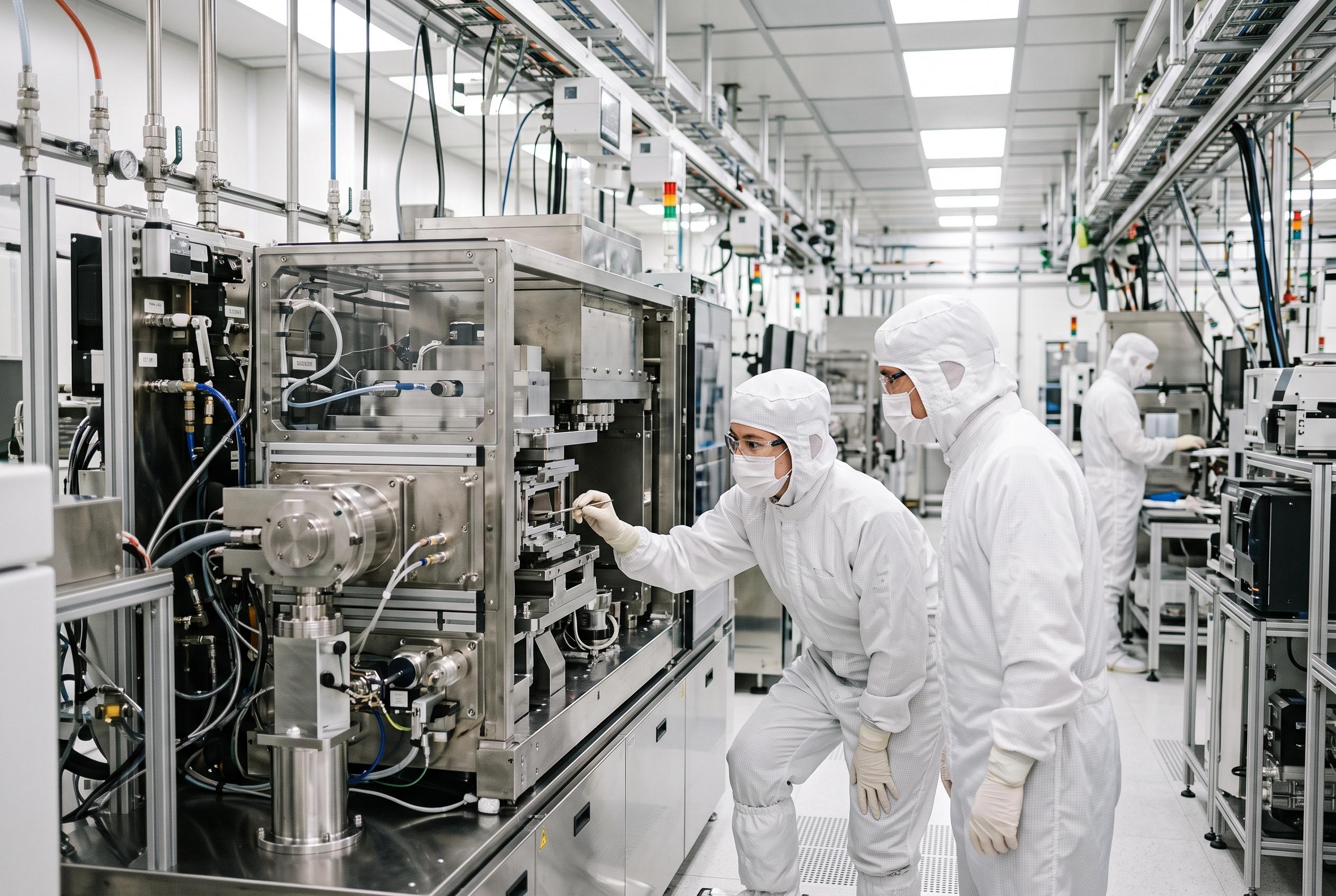

A €1.1bn expansion and new 7nm-class platform mark GlobalFoundries’ push to turn regional resilience, specialty processes and adjacent technologies into an alternative to Taiwan-centred chip manufacturing.
GlobalFoundries is trying to do more than add space to a German campus. The company is positioning its Dresden expansion as part of a wider effort to secure a durable role in the non-China, non-Taiwan supply chain, at a moment when foundry customers are increasingly sensitive to geopolitical concentration and capacity bottlenecks. The investment also reflects a simple commercial reality: as the most advanced logic demand continues to cluster around Taiwan, alternative manufacturing bases are likely to gain strategic value, even if they are not chasing the very leading edge.
That context matters because GlobalFoundries has long taken a different path from the industry’s front-runners. After AMD separated from its manufacturing arm and GlobalFoundries was formed in 2009 with Mubadala, the business evolved into a foundry focused on mature and specialty processes rather than the newest transistor architectures. The approach has left it outside the core AI boom that has lifted TSMC, but it has also given the company a clearer identity as a supplier for customers that prioritise resilience, cost discipline and regional sourcing.
The Dresden project is therefore best understood as a bet on demand that sits below the AI spotlight but remains essential to the broader chip economy. GlobalFoundries has said the SPRINT expansion involves €1.1 billion in new cleanroom and laboratory capacity, with the site expected to produce more than one million 300mm wafers a year by the end of 2028. The company has linked the investment to locally manufactured technologies for European customers, especially in industrial, automotive and edge applications, where supply security and power efficiency often matter more than bleeding-edge performance.
At the same time, GlobalFoundries is trying to reassert technical relevance. Tom’s Hardware reported that the company has announced FDX Fusion, a 7nm-class FD-SOI platform built around planar transistors rather than FinFETs, with production targeted for 2028 in Dresden and design kits expected in 2027. The process is being presented as a low-power, high-integration option for physical AI, sensors, automotive and industrial systems, with support for RF, analogue and embedded non-volatile memory. If it works as described, it would give GlobalFoundries a differentiated product line at a time when many customers want more choice than the leading-edge foundries can offer.
The company is also broadening its industrial footprint beyond conventional wafer fabrication. Tom’s Hardware reported that GlobalFoundries has agreed a five-year, $2 billion arrangement with TSMC to make silicon interposers for CoWoS advanced packaging in the United States, a sign that the foundry is willing to participate in adjacent parts of the supply chain even after stepping away from leading-edge logic. It has also moved into silicon photonics through the purchase of Advanced Micro Foundry in Singapore, strengthening its exposure to data-centre and telecom markets where optical links are becoming more important as power constraints intensify.
Taken together, these moves suggest a company trying to turn scale, geography and process specialisation into a more resilient business model. GlobalFoundries is not attempting to match TSMC node for node, and it has no obvious reason to do so. Instead, it is building around regions and applications where the market values redundancy, local manufacturing and predictable cost structure. In Europe, where ASML has recently argued that local chip investment is still too thin to support the wider ecosystem, that strategy may prove commercially modest but strategically relevant.
Disclaimer: This content is intended for informational purposes only. Readers are advised to exercise their own judgement, conduct due diligence, or consult a qualified expert before acting on any information provided.



