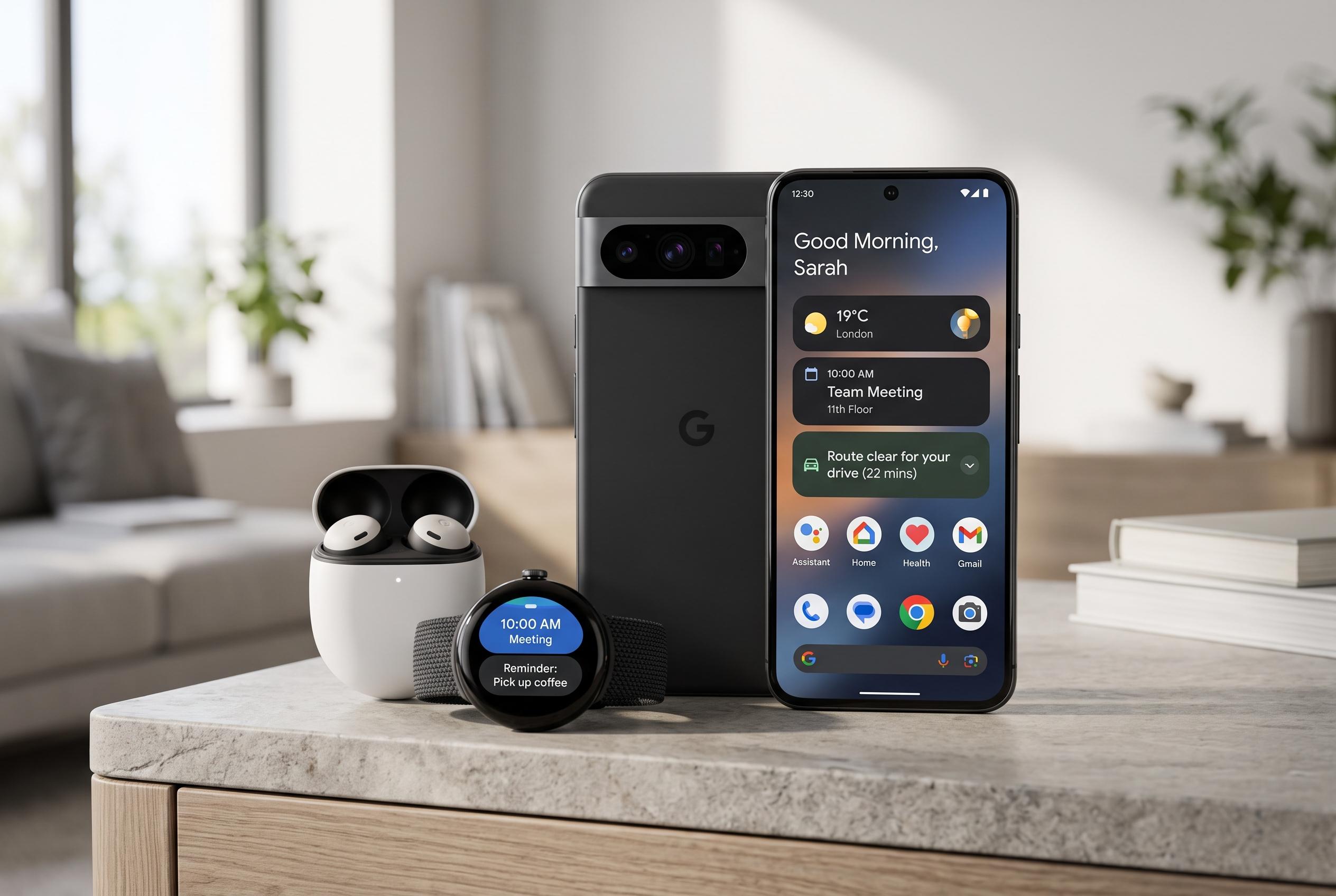

Google’s Made by Google event unveiled the Pixel 11 series and new wearable devices, signalling a move towards devices that anticipate user needs through advanced software and smarter hardware integration.
Google’s annual Made by Google event on 12 August marked a broader shift in the Pixel strategy than a routine hardware refresh. The company used the launch to present the Pixel 11 family, a new Pixel Watch, its first dedicated tracker tag and fresh Pixel Buds software features, but the common thread was clear: Google is pushing its devices towards anticipating needs rather than merely responding to commands. Industry coverage of the event said that aim now sits at the centre of the Pixel ecosystem.
The Pixel 11 line comprises the Pixel 11, Pixel 11 Pro, Pixel 11 Pro XL and Pixel 11 Pro Fold. According to Google and reports from Android Central and Digital Camera World, all four models run on the new Tensor G6 chip, with the base phone getting a thinner camera bar, a larger 48-megapixel main camera and improved low-light performance. The Pro models gain brighter displays, tougher screen protection and more capable telephoto hardware, while storage now starts at 256GB on the standard phones. The Fold is also lighter, thinner and described by Google as more durable than its predecessor. Pricing starts at $899 for the base handset, with the Fold topping out at $1,899, and the phones go on sale on 20 August.
Much of the launch’s technical emphasis was on software that feels more proactive. Google’s Gemini assistant is being pushed deeper into the phone, with support for more than 40 apps and context-aware prompts that can surface travel details, suggest restaurant bookings or offer to add events to Calendar. Android Central reported that Google also introduced a cleaned-up voice input tool called Rambler, along with Sign To Text, which uses the camera to interpret American Sign Language. The Pixel 11’s camera software is similarly aimed at removing friction: Magic Capture analyses hundreds of frames to improve timing, while new features such as Instant Night Sight and Camera Looks are designed to make low-light and style choices easier at the point of capture.
The Pro models also add a visual alert system called HiLight, which places coloured LED effects around the rear camera module so the phone can signal calls, Gemini activity and other notifications while facedown. TechRadar said the feature is meant to make information glanceable rather than attention-grabbing, echoing Google’s broader design theme. Google is also widening interoperability, with Quick Share now able to exchange photos and videos with iPhones and MacBooks, and a transfer process intended to make moving from Apple’s ecosystem less cumbersome.
Google’s wearable and accessory announcements followed the same logic. The Pixel Watch 5 adds improved GPS accuracy, more memory and a faster processor, while Google says its Health Guardian tools can track longer-term wellness trends such as sleep breathing quality and insulin resistance. A breathing emergency feature is available in some European markets but not in the US yet. The new Pixel Tag, priced at $29, joins Google’s Find Hub network and includes UWB support, a replaceable battery and anti-stalking protections. Pixel Buds Pro 2 are not being replaced, but they are gaining dynamic noise cancellation, watch-linked sleep pausing and expanded Live Translation through software updates. Taken together, the launch suggests Google now wants the Pixel range to act less like a set of gadgets and more like an ambient assistant.
Disclaimer: This content is intended for informational purposes only. Readers are advised to exercise their own judgement, conduct due diligence, or consult a qualified expert before acting on any information provided.