

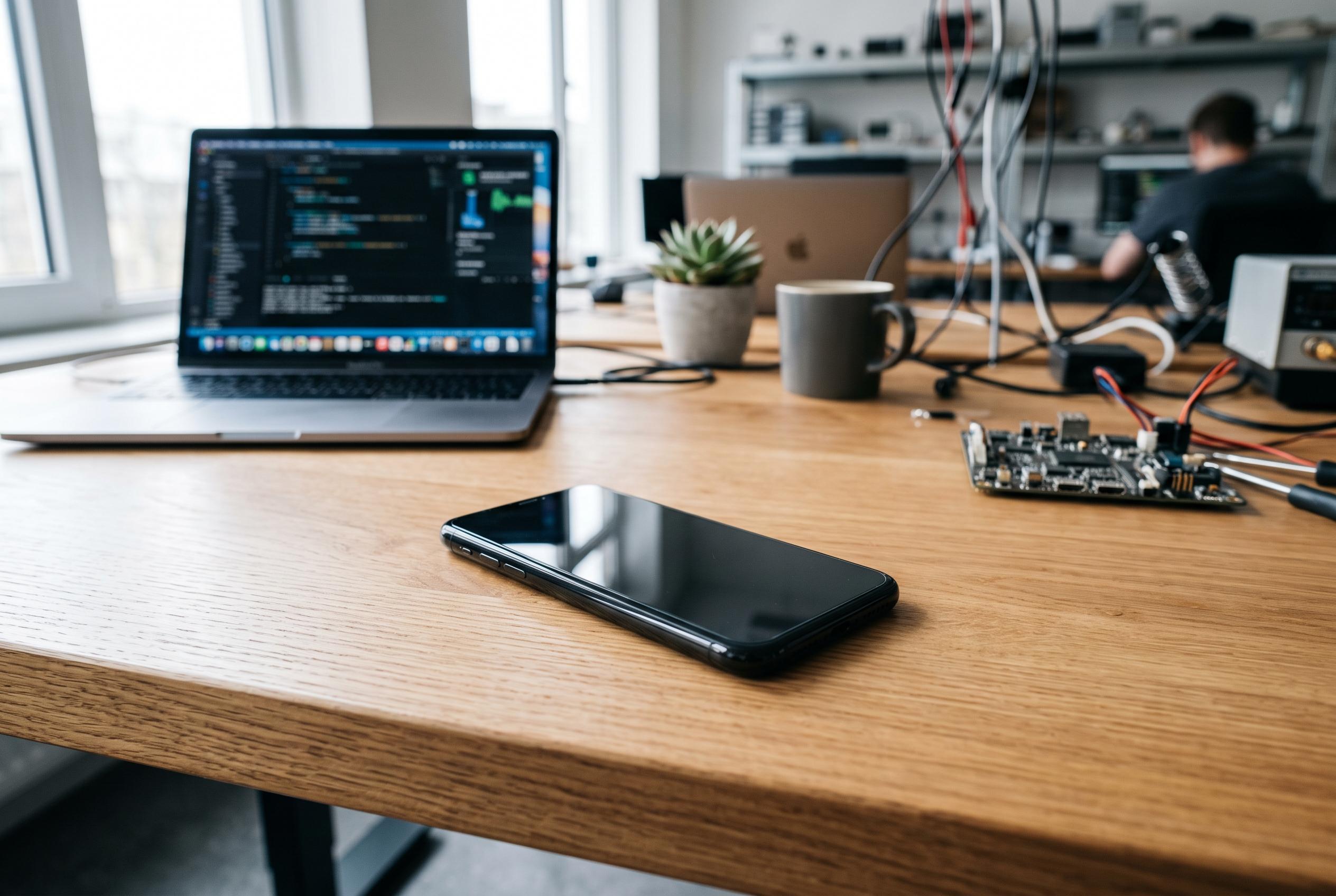

Huawei says it has shipped more than 100 million Kirin-powered smartphones since returning to the premium market, while its LogicFolding architecture and AI accelerators signal a broader push to rebuild China’s chip industry.
Huawei says it has now shipped more than 100 million smartphones powered by its Kirin processors since the company returned to the premium handset market in 2023, a milestone that underscores how far its in-house chip programme has recovered since US sanctions disrupted its access to key overseas suppliers. The claim, reported by SCMP and echoed by Chinese technology coverage, also comes as Huawei begins volume production of its Kirin 9050 family and tests a next-generation chip due in 2027. Huawei says preliminary results for the newer part are already in line with its internal targets.
The company’s latest flagship processor, the Kirin 9050 Pro, is the first commercial chip to use Huawei’s LogicFolding architecture, according to reporting from CRN Asia. That design is intended to improve transistor density by stacking and reorganising elements more efficiently, while also making better use of limited manufacturing capability in China. Huawei has said the chip incorporates more than 50 million hybrid interconnects and lifts transistor placement density by 53.5%, a notable gain for a firm still operating under restrictions that limit access to the most advanced lithography equipment.
The significance of that progress is clearest when set against Huawei’s position in 2020, when it lost access to TSMC as a result of US sanctions. Its return to the high-end smartphone market in 2023 with the Mate 60 Pro and the Kirin 9000S, manufactured by China’s SMIC on a 7nm-class process, was widely seen as evidence that Huawei had rebuilt part of its semiconductor supply chain at home. The early teardown and supply-chain analysis that followed the Mate 60 Pro launch also showed how closely watched the chip remained, with industry commentators treating it as a marker of Chinese progress under export controls.
Huawei’s chip strategy now extends beyond handsets. The company says it shipped 572,000 Ascend AI accelerators in the first half of 2026, up by 300,000 year on year, giving it 28% of China’s data-centre AI-chip market. Nvidia, by comparison, shipped 678,000 units into China and retained a 34% share, down from 44% a year earlier, according to Huawei’s figures reported in Chinese media. That suggests Huawei is pressing further into the domestic AI hardware market even as it continues to rely on a constrained industrial base.
The broader picture is one of adaptation rather than full technological independence. Huawei’s progress with LogicFolding appears to show that architectural innovation can partly offset restrictions on leading-edge fabrication. But the company is still working within the limits of China’s current manufacturing ecosystem, and its ability to sustain that pace will depend on whether local suppliers can keep improving yields, packaging and toolchain support. Even so, the shipment milestone and the move towards a 2027 chip point to a company that has re-established a viable semiconductor roadmap after a period when its position looked far more fragile.
Disclaimer: This content is intended for informational purposes only. Readers are advised to exercise their own judgement, conduct due diligence, or consult a qualified expert before acting on any information provided.



