

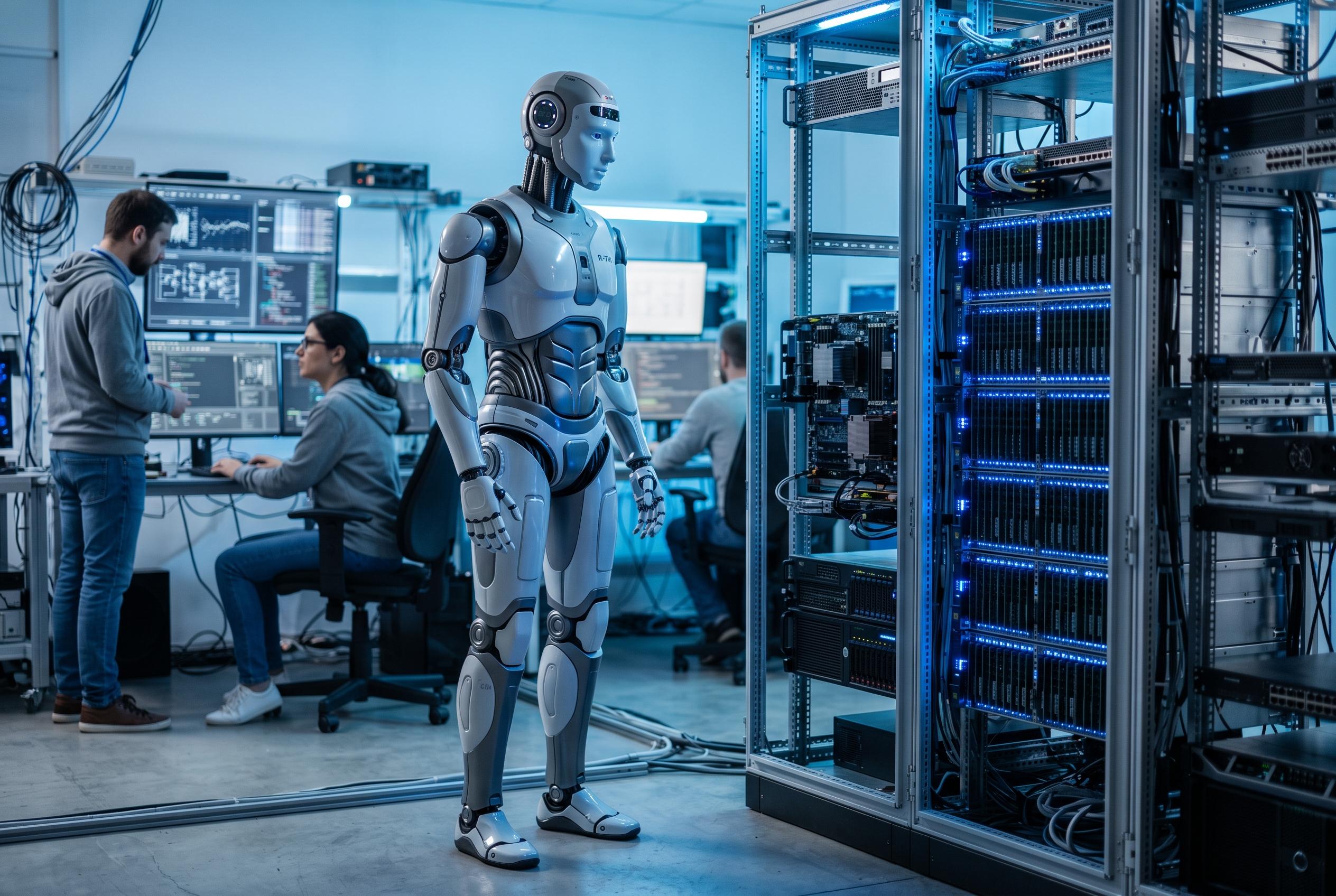

Humanoid robots could become a major new buyer of memory chips, with global DRAM demand from the machines forecast to rise from 8,300 terabits this year to 172,000 terabits by 2030.
Memory markets may be heading for a fresh source of demand outside data centres, with humanoid robots emerging as a potentially significant new customer. Counterpoint Research estimates that global DRAM demand for humanoid robots could rise more than 20-fold by 2030, from about 8,300 terabits this year to roughly 172,000 terabits. The research, first highlighted by The Chosun Daily, also suggests that average memory per robot will almost double over the period, from 19 gigabytes to 39 gigabytes.
The forecast matters because the memory industry has already been stretched by demand from artificial intelligence hardware. Hyperscalers have absorbed large volumes of high-bandwidth memory for data-centre expansion, helping to push up prices and tighten supply for consumer devices. At the same time, Chinese maker ChangXin Memory Technologies has said it has begun mass production of advanced memory chips, adding another variable to an already uncertain supply outlook. Goldman analysts are watching Samsung’s results for signs of whether leading suppliers still expect tight conditions to last into 2028.
The robot demand story is also tied to the changing design of AI systems. As Counterpoint noted, humanoid machines are increasingly expected to process images, video and sound at the same time, while using so-called world models to respond to their surroundings. That raises the need for faster processing and larger memory pools. The same pattern is appearing in highly autonomous vehicles, which Micron chief executive Sanjay Mehrotra said can require more than 200 gigabytes of memory and several terabytes of storage, with humanoid robots likely to need similar specifications.
Forecasts for shipments of humanoid robots also suggest the market could become meaningful on its own, rather than just a niche extension of industrial automation. Goldman’s Eric Sheridan recently raised his base-case estimate to 890,000 units in 2030 and 6.5 million in 2035, up from prior projections of 256,000 and 1.4 million respectively. Separately, Acer chairman and chief executive Jason Chen has argued that memory prices may start easing in the second half of next year, a view that contrasts with warnings from some chipmakers that shortages could persist well beyond 2027. The result is a market split between near-term supply relief and long-term demand growth driven by AI, vehicles and robotics.
Disclaimer: This content is intended for informational purposes only. Readers are advised to exercise their own judgement, conduct due diligence, or consult a qualified expert before acting on any information provided.



