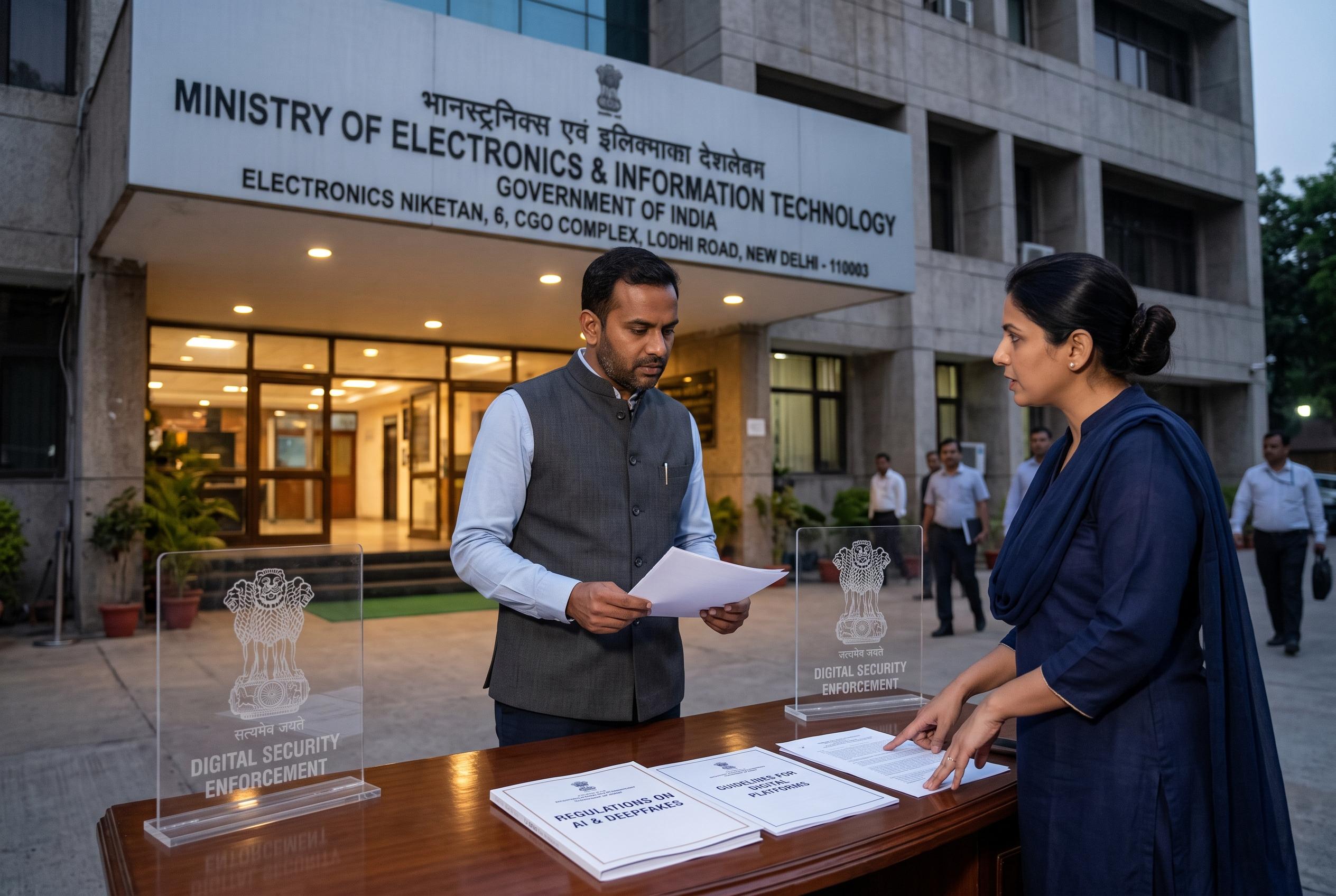

India’s Ministry of Electronics and Information Technology is pushing Meta to implement stricter measures against deepfakes, child sexual abuse material, and unlabelled AI-generated content amid tightening online content rules and heightened government scrutiny.
India’s Ministry of Electronics and Information Technology has moved its talks with Meta into a technical phase, pressing the company to make specific changes to curb deepfakes, child sexual abuse material and unlabelled AI-generated content on its platforms. According to a PTI report cited in the Indian press, Meta’s global team, led by global affairs chief Joel Kaplan, spent the latest round of discussions explaining how its systems work and outlining possible fixes, with another meeting expected next week. The talks suggest closer government scrutiny of Meta’s moderation systems and its compliance with Indian law.
Officials have asked Meta to strengthen detection and response systems after raising concerns that harmful AI-generated material can reappear even after being flagged, and that synthetic videos continue to circulate without visible labels. The government has also sought more human oversight in moderation, especially in Indian languages and local cultural contexts, and wants Meta to report back on the results of any corrective measures.
The pressure on Meta comes as India tightens its wider rules on AI content. Reports in The Times of India, The Economic Times and The Statesman say the government has introduced changes requiring social media platforms to clearly label AI-generated or modified content, verify user declarations, preserve embedded metadata and act on some takedown orders within three hours. Meta has separately said that the deadline is operationally difficult, according to Livemint, while the company’s Oversight Board has criticised its existing deepfake policies and called for stronger tools and a broader overhaul.
The discussions also follow a politically sensitive episode in which Facebook briefly restricted a video posted by Prime Minister Narendra Modi, prompting questions over Meta’s content filters and safeguards. Reuters and PTI have reported that the matter drew attention from the Parliamentary Standing Committee on Communications and Information Technology, which sought a formal apology and warned that safe-harbour protection under India’s IT law could be reviewed. Separate probes by the National Commission for Protection of Child Rights and the National Human Rights Commission have also added to the scrutiny around CSAM-linked material and paid promotions on Meta’s platforms.
Disclaimer: This content is intended for informational purposes only. Readers are advised to exercise their own judgement, conduct due diligence, or consult a qualified expert before acting on any information provided.