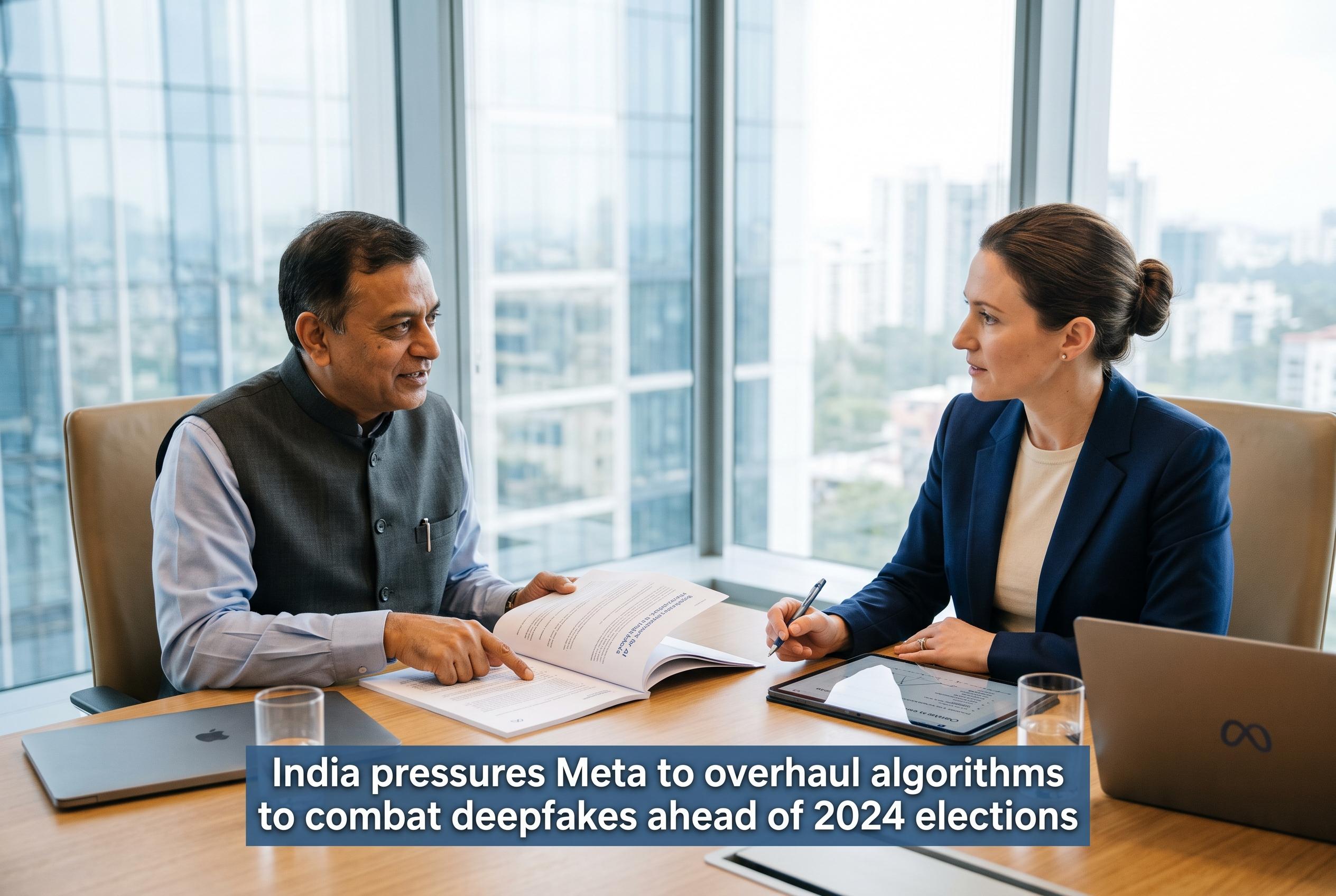

India’s Ministry of Electronics and Information Technology has called on Meta to redesign its recommendation systems and submit a compliance plan to curb the spread of manipulated content, signalling a heightened regulatory push ahead of the 2024 general election.
India’s Ministry of Electronics and Information Technology has pressed Meta to redesign parts of its recommendation systems and submit a compliance plan aimed at reducing the spread of deepfakes, propaganda and other manipulated material across Facebook and Instagram, according to government sources cited by The Economic Times. Officials are also seeking faster action on lawful takedown requests, tighter moderation and clearer alignment with India’s data localisation expectations.
The discussions come after a meeting on Friday between Meta’s technical team and MeitY officials, during which the company set out how its current systems identify harmful content. Government officials, however, are reported to have pushed for more direct algorithmic changes, arguing that existing controls are not enough to limit the circulation of synthetic media, morphed images and misleading posts.
The latest intervention fits into a broader regulatory push by New Delhi. Earlier this year, MeitY proposed amendments to the IT Rules to bring synthetically generated content under a more explicit framework, including labelling requirements designed to make AI-generated material easier to spot. Separately, the ministry has already tightened its messaging to platforms over unlawful content and electoral integrity, telling companies they must not host or transmit prohibited material and warning of action for non-compliance.
Meta has faced similar scrutiny in India before. During the run-up to the 2024 general election, the company said it would label altered content and reduce its distribution across Facebook and Instagram, including limiting its visibility in recommendation surfaces such as the Explore feed. The government’s current focus appears to be less on voluntary labelling and more on whether platform systems can be made less permissive to abuse from the outset.
The talks also reflect wider official concern over child sexual abuse material and other harmful content online. According to government sources, Meta has acknowledged some gaps in its existing systems and outlined technical measures it could take to improve detection of deepfakes and other synthetic media. Both sides are expected to continue discussions next week.
Disclaimer: This content is intended for informational purposes only. Readers are advised to exercise their own judgement, conduct due diligence, or consult a qualified expert before acting on any information provided.