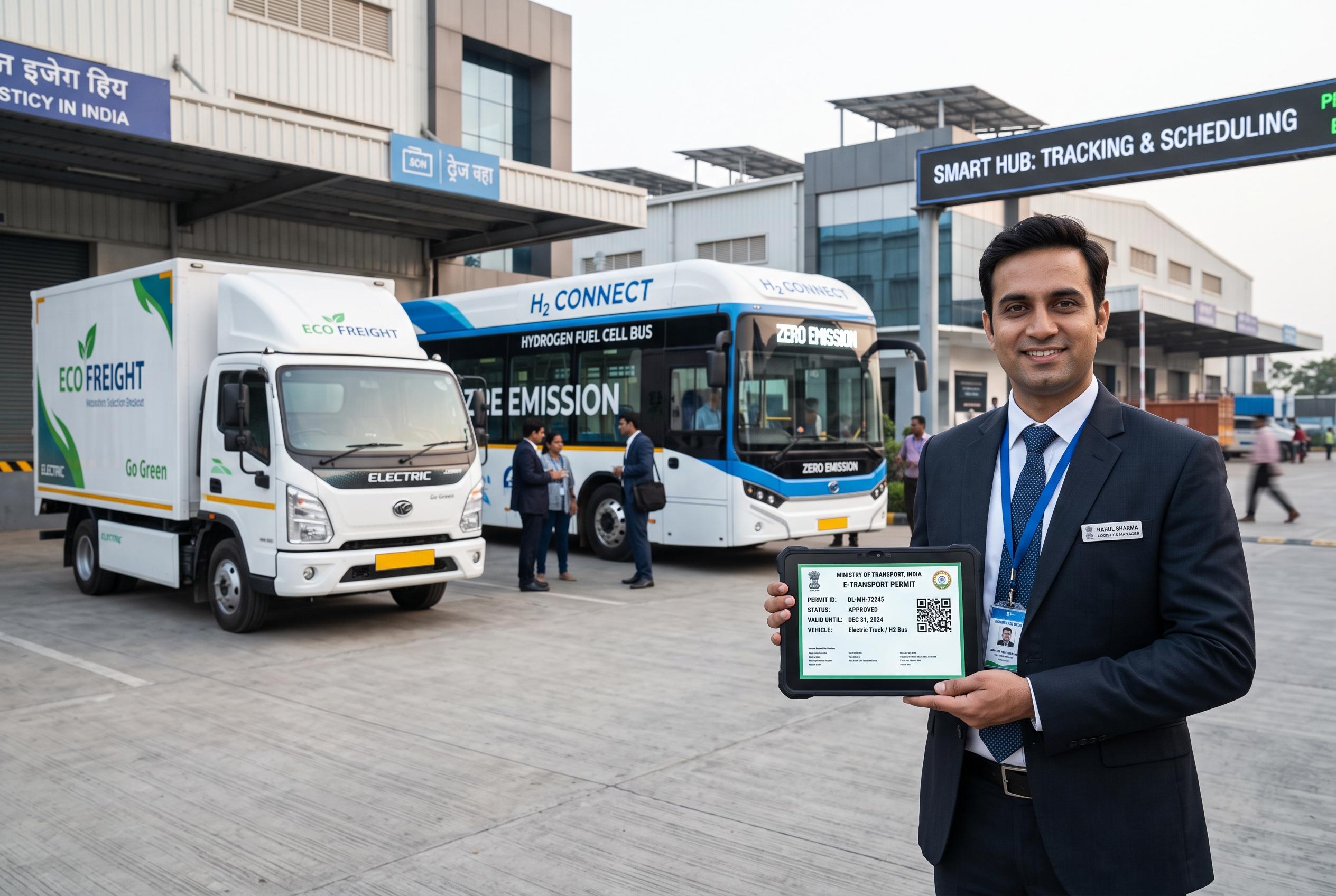

The Ministry of Road Transport and Highways has announced amendments to extend the operational age of electric, hydrogen, and CNG vehicles, while moving national permits to a fully digital process, aiming to promote cleaner fleets and streamline cross-border logistics.
The Ministry of Road Transport and Highways has proposed a new round of rule changes that would give electric, hydrogen-powered and compressed natural gas vehicles a longer commercial life, while moving national permits for goods and passenger transport fully online. The draft amendments to the Central Motor Vehicles Rules, 1989, form part of a wider effort to support cleaner fleets and cut administrative friction in India’s transport system.
According to the draft, the operational age limit for EVs, hydrogen vehicles and CNG vehicles would be extended by five years. The intention is to make investment in low-emission fleets more attractive for operators that rely on long asset lives and predictable running costs. For commercial owners, the extra years could improve the economics of switching away from diesel and petrol vehicles, particularly in inter-state logistics and passenger transport, where vehicle replacement cycles are a major cost factor.
The ministry has also proposed a fully digital National Permit process for commercial vehicles. Applications and issuance would be handled online, which should reduce paperwork, shorten processing times and remove some of the friction that transporters face when operating across state borders. The move builds on earlier steps already taken by the ministry to push electronic compliance, including mandatory vehicle tracking systems and FASTags for national permits, and the acceptance of some documents in either physical or digital form. Tamil Nadu’s recent temporary arrangement allowing out-of-state trucks to renew permits through the Suraksha Mitra portal also shows how state systems are already adapting to that shift.
A further change would widen the trade-certificate framework to include automotive component manufacturers. At present, the system is mainly used by dealers and original equipment manufacturers. Bringing parts makers into the same compliance structure would make it easier to test and move components, while giving regulators a clearer trail for monitoring activity in the sector. Taken together, the proposals suggest a two-track policy agenda: encouraging cleaner vehicle adoption and using digitisation to streamline oversight across the motor industry.
Disclaimer: This content is intended for informational purposes only. Readers are advised to exercise their own judgement, conduct due diligence, or consult a qualified expert before acting on any information provided.