

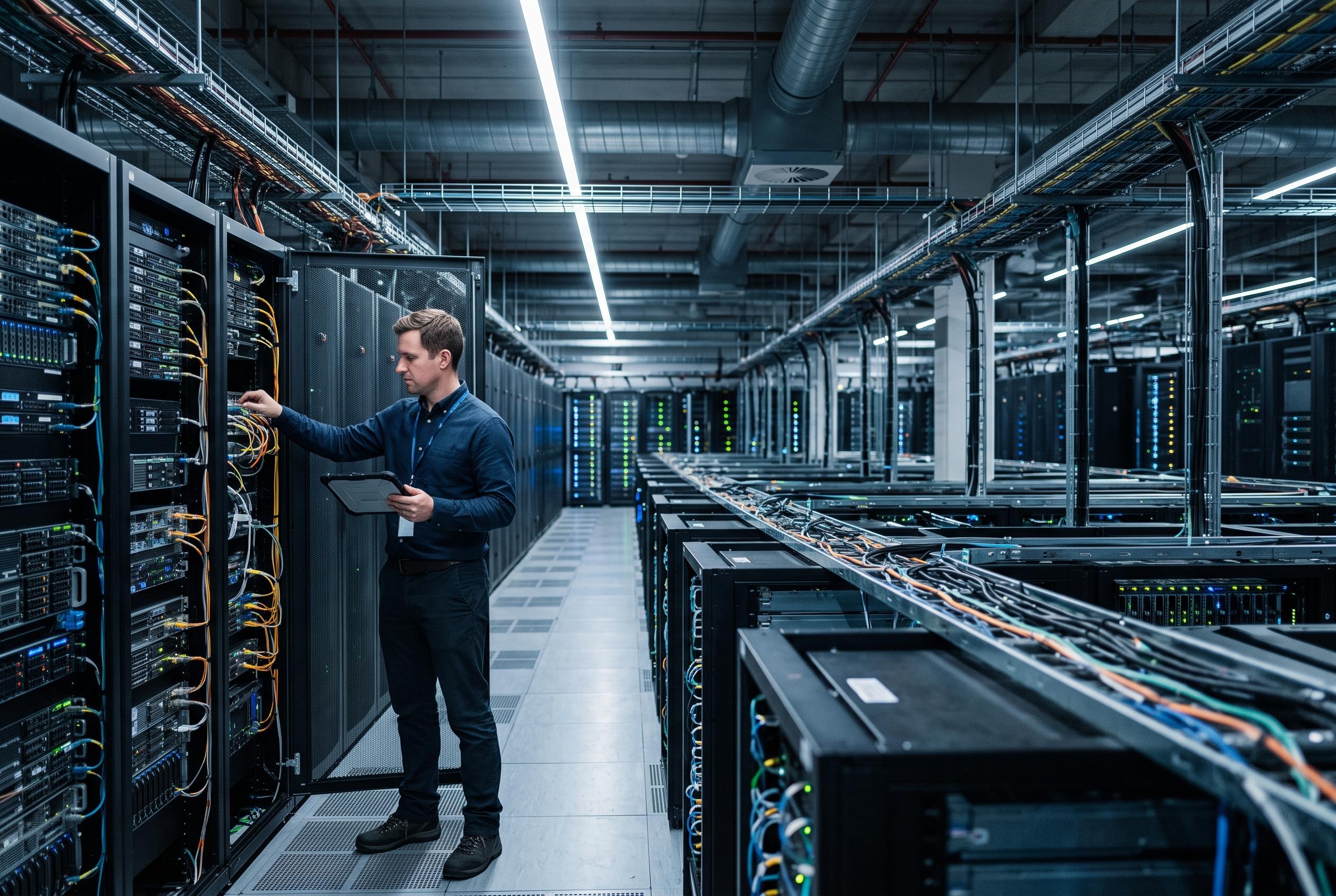

India’s data centres may consume up to 2 per cent of national electricity within a decade as AI and digital infrastructure accelerate, prompting calls for coordinated power and water planning.
India’s data-centre sector could become a far larger consumer of electricity over the next decade, with demand rising to as much as 2 per cent of national use from about 0.5 per cent today, according to Abhay Karandikar, a member of NITI Aayog. He said the shift would track the rapid build-out of digital infrastructure and the heavier computing loads linked to artificial intelligence and other data-intensive services.
Speaking on the sidelines of a NITI Aayog event to release a new evaluation framework for data-centre projects, Karandikar said the increase would be significant but manageable if supply planning keeps pace. He pointed out that data centres already account for between 2 per cent and 5 per cent of electricity consumption in markets such as the United States and Europe.
The framework is intended to give authorities a clearer method for assessing proposals, including the likely demand for power and water. That matters because the cooling systems used to keep servers operating efficiently can require substantial water, although Karandikar said newer technologies could reduce that burden. He also suggested that improvements in cooling design could create opportunities for Indian technology companies.
The policy focus reflects a broader concern that India’s digital expansion must be matched by energy planning. According to Karandikar, the government is looking to expand supply through renewable energy and, potentially, nuclear power in the years ahead. The report released by NITI Aayog also argues that states should treat data centres as strategic infrastructure rather than simply as private investments, with common standards and central guidance to support more sustainable development.
At present, large data-centre capacity remains concentrated in Mumbai, Chennai and the Delhi-NCR region, but Karandikar said future growth could spread to cities including Lucknow, Bengaluru, Hyderabad and Pune if state governments make land, electricity and water available. He also linked the discussion to wider infrastructure planning, saying India has around four years to prepare for the spectrum needs expected by 2030 as it develops sixth-generation telecommunications and considers how satellite services might coexist with new allocations.
Disclaimer: This content is intended for informational purposes only. Readers are advised to exercise their own judgement, conduct due diligence, or consult a qualified expert before acting on any information provided.



